Cyber Security - The Beacon of Trust
As John Lennon once said, another year over…and a new one just begun. As we head into 2024, it’s important to reflect on what we’ve seen and where we need to focus in the year ahead.


As John Lennon once said, another year over…and a new one just begun. As we head into 2024, it’s important to reflect on what we’ve seen and where we need to focus in the year ahead.
Computer vision: digital understanding of the physical world From face recognition to fire prevention, autonomous cars to medical diagnosis, the promise of video analytics has enticed technology innovators for years. Video analytics, the processing and analysing of visual data through machine learning and artificial intelligence, is perceived as a significant opportunity for edge computing.
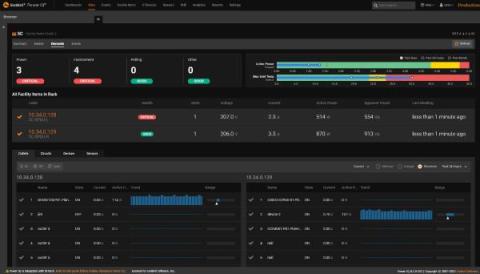
Learn more about how modern DCIM software is being used to measure the power capacity effectiveness (PCE) of data centers. Schedule a free one-on-one demo of Hyperview today.
2023 was the year of Artificial Intelligence (AI). 2024 will build on the incredible momentum of the likes of ChatGPT, Google Bard, Microsoft CoPilot, and others, delivering applications and services that apply AI to every industry imaginable. A recent analysis piece from Schroders makes the point well: “The mass adoption of generative Artificial Intelligence (AI) …has sparked interest akin to the Californian Gold Rush.”
Our CEO, Jad Jebara joins Digitalisation World podcast to provide insights as to how the data center industry, prompted by the requirement for meaningful environmental reporting, can work towards a truly sustainable future by focusing on the metrics that matter. See first-hand how modern DCIM software is being used to manage hybrid IT environments. Schedule a free one-on-one demo of Hyperview today.
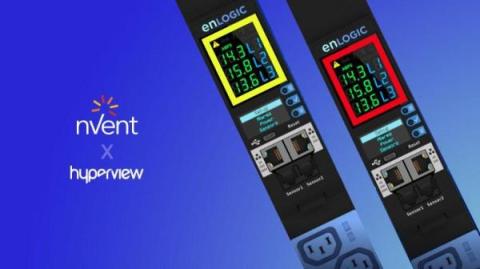
As data centers grow more complex and power-hungry, rack PDUs are an increasingly important component of data center power circuits. Modern intelligent rack PDUs have many advanced features and work seamlessly with Data Center Infrastructure Management (DCIM) software to provide a complete solution for monitoring and managing data center infrastructure. Let’s delve into the key trends shaping rack PDU management in 2024 and beyond.
BACnet/IP Support in Linux Data Collector: Expanded monitoring capabilities for BACnet/IP assets. Outlet Control Upgrade: Enhanced control options for managing multiple rack PDU outlets simultaneously.
We’re wrapping up the year with one last release, adding a few more goodies. 4.2 comes with some notable feature improvements. The Connectivity add-on now makes it easier to manage ports with editable port name templates and bulk editing capabilities. Plus, we’ve introduced new Bulk Actions for adding and editing network ports. And the Linux version Data Collector got even better – it now supports AES256 for SNMPv3 discovery and monitoring.