
Top threats in mobile banking and how security solutions prevent them
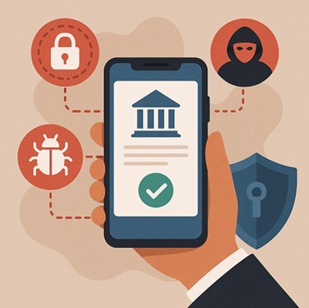
Mobile banking is a big feature of modern financial services since it helps customers manage their money from anywhere and at any time. With only a few clicks, those who have smartphones may move money across accounts, pay bills, and check their balances. But this easiness does come with some major risks. There are always new ways that cybercriminals find to take advantage of problems with mobile banking apps. This is why it's crucial for both users and banks to have effective mobile banking security solutions.
More people are using mobile banking, which has led to more complicated attacks like phishing schemes and virus uploads. Banks and fintech companies are always looking for ways to keep their customers safe. Working with well-known tech companies like Jappware can assist make sure that mobile banking apps can deal with new risks.
Common threats in mobile banking
1. Phishing attacks
Phishing is still one of the biggest risks to mobile banking. Cybercriminals send bogus emails, texts, or app notifications to trick consumers into giving them confidential information like credit card details or login passwords. These kinds of attacks are hard to recognize since they often seem like legitimate banks.
2. Malware and Trojan infections
"Banking Trojans" is a common name for malware that targets financial apps and can infiltrate into mobile devices. Once these rogue programs are running, they can steal your login credentials, get SMS verification codes, or even put bogus login panels on top of actual apps.
3. Man-in-the-middle (MitM) attacks
When hackers listen in on a user talking to a bank's computer, they start a MitM attack. For example, if individuals connect to public Wi-Fi networks that aren't secure, attackers might grab their login or transaction information right away.
4. SIM swapping
Criminals utilize SIM switching attacks to trick cell operators into moving a victim's phone number to a new SIM card. If attackers obtain the victim's phone number, they can get bypass SMS-based two-factor authentication (2FA) and enter into mobile banking apps without permission.
5. Insecure application code
Apps for mobile banking that aren't updated or were made properly in the past can be at risk. Unsafe code can let data leak, give hackers access to encryption keys, or make it easy for them to use. To avoid these concerns, the development process must incorporate a lot of testing.
6. Unauthorized device access
If security measures like biometric authentication or app-specific PIN numbers aren't turned on, people who shouldn't be able to get into banking apps on a lost or stolen phone might be able to do so.
7. Fake banking apps
Scammers occasionally put bogus banking apps in unofficial app stores. People who download them might not even know that they are giving thieves their personal information.
How mobile banking security solutions prevent threats
Strong authentication mechanisms
These days, having just an account and a password isn't enough to keep you safe. Biometric verification (fingerprints, faces), multi-factor authentication (MFA), and device fingerprinting all make things safer by keeping those who shouldn't be there from gaining in.
End-to-end encryption
End-to-end encryption makes it secure for the mobile app and the bank's computers to talk to each other. Encryption keeps hackers from accessing data, even if they get it.
Real-time fraud detection
Advanced applications that employ artificial intelligence (AI) and machine learning (ML) keep an eye on what users do in real time. The system can interrupt the activity or ask for further confirmation if it sees something weird, like someone coming in from an area it's not used to or making trades that are too huge for what it usually does.
Secure application development
Banks may protect their mobile applications from attacks by following best practices for app development, such as concealing code, running security tests, and making updates on a regular basis. You should only work with bespoke developers that know a lot about keeping your money safe.
Device security and access controls
Security solutions can impose device-level protection by requiring users to provide a PIN number or fingerprint information before they can start an app. They may also establish session timeouts and erase the device from afar if it becomes lost or stolen.
Threat intelligence integration
To remain up to date on new dangers, modern financial platforms use worldwide threat intelligence networks. This lets them block known bad IP addresses, suspicious sites, or fraudulent patterns before they can do any harm.
Secure API management
APIs are used by many mobile banking apps to talk to services outside of the app. Attackers can get in using APIs that aren't well protected. Security solutions make sure that APIs are always checked, encrypted, and monitored.
Why businesses should prioritize mobile banking security
Keeping mobile banking safe is really crucial. Security breaches may affect a financial company's reputation and make clients less likely to trust it, in addition to spending money immediately away. In a firm where customers need to trust you, you can't make a mistake with security.
Following laws like GDPR, PSD2, and PCI DSS is also a part of strong security for mobile banking. These frameworks include rigorous standards about data safety and payment processing, and not following them might lead to big fines.
The role of expert partners
Banks and other financial institutions know they need better security, but putting it in place needs knowledge of both business and technology. This is where working with financial software developers comes in. Companies like Jappware make custom mobile banking apps that are strong by using safe coding standards, fraud protection systems, and compliance knowledge.
When banks work with an experienced development partner, they may get the latest information and ideas on mobile security. This lets businesses focus on their main job of providing clients while making sure that their apps stay safe and up to date.
Final thoughts
In the world of finance, a lot of things happen extremely rapidly. To be speedy, meet the rules, and gain clients' confidence, loan software is now a must-have. To pick the correct system, you need to know what your business requires, look closely at the features, and think about how it will expand in the future.
If a business hires a good loan software development firm, they can be confident they will obtain the answers they need. With the aid of professionals like Jappware, businesses can make loans easy, safe, and good for customers. In the long term, this will help them grow.