
Top 6 Enterprise Web Development Agencies for Scalable Digital Growth
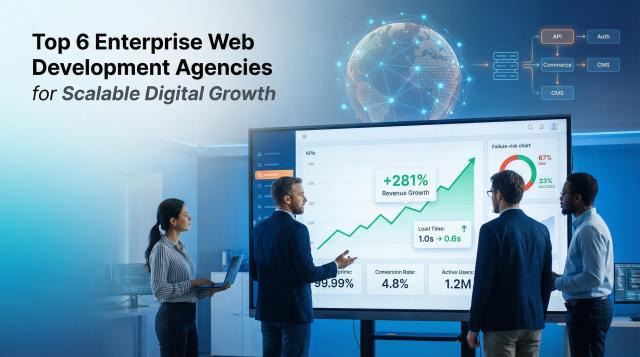
Enterprise web experiences now drive revenue, retention, and brand reputation.
Research firm Monocubed values the global web-development market at $82.4 billion by 2026, yet roughly 67 percent of large enterprise projects fail when teams underestimate scope, according to a Monterail analysis. Even a one-second page-load delay can cut conversions by 4.4 percent, finds a 2023 Portent study.
That risk-reward equation makes partner choice critical. In this guide, we profile six enterprise web-development agencies—from nimble boutiques to global consultancies—that consistently ship fast, secure, and scalable platforms for Fortune-level brands. Let’s find the team that moves you further, faster.
Our Research And Selection Methodology
Choosing six enterprise web development agencies wasn’t a popularity contest; we followed a clear, repeatable process so you can trust every name on the list.
First, we scanned the market. Search rankings, analyst reports, and more than 20 “best agency” roundups fed our long list of candidates.
Second, we set the bar. Four scoring pillars (enterprise focus, technical innovation, service breadth, and proven results) carried equal weight. An agency had to excel in all four to advance.
Third, we graded about 30 contenders. Client rosters, case studies, review scores, and public certifications all counted. A picture-perfect portfolio still lost points if uptime, security, or post-launch support looked shaky.
Finally, we chased variety. You don’t always need a 300,000-person consultancy; sometimes a 40-person boutique delivers more punch. We kept agencies of every size that met our criteria so you can pick the right fit.
The outcome is a concise, trustworthy short list you can act on today. That’s our process, and now we’ll meet the agencies.
Never Settle illustrates that point.
Google Analytics data published in the agency’s impact report shows a 281 percent year-over-year jump in e-commerce purchases for Kraft Tank Corp after its site rebuild, clear evidence that a 40-person team can hit enterprise-level performance targets.
-
Never Settle – Boutique Innovation For Enterprise Impact
Never Settle shows how a 40-person crew can excel on the largest stages. Founded in 2012 and based near Denver, the agency brings technologists, designers, and growth strategists who plug straight into your enterprise workflow.
Precision sets them apart. Every project starts with a deep dive into business goals, then sprints through prototyping and iterative releases. That pace helps corporate teams hit tough launch dates without sacrificing code quality or compliance.
Results match the ambition. A recent B2B ecommerce rebuild increased online purchases by 281 percent year over year for a manufacturing client, unlocking fresh executive support and investment. Similar wins span CMS rollouts, CRM and ERP integrations, and custom web apps built for global traffic.
You get end-to-end coverage in one place: UX research, full-stack engineering, performance tuning, and digital marketing that drives adoption after launch. If you want hands-on partnership with enterprise-grade outcomes, Never Settle is the boutique ally to call first.
-
EPAM Systems – Global Engineering Powerhouse And Mach Pioneer
EPAM operates at a different scale. With more than 62,000 engineers in 50 countries, the firm tackles complex web ecosystems that serve millions of users without stress.
EPAM Systems global engineering and MACH pioneer homepage screenshot
Enterprises call EPAM when the mandate is truly transformational. Think multi-region commerce platforms, cloud migrations measured in petabytes, or microservice re-platforming that frees legacy systems from a monolith. As a founding member of the MACH Alliance, EPAM builds every project around microservices, API-first design, cloud-native deployment, and headless experience, so your stack stays flexible as strategy shifts.
Delivery discipline is a second advantage. CMMI Level 5 processes, 24/7 follow-the-sun teams, and security controls that satisfy SOC 2 and ISO 27001 auditors keep risk low. Growth metrics add proof: three straight years on Fortune’s 100 Fastest-Growing Companies list, plus a top-five ranking on Newsweek’s 2025 IT-services index.
If your vision spans continents and touchpoints, EPAM brings the bench strength and engineering rigor to make it real.
-
Publicis Sapient – Digital Business-Transformation Specialists
Publicis Sapient combines boardroom strategy with code that ships. Born as Sapient in 1990 and now the tech heart of Publicis Groupe, the firm’s 20,000 consultants, designers, and engineers help incumbents think and act like digital natives.
Their signature move is end-to-end reinvention. A global bank needs faster onboarding, and Sapient redesigns the customer journey, rewires core systems, and launches a new portal. A retailer looks for stronger omnichannel muscle, and Sapient rolls out a headless commerce stack, cloud infrastructure, and data-driven personalization that lifts revenue while trimming hosting costs.
Why does it work? Cross-functional squads pair creative storytellers with cloud architects, so experiences feel human while the plumbing stays reliable. Domain playbooks—open-banking APIs, airline ancillaries, energy-trading dashboards—jump-start delivery and reduce risk.
Add the reach of Publicis’s creative network, and you get a partner who sparks desire and satisfies demand in the same sprint. When you need vision, velocity, and measurable ROI, Publicis Sapient is the one-stop choice.
-
Globant – Agile Development At Scale With A Digital-Native Twist
Globant was born in Buenos Aires start-up culture and never slowed down. Today about 30,000 “Globers” work in pods, tight cross-functional teams that own a problem from idea to production and beyond.
Globant digital-native agile development company homepage screenshot
That pod model is rocket fuel for enterprises trapped in waterfall slowdowns. Each pod ships an increment every two weeks, collects feedback, and trims months from typical release cycles. It is how Disney moved MagicBand from concept to park-wide reality and how Electronic Arts keeps FIFA live services running on match day.
The technology range is just as broad. From React front ends to serverless back ends, from AI chatbots to AR shopping demos, Globant layers innovation onto stable cloud infrastructure. Specialist studios in gaming, data, IoT, and sustainability can drop in when needed, so you gain deep expertise without juggling vendors.
Culture seals the deal. Globant hires worldwide but celebrates Latin American creativity and problem-solving grit. The outcome is software that feels fresh, looks polished, and scales globally without the hefty price tag of larger consultancies.
-
Cognizant – Enterprise It Giant With End-To-End Web Mastery
Cognizant is the safety net Fortune 100 boards mentioned by name. With about 350,000 consultants in 40 countries, the company fields specialized squads that mirror your org chart, from digital strategy to post-launch support.
Cognizant enterprise IT and digital experience services homepage screenshot
Scale is the headline, yet disciplined execution wins the story. Need 100 developers to modernize a decades-old insurance portal? Cognizant can ramp in weeks, pair agile pods with Six Sigma governance, and deliver microservices that cut release time by half while meeting HIPAA or PCI rules without drama.
Breadth is equally pragmatic. One engagement may bundle Adobe Experience Manager for marketing, Salesforce for customer care, and a custom Node back end that syncs smoothly with SAP. Clients stay because each layer, from UX polish to database sharding, lives under a single accountable roof.
For enterprises facing mission-critical timelines, thorny integrations, and zero-downtime targets, Cognizant offers the talent and rigor to move mountains on schedule.
-
Valtech – Experience-Driven Commerce And Cms Mastery
Valtech blends design finesse with enterprise discipline. Founded in 1993 in Paris, the agency now counts more than 5,000 strategists, creatives, and engineers who help global brands shine across every channel.
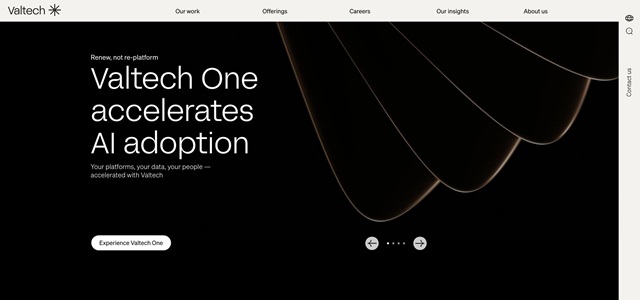
Valtech experience-led commerce and CMS agency homepage screenshot
Customer experience guides each build. When Lufthansa needed a new travel companion platform, Valtech mapped the passenger journey first, then rebuilt the architecture. A headless news portal that publishes in dozens of languages followed the same pattern, keeping conversion, accessibility, and page speed in focus while the tech stack works quietly underneath.
The toolkit is broad: Sitecore, Adobe Experience Manager, Contentful, Salesforce Commerce Cloud, and custom microservices sit side by side. Emerging tech is welcome too; AR store demos, connected-car apps for Audi, and sustainable performance audits keep each launch relevant tomorrow.
You will also appreciate Valtech’s consultative hand-off. The team documents, trains, and empowers in-house staff, cutting vendor lock-in and lowering total cost of ownership. If your aim is a unified global brand experience delivered with creative polish and composable tech, Valtech checks every box.
Comparing the contenders at a glance
|
Agency |
Founded / size |
Global reach |
Core strengths |
Distinct edge |
Typical starting budget |
|
Never Settle |
2012, 40 staff |
Denver HQ, clients worldwide |
Full-stack web, ecommerce, marketing integrations |
Boutique precision with award-winning work |
USD 50,000 |
|
EPAM Systems |
1993, 62,000 staff |
50 countries |
Large-scale platform engineering, MACH architecture |
Deep engineering bench with 24/7 delivery |
USD 250,000–1,000,000 |
|
Publicis Sapient |
1990, 20,000 staff |
50 offices |
Strategy-to-code transformation |
Creative plus tech under one roof |
USD 300,000+ |
|
Globant |
2003, 30,000 staff |
Americas, EMEA, APAC |
Agile pods, AI and emerging tech |
Startup speed at enterprise scale |
USD 200,000 |
|
Cognizant |
1994, 350,000 staff |
40 countries |
End-to-end IT, complex integrations |
Massive resources with strict governance |
USD 500,000+ |
|
Valtech |
1993, 5,000 staff |
Five continents |
Composable commerce, global CX |
Design-first approach with tech depth |
USD 200,000 |
How To Choose The Right Enterprise Web Partner
The short-list is helpful, but fit beats fame. Before you send an RFP, line up the criteria that matter most to your business, then score each agency against them. These 7 factors keep the decision clear and defensible.
Goal alignment. Match expertise to outcome. If you need a headless commerce launch, choose a firm that has shipped similar platforms in your industry and can talk numbers, not buzzwords.
Technical approach. Dig into architecture choices. Ask how the team will handle cloud scaling, microservices, and API governance. Future upgrades cost less when the foundation is modern from day one.
Scalability track record. Request real-world load numbers, not lab tests. An agency that has already supported millions of concurrent users will protect your conversion rate when traffic spikes.
Integration know-how. Enterprise sites never stand alone. Press for examples of tying CRMs, ERPs, and payment gateways into a seamless workflow. Smooth data flow now prevents data silos later.
Security and compliance. Breaches hurt both revenue and reputation. Look for SOC 2 or ISO 27001 processes, regular penetration testing, and experience with regulations like HIPAA or GDPR that mirror your own.
Total cost of ownership. Low upfront fees can turn into expensive rewrites. Ask about documentation, code ownership, and long-term support so you see the full dollar picture, not just the launch quote.
Culture and support. You’ll work shoulder to shoulder for months. Gauge communication rhythm, time-zone overlap, and post-launch SLAs. The right cultural fit often decides success more than any technical spec.
Frequently Asked Questions
Why hire an enterprise-focused agency instead of a general web shop?
Scale, security, and governance change everything. Enterprise specialists have tested playbooks for single sign-on, global load balancing, and multi-stakeholder sign-off. A generalist can build a pretty site, but a specialist keeps that site compliant, fast, and profitable when 1,000,000 users log in at once.
What services should I expect in a full engagement?
Discovery workshops, UX research, front- and back-end development, QA automation, DevOps, accessibility hardening, and post-launch support usually appear in an enterprise scope. Many firms also fold in SEO and change-management training so your team can move faster after go-live.
How long will a large-scale build take?
Plan on 3–6 months for a focused corporate site and 9–18 months for a complex web application with deep integrations. Agile sprints let you see working software early, yet final polish still takes time.
What drives cost more than anything else?
Complex integrations and compliance demands. Tying into legacy ERPs or meeting strict data-protection rules adds hours and specialist roles. Clear requirements and phased delivery help keep budgets under control.
Conclusion
Every agency on this list can build a high-performance platform. The real win is pairing that technical firepower with your culture, risk profile, and growth targets.
Start by sketching a one-page brief. List your must-have integrations, compliance rules, and success metrics. Share it during discovery calls and listen to the questions each team asks. Sharp questions signal a sharp partner.
Short-list 2 or 3 agencies that resonate. Request proposals, compare timelines, and meet the actual delivery leads, not only the sales crew. Look for teams that explain trade-offs clearly and back claims with client stories and data.
After you pick a partner, lock in governance early. Agree on sprint cadence, success KPIs, and post-launch support so momentum never stalls.
Done right, the collaboration becomes more than a project. It turns into a runway for continuous digital growth, faster testing cycles, and a user experience your competitors scramble to match. Ready to get started? Your future agency is one conversation away.