
Mobile Connectivity While Driving Is Now an Operational Requirement
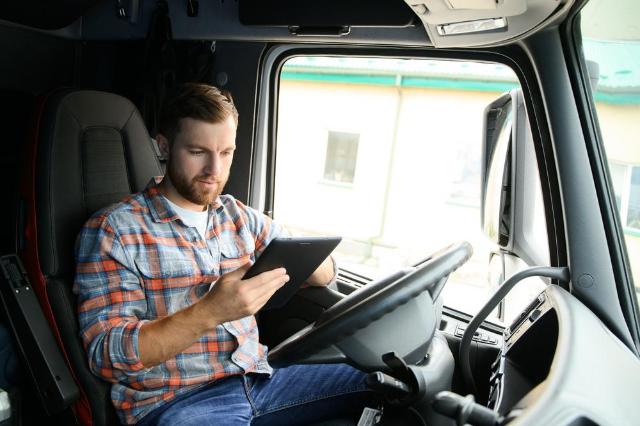
Image Source: depositphotos.com
If you manage operations, field teams, logistics, or mobile workforces, mobile connectivity while driving is no longer a convenience. It is infrastructure. The expectation that vehicles remain connected at all times has quietly shifted from “nice to have” to “mission critical,” especially as more work happens on the road rather than at fixed locations.
You already feel this shift. Routes change mid-drive. Dispatch messages arrive in real time. Work orders, compliance forms, navigation updates, and safety alerts depend on consistent data connections. When connectivity drops, productivity drops with it.
The challenge is not whether mobile connectivity matters. The challenge is maintaining it reliably while in motion.
The Reality of Mobile Connectivity on the Road
Mobile networks were designed first for population density, not vehicle mobility. Even with nationwide LTE and expanding 5G coverage, signal strength fluctuates dramatically when you move through:
- Rural highways and industrial corridors
- Mountain passes and desert stretches
- Warehouses, ports, and steel-heavy job sites
- Urban areas where buildings reflect and absorb signal
Independent drive tests consistently show signal strength can vary by 20 to 40 dB within a few miles on secondary roads. That swing is the difference between usable data and a dead connection. For drivers and operators, it often shows up as frozen navigation, dropped calls, or failed uploads.
Why Dropped Connections Cost More Than You Think
Lost connectivity does not just frustrate drivers. It creates measurable operational risk.
Studies across transportation and field service industries show that delayed or failed mobile data updates can add 10 to 15 percent to route times when drivers must stop, retry transmissions, or revert to manual processes. For fleets running dozens or hundreds of vehicles, that delay compounds quickly.
More importantly, safety suffers. When drivers lose signal, they lose access to live traffic alerts, weather warnings, and emergency communication. In remote areas, that loss becomes a liability rather than an inconvenience.
How Vehicles Interact With Cellular Networks
Your vehicle itself works against reliable signal. Metal frames, coated windshields, cargo equipment, and electronics create a partial Faraday cage effect. Even when your phone shows bars outside the vehicle, usable signal inside can be significantly weaker.
Modern vehicles make this worse. Advanced driver assistance systems, onboard Wi-Fi, GPS modules, and infotainment systems all compete within a crowded RF environment. Without help, your phone is fighting both distance from the tower and interference from the vehicle.
The Gap Between Coverage Maps and Real-World Performance
Carrier coverage maps suggest near-total national coverage. Real-world performance tells a different story.
Coverage maps show where a signal exists, not whether it is strong enough to support data while moving at highway speeds. A connection that works when parked may fail entirely at 65 miles per hour due to rapid tower handoffs and marginal signal strength.
This gap is why many operations teams struggle to diagnose connectivity issues. On paper, coverage looks fine. In practice, drivers still lose signal.
Solutions That Actually Address the Problem
Improving mobile connectivity while driving requires addressing the physics of signal, not just switching carriers or devices.
External Signal Capture
Vehicle-mounted external antennas sit above the metal shell of the vehicle, where signal is strongest. This alone can improve received signal by several decibels compared to a phone inside the cabin.
Signal Amplification
Vehicle cell phone signal boosters take that external signal, amplify it, and rebroadcast it inside the vehicle. This does not create signal where none exists, but it dramatically improves weak, usable signal.
Field testing shows that in fringe coverage areas, amplification can turn unusable signal into stable voice and data connections, especially for LTE-based networks.
Network-Agnostic Design
Operations rarely control which carrier drivers use. Effective mobile connectivity solutions must support multiple carriers simultaneously, rather than locking teams into a single network strategy.
Where Connectivity Has the Biggest Operational Impact
Mobile connectivity while driving matters most in roles where timing and communication drive outcomes:
- Field service teams updating work orders between jobs
- Logistics and delivery fleets managing dynamic routing
- Construction and utilities crews operating in remote zones
- Sales teams traveling between client sites
- Emergency and support vehicles where communication is critical
In each case, consistent connectivity reduces idle time, improves response speed, and lowers error rates.
Measuring the ROI of Better Connectivity
Connectivity improvements are often approved when framed as technology upgrades. They are more accurately operational efficiency investments.
Consider the math. If improved connectivity saves each driver just five minutes per shift by reducing retries, stops, or rerouting errors, that adds up to more than 20 hours per driver per year. Multiply that across a fleet, and the return becomes obvious.
You also reduce softer costs: driver frustration, safety exposure, and customer dissatisfaction caused by missed updates or delays.
Preparing for the Next Phase of Mobile Work
As more applications move to cloud-based platforms and real-time reporting becomes standard, tolerance for dropped connections will continue to shrink. Autonomous features, predictive routing, and AI-driven logistics all assume continuous data availability.
If your operations depend on vehicles, you should treat mobile connectivity as part of your core infrastructure, not an afterthought.
The question is no longer whether drivers will need reliable connectivity. The question is whether your operation is designed to support it consistently, mile after mile.
Reliable mobile connectivity while driving does not happen by accident. It happens when you acknowledge the limits of networks, the realities of vehicles, and the operational cost of dropped signal—and then design around them.