
From Machine Setup to Final Inspection: Tools That Ensure High-Precision Manufacturing
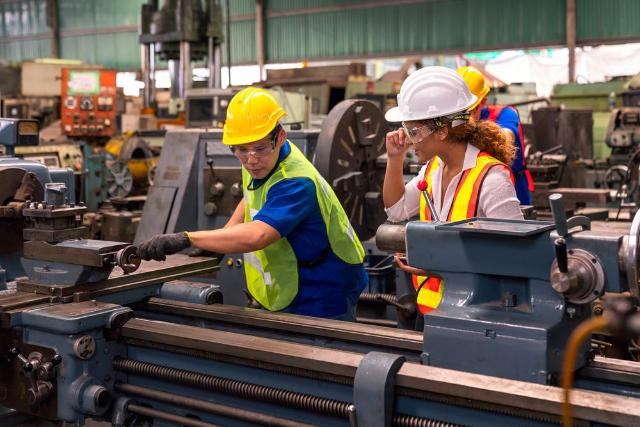
Image Source: depositphotos.com
High-precision manufacturing is not the result of a single step—it is the outcome of a controlled process that begins with proper machine setup and ends with thorough final inspection. Every stage in between plays a role in maintaining tight tolerances, consistent finishes, and repeatable results.
CNC machines are capable of incredible accuracy, but that potential can only be realized when tooling, workholding, and inspection systems are aligned. From rigid toolholding systems to dependable measurement tools, each component supports dimensional integrity throughout the production cycle.
Understanding how to optimize setup and inspection processes is essential for any machine shop focused on high-precision manufacturing.
Optimizing Machine Setup for Precision and Repeatability
The foundation of precision begins at setup. Even minor alignment errors or unstable clamping can introduce dimensional inconsistencies that compound during production.
In turning operations, stable and repeatable toolholding is critical. High-quality vdi tooling systems provide accurate positioning and rigid support for cutting tools mounted in CNC lathe turrets. Properly installed VDI tooling minimizes runout and reduces vibration during cutting, both of which directly impact dimensional accuracy and surface finish.
When toolholders are secure and aligned correctly, machinists experience:
- Improved concentricity in turned parts
- Reduced tool deflection
- Better surface finish consistency
- More predictable tool life
In milling operations, workholding stability plays an equally important role. A self centering vise simplifies setup by automatically aligning the workpiece along the machine’s centerline. This reduces manual adjustment time and improves repeatability between parts.
For high-precision applications, consistent part positioning is essential. If a workpiece is misaligned at the beginning of a run, dimensional errors may not become obvious until multiple operations are complete. Self-centering vises help eliminate this risk by ensuring symmetrical and stable clamping from the start.
To optimize machine setup for precision:
- Verify fixture alignment before machining
- Minimize tool overhang to reduce deflection
- Confirm proper clamping force
- Perform test cuts and first-article inspections
- Standardize setup procedures across operators
Precision manufacturing begins long before chips start flying. A disciplined setup process ensures repeatable accuracy across every part produced.
Inspection Tools That Safeguard Final Part Accuracy
Even with optimized setup procedures, final inspection remains essential. Measurement tools validate that the machining process delivered parts within tolerance and that no variation occurred during production.
One of the most versatile inspection instruments used in CNC environments is the dial caliper. Dial calipers allow machinists to measure outside dimensions, inside diameters, and depths quickly and efficiently. They are commonly used during in-process checks and final inspections to confirm part specifications.
Accurate measurement protects both the shop and the customer. Without proper verification, dimensional drift caused by tool wear or thermal expansion may go unnoticed until entire batches are out of spec.
Effective inspection practices include:
First-Article Verification
Measure critical features after the first completed part to confirm setup accuracy before running full production.
In-Process Monitoring
Perform periodic checks to catch deviations early. Quick measurements with a dial caliper help detect offset changes before scrap accumulates.
Final Inspection Documentation
Record key dimensions to ensure traceability and maintain quality standards.
Inspection tools safeguard final accuracy by providing objective confirmation that machining processes are performing as intended.
Creating a Closed-Loop Precision System
High-precision manufacturing is strongest when setup and inspection operate as a closed-loop system. Toolholding systems such as vdi tooling ensure stability during cutting. Workholding solutions like self-centering vises maintain consistent alignment. Inspection tools like dial calipers confirm that final dimensions meet specification.
When these elements work together, variability decreases and repeatability improves.
Machine shops that prioritize both setup optimization and rigorous inspection benefit from:
- Reduced scrap rates
- Shorter setup times
- Improved surface finishes
- Greater customer confidence
- Enhanced production efficiency
Precision is not maintained by chance—it is preserved through consistent processes and reliable tools.
Conclusion
From machine setup to final inspection, every stage of the manufacturing process influences part accuracy. Stable systems like vdi tooling provide rigid tool support in turning operations, while a dependable self centering vise ensures consistent alignment in milling setups. Reliable inspection instruments such as a dial caliper verify that finished parts meet dimensional requirements.
By optimizing setup procedures and implementing structured inspection practices, CNC machine shops create a precision-driven workflow that supports repeatable, high-quality results. In high-precision manufacturing, accuracy is not simply measured at the end—it is built into every step of the process.