
Looking Beyond Telegram in 2026: Secure Messaging Apps Worth Trying
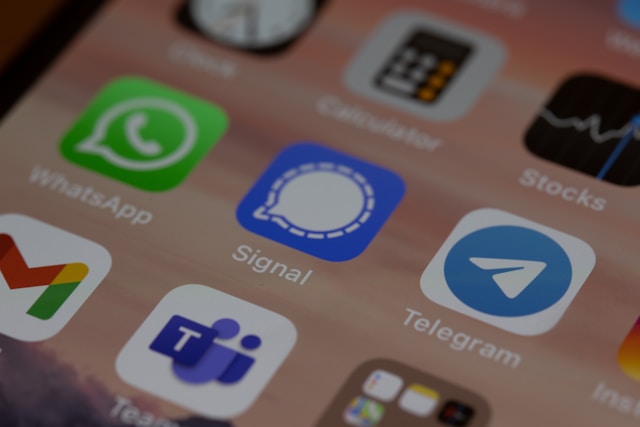
In today's digital world, where personal correspondence can become the object of mass surveillance, and user data regularly leaks into the public space, choosing a secure messenger or a good alternative to Telegram becomes not just a matter of comfort, but a necessity to protect privacy.
In 2026, messengers are becoming among the most popular channels for information leaks, accounting for 35% of all incidents involving the compromise of confidential data. In such circumstances, choosing the right messenger can be a crucial factor in maintaining the confidentiality of personal and work correspondence.
Below are the best messengers that serve as reliable and secure alternatives to Telegram.
Messaging Apps That Outperform Telegram in 2026: Security and Features Compared
Nicegram
Nicegram is a leading alternative client for Telegram, aimed at users who need advanced chat management capabilities and more flexible interface settings. Unlike classic secure messengers, Nicegram does not offer its own encryption architecture, but uses Telegram infrastructure, complementing it with additional functions.
The service has become popular due to improved user experience and tools that are not available in the official client. For example, it allows you to use multiple accounts simultaneously, filter chats, hide unnecessary conversations, and access content that may be limited in the standard version of the application.
Pros:
- Advanced customization options for the interface and chat management.
- Support for multiple accounts in one application.
- Built-in AI assistant in chat.
- Convenient filters and sorting of chats.
- Access to additional Telegram functions without losing the familiar ecosystem.
Cons:
- It is not an independent messenger — the security level directly depends on Telegram.
- There is no end-to-end encryption by default.
- Less transparency compared to fully open-source solutions.
Signal
Signal is the absolute leader among secure messengers, recognized by experts as a benchmark for privacy protection. Developed by an American cybersecurity specialist, this messenger is supported by the non-profit Signal Foundation, which eliminates commercial interests and dependence on large technology corporations.
In May 2025, cybersecurity experts from Artezio compiled a ranking of the most secure messengers, in which Signal topped the list.
The messenger has become a leader thanks to its open source, minimal metadata collection, and an innovative “delayed encryption” system that, starting in 2024, aims to provide complete protection even when keys are compromised.
Pros:
- A completely free product with no ads or data collection for marketing.
- Disappearing messages feature with configurable self-destruct timer.
- High-quality voice and video calls.
- Support for group chats and media sharing.
Cons:
- Mandatory binding to the phone number during registration, which reduces anonymity.
- Some metadata remains unencrypted.
- Limited video conferencing capabilities with a large number of participants.
Threema
Threema is a Swiss messenger with a strong focus on data protection and user privacy. Designed in accordance with strict Swiss privacy laws, it offers a unique registration model without requiring a phone number or email.
Pros:
- Messages are deleted from the servers immediately after delivery — there is no long-term storage.
- The data is stored locally on users' devices.
- Full set of functions: chats, groups, voice messages, file transfer, audio, and video calls.
- Supports isolated spaces to separate personal and work communications.
- High efficiency in countering social engineering thanks to the zero-trust architecture.
Cons:
- Paid app — requires a one-time purchase upon download.
- Relatively small user base compared to Telegram.
- The cost may seem like a barrier for users who are used to free messengers.
Session
Session is a decentralized messenger based on the Signal protocol and the Oxen network, providing maximum anonymity without requiring a phone number. The architecture is based on onion routing technology, similar to the Tor network, which helps conceal even communication metadata.
Pros:
- Complete anonymity — it is impossible to track the user even via metadata.
- Open source code.
- Free to use.
- Automatic message deletion support.
- Available on all major platforms, including mobile devices and computers.
Cons:
- Lower functionality compared to commercial solutions.
- A relatively complex interface for beginners.
- A small community of users.
- The absence of some familiar features such as bots and channels.
Olvid
Olvid is a French messenger with a unique zero-trust architecture that does not require a phone number or email to register. Developed in accordance with the European GDPR data protection standards, it took second place in the Artezio rating due to its special effectiveness in countering social engineering methods.
Pros:
- High level of protection against social engineering.
- Compliance with European GDPR standards.
- Minimalistic and intuitive interface.
- Regular security updates.
Cons:
- Limited recognition outside of Europe.
- A smaller set of functions compared to mass messengers.
- Small user base.
Conclusion
In 2026, choosing a messenger is a balance between convenience, functionality, and privacy. Solutions like Signal and Threema prioritize data protection, while applications like Nicegram expand the capabilities of the familiar Telegram ecosystem. The optimal choice depends on your tasks: anonymity is more important for some, convenience and a wide audience are more important for others.