
iBeta Certification: Attack Types and Relevant Datasets

Image Source: depositphotos.com
What iBeta actually tests. iBeta runs ISO/IEC 30107-3 PAD evaluations across PAD-subsystem, data-capture, or full-system modes. Levels increase attacker resources and time, with explicit caps on allowed penetration and bona-fide error rates (e.g., ≤15% BPCER/FNMR for Level 1/Level 2). This dictates what your relevant dataset must cover
Methodology and types of attacks for iBeta Level 1
- Printed photos: include different printer types and paper finishes; vary crop, scale, and head pose to cover “near-frontal but imperfect” presentations
- Video replay: short videos on smartphone/laptop screen; capture different pixel densities and refresh rates
- Paper/cut-out masks: eye/mouth cutouts, flat/warped paper; test with slight bending
These map directly to iBeta Level 1’s 2D PAI scope and constraints from the ISO/IEC
References: iBeta whitepaper, ID R&D news
Relevant Datasets for iBeta Level 1
- Replay-Attack (Idiap): 1,300 photo & video replay clips, multiple lighting conditions
- OULU-NPU — controlled print & replay with multiple printers/displays
- iBeta Level 1 Certification Dataset by Axon Labs: >28.8k attack videos across 7 PAI types curated specifically for Level 1 (diverse angles, distances, lighting, and media). The full version of the dataset is available on a commercial basis
Methodology and types of attacks for iBeta Level 2
- Silicone mask: realistic silicone masks that are worn by the actor and supplemented with external attributes
- Latex mask: similar to a silicone mask, but less realistic
- Resin mask: one of the most realistic masks, the methodology is similar to silicone masks
- 3D animation: high-fidelity rendered face with lip-sync, blinking; presented on a display for capture
- 3D-paper mask: printed paper masks that add volume; used on the actor with the addition of external attributes
Level 2 extends Level 1 by adding realistic 3D PAIs and broader, more costly attack setups per the ISO/IEC 30107-3/iBeta methodology
References: iBeta whitepaper, Biometric Update – Veridas, 1Kosmos press release
Relevant Datasets for iBeta Level 2
- 3DMAD (Idiap): classic mask database — 76,500 frames, 17 subjects; good for fundamental mask cues
- HKBU-MARs:real-world variation mask set — complements material/fit/diversity gaps
- Silicone Mask Dataset for iBeta Level 2 by Axon Labs: Level 2 - oriented mask-centric dataset for training under Level 2 conditions
Real iBeta case studies passes and what actually worked
Axon Labs specializes in preparing for iBeta PAD Level 1/2. Through projects and practice, they have identified what works and what does not. Below is a summary of real-life cases:
Case 1 — Brazilian fintech (Level 1, active liveness).
Goal: first-attempt L1 pass without delays
Preparation: turnkey dataset tuned to active scenario (required “approach to camera”), plus tight QA on distance/quality; emphasis on print and display replay species
Outcome:Level 1 passed on the first attempt, with all capture→validation→liveness checks cleared
Case 2 — Vietnam digital bank (Level 2, mask attacks)
Goal: pass Level 2 on first attempt under cost/time pressure.
Preparation: “Pre-iBeta Level 2 attack pack” (mask PAIs + dynamic replays) and retraining on real attack footage; added European bona-fide videos to match lab conditions
Outcome:APCER ≈0% and successful Level 2 pass; total project time ≈1 month
How Axon Labs Helped Achieve iBeta Certification
Industry context: iBeta regularly posts vendor confirmation letters, and Southeast Asia has seen multiple recent Level 2 passes (e.g., Cake Digital Bank), signaling market maturity and tighter baselines. Use this as a benchmark when planning your internal targets
iBeta Liveness Trends 2024
To better understand the specifics of certification, Axon Labs has compiled iBeta's results for 2024: distribution of passes by region, level, liveness methods, and devices
Key findings:
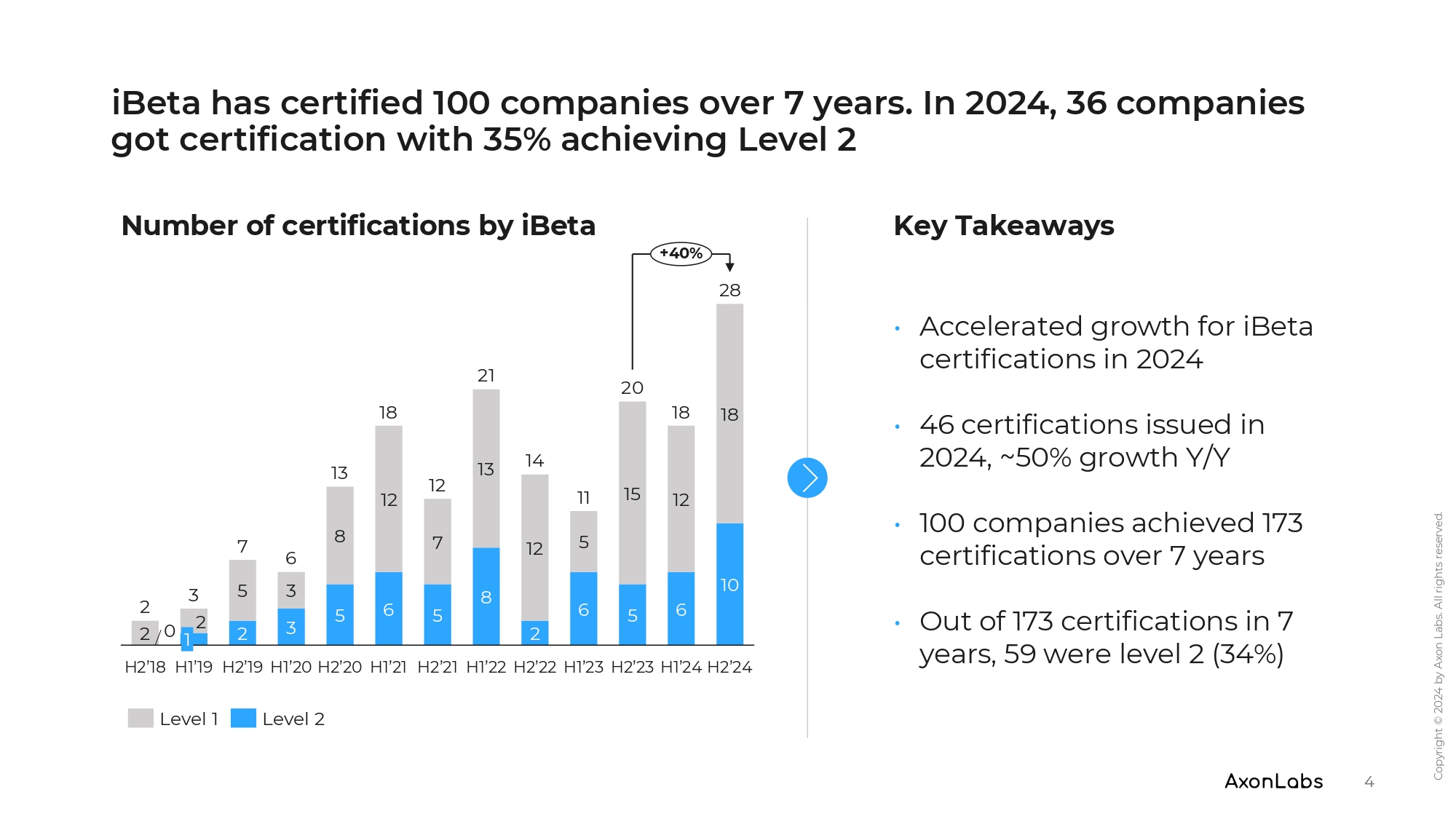
- Volume & levels. 100 companies achieved 173 certifications over seven years; in 2024, 46 certifications were issued to 36 companies, ~35% at Level 2
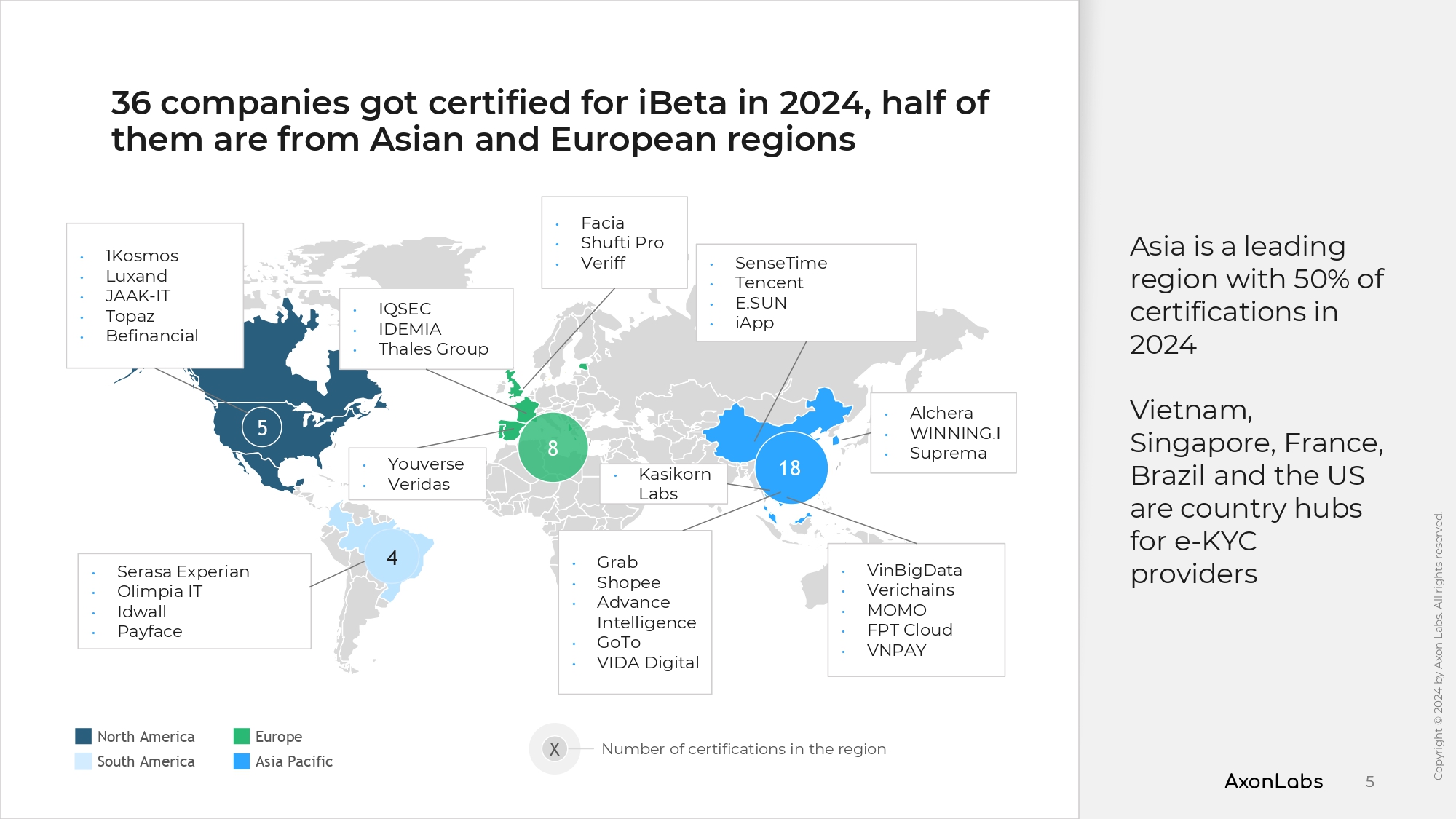
- Asia leads at ~50% of 2024 certifications; country hubs include Vietnam, Singapore, France, Brazil, and the US
- Liveness mode. Passive ≈55% (25/46); active ≈45%
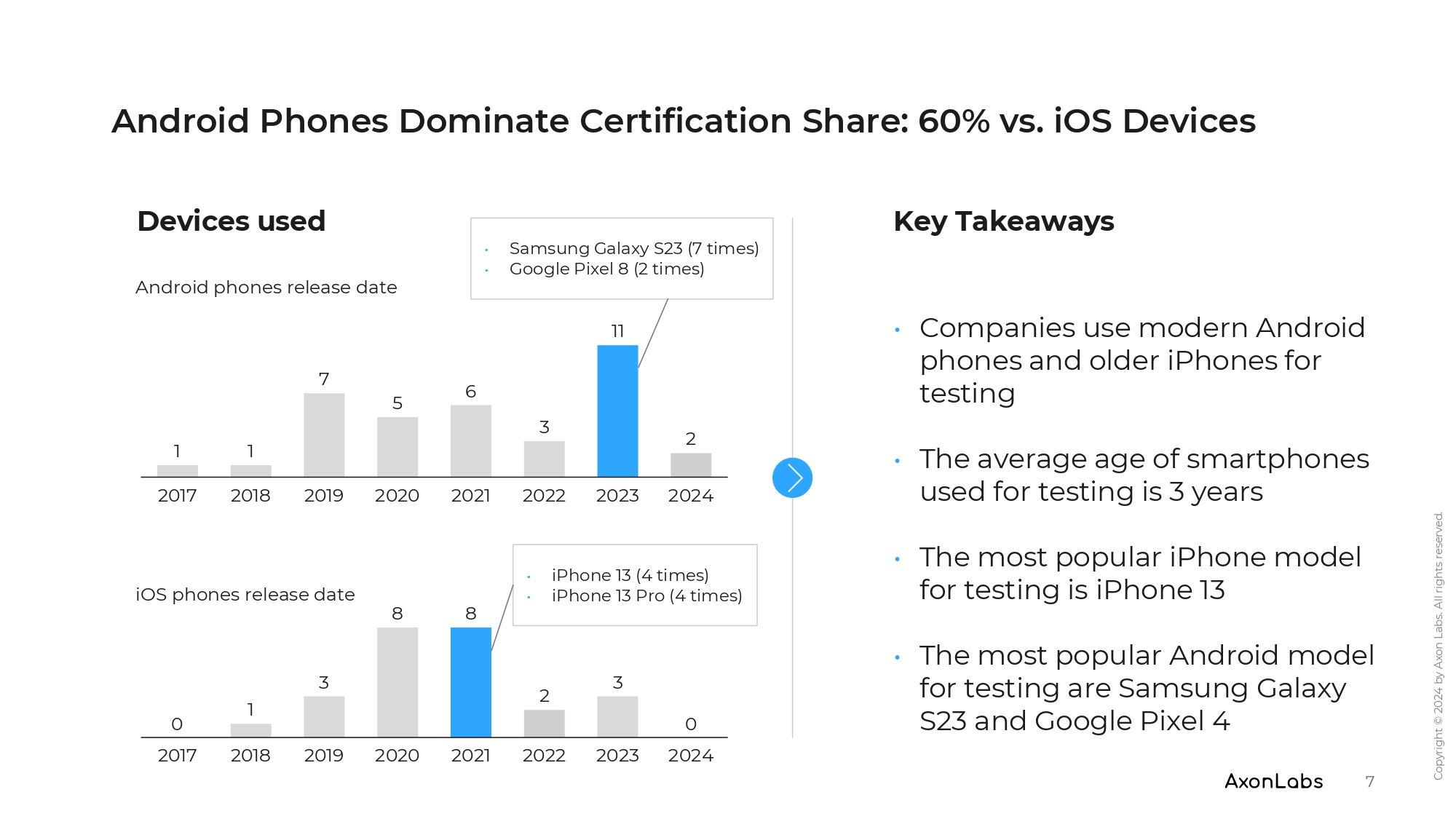
- Android dominates device share (~60% vs iOS). Platform split: Android-only 21 (~46%), Android+iOS 18 (~39%), iOS-only 7 (~15%). Test phones average ~3 years old; common models include iPhone 13 / 13 Pro and Galaxy S23 (also Pixel 8)
What this means for dataset prep:
- Prioritize passive-liveness scenarios in your Level 1/Level 2 datasets unless your product mandates active flows
- Match Android-first device profiles and age (optics/FOV, frame rates) to replicate lab capture conditions
- For Level 2 planning, budget for material diversity (silicone/latex/resin) but align volumes to what iBeta typically exercises; keep internal gates consistent with ISO/IEC 30107-3 / iBeta PASS thresholds to avoid high bona-fide error bias
Conclusion
iBeta PAD is the common language for assessing resilience to presentation attacks. Level 1 focuses on 2D (printed photos, screen replays, paper masks); Level 2 covers more complex 3D masks and richer replays. Preparation requires the right datasets/protocols per level and testing on typical, not brand-new, devices. 2024 results show certifications concentrated in Asia and Europe, dominance of passive liveness, and Android’s lead, with many vendors achieving both levels. Action point: design your testing pipeline for Level 1+Level 2 from the start, include realistic replay scenarios and high-quality 3D masks (materials/finishes/skin-tone matching), and target the actual device fleets