
How Modern Bow Thrusters Improve Yacht Maneuverability and Docking Safety
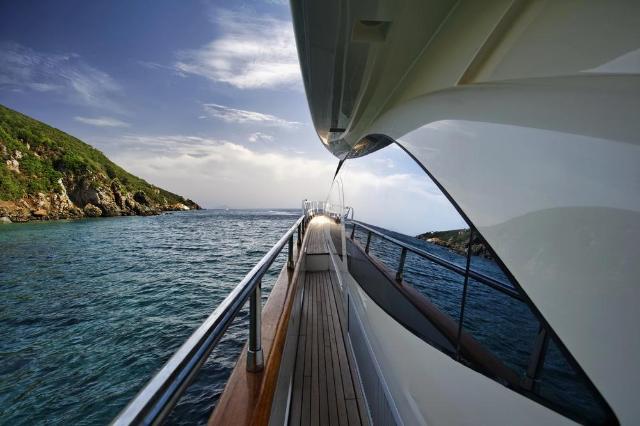
Image Source: depositphotos.com
Modern yacht maneuvering has evolved into a highly engineered process where propulsion assistance systems play a critical role in safety and operational efficiency. As vessels increase in size and onboard systems become more sophisticated, precise low-speed maneuvering requires technological solutions rather than relying solely on traditional seamanship.
For a deeper technical explanation and practical installation guidance, marine professionals can explore the detailed resources available in the Gaelix Marine Service Knowledge Centre.
Bow thruster systems have become a standard component on modern yachts, enabling controlled lateral movement during docking and close-quarters navigation. Leading manufacturers such as Max Power and Lewmar have significantly advanced electric tunnel thruster technology, introducing efficient drive systems, intelligent controls, and improved installation architectures suited for both recreational and professional vessels.
Today, thrusters are no longer optional accessories — they are integral elements of modern marine control systems.
The Physics Behind Docking Challenges
At low speeds, vessel maneuverability becomes limited because rudders require water flow generated by forward motion. Environmental forces such as wind and current often overpower steering control, particularly in marinas or narrow harbors.
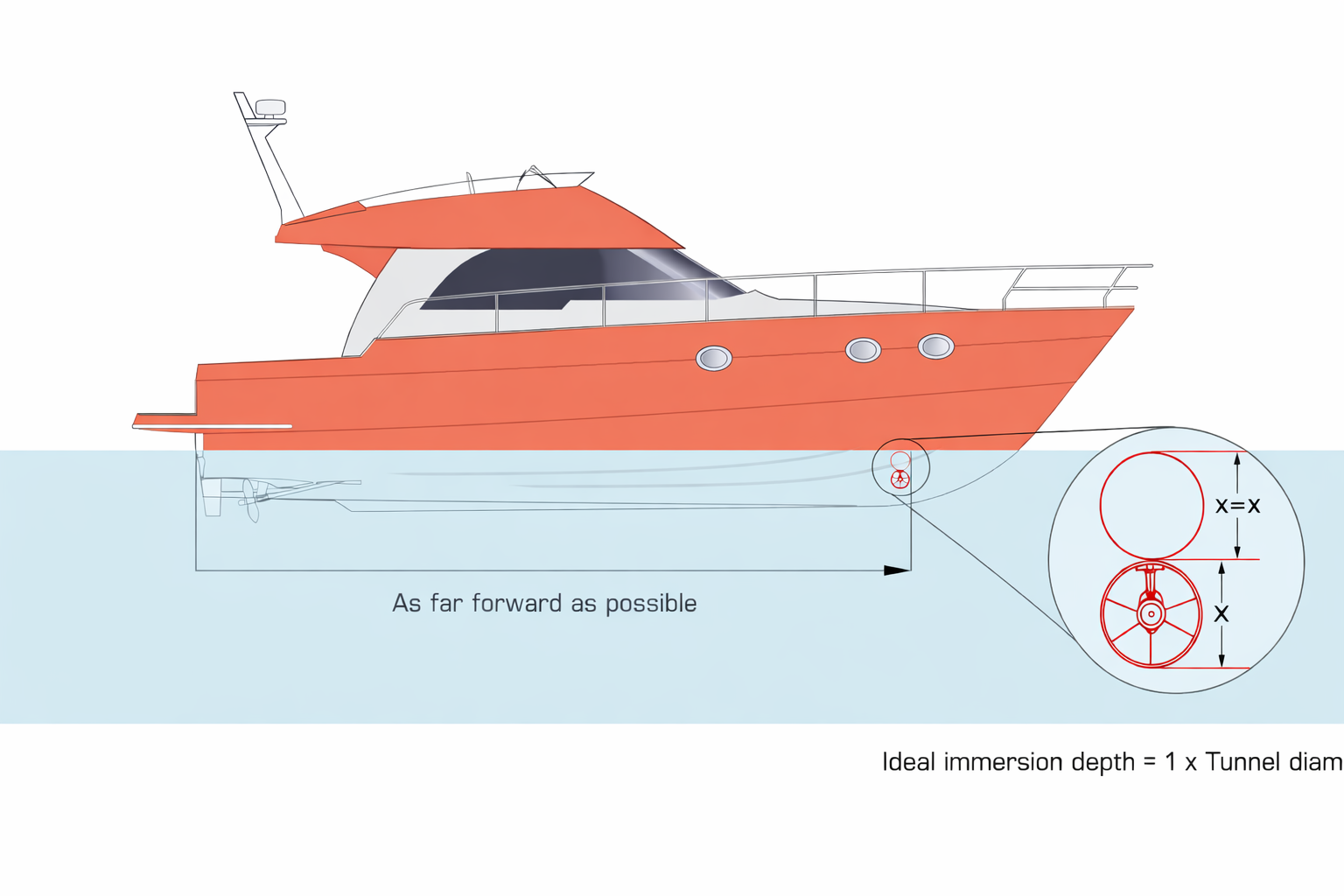
Figure 1. Typical bow thruster tunnel positioning and recommended immersion depth for optimal thrust efficiency.
Typical docking difficulties include:
-
Bow drift caused by crosswinds
-
Delayed turning response due to vessel inertia
-
Limited correction capability in tight spaces
-
Increased risk during single-operator docking
Bow thrusters provide independent lateral thrust, allowing precise positioning without forward propulsion.
How Electric Tunnel Thrusters Work
Electric tunnel thrusters are installed transversely inside the hull near the bow. When activated, the propeller accelerates water through the tunnel, generating sideways force that moves the bow port or starboard.
A modern system typically includes:
-
High-efficiency DC motor
-
Composite or metal drive leg
-
Hydrodynamically optimized propeller
-
Electronic control unit
-
Safety contactors and protection systems
-
Helm control interface
Manufacturers such as Max Power have introduced composite drive legs and maintenance-free gear systems designed to reduce corrosion and operational wear, while companies like Lewmar focus on integrated marine equipment ecosystems compatible with wider onboard systems.
Electric vs Hydraulic Systems
Electric Thrusters
Electric tunnel thrusters remain the most common solution for yachts between 20 and 70 feet.
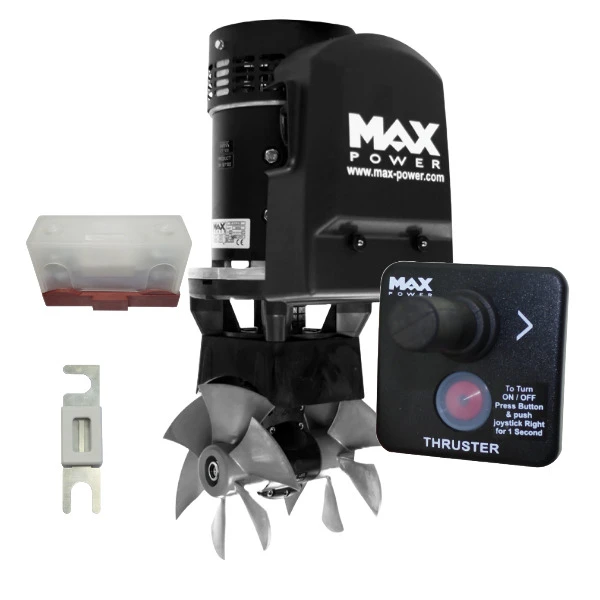
Figure 2. Max Power electric tunnel thruster unit with control interface components, illustrating the propulsion system responsible for generating lateral thrust and improving low-speed maneuverability during docking operations.
Key advantages:
-
Simplified installation
-
Reduced maintenance requirements
-
Immediate thrust response
-
Efficient integration with modern battery systems
They are particularly effective for short maneuvering cycles typical of marina docking.
Hydraulic Thrusters
Hydraulic systems are used on larger yachts requiring continuous operation and higher thrust output. These systems integrate with onboard hydraulic circuits and provide sustained performance under heavy loads.
Integration with Modern Docking Control Systems
One of the most significant developments in recent years is the integration of thrusters into unified vessel control environments.

Figure 3. Modern bow thruster control interfaces by Max Power, including joystick panels and wireless remote solutions designed for precise low-speed maneuvering and intuitive docking control on modern yachts.
Modern docking solutions combine:
-
Bow and stern thrusters
-
Engine controls
-
Joystick docking systems
-
Wireless remote controllers
-
Power monitoring electronics
This integration enables intuitive vessel handling where complex propulsion inputs translate into simple joystick movements.
Power Management and Installation Engineering
Thruster performance depends heavily on correct electrical system design.
Critical installation considerations include:
-
Proper battery bank sizing
-
Cable length and voltage drop calculation
-
Tunnel positioning and hydrodynamics
-
Structural reinforcement of the hull
-
Thermal load management
Incorrect electrical planning can significantly reduce thrust output even when high-quality equipment is installed.
Operational Benefits
Modern bow thruster systems deliver measurable improvements:
Enhanced Docking Precision
Fine control enables centimeter-level adjustments during berthing.
Reduced Crew Requirements
Captains can safely dock vessels with minimal assistance.
Increased Safety Margin
Thrusters compensate for environmental forces during maneuvering.
Equipment Protection
Lower collision risk reduces maintenance costs and structural damage.
The Evolution of Marine Maneuvering Technology
The industry is moving toward smarter maneuvering systems combining propulsion, automation, and digital monitoring.
Emerging trends include:
-
Proportional speed control
-
Energy-efficient composite propulsion components
-
Integration with hybrid-electric propulsion
-
Remote docking solutions
-
Smart diagnostic systems
Manufacturers and marine system integrators continue to refine thruster efficiency while simplifying operation for vessel owners.
Conclusion
Bow thruster technology has fundamentally changed how modern yachts operate in confined environments. By combining propulsion engineering, electronic control systems, and ergonomic interfaces, modern thrusters transform docking into a controlled and predictable process.
As marine technology advances, collaboration between equipment manufacturers and specialized marine system providers becomes increasingly important. Detailed technical guidance and system integration expertise offered by companies such as Gaelix Marine Service, an official supplier of advanced thruster solutions including Max Power systems, help ensure optimal performance and safe vessel operation.
For a professional recommendation based on your vessel specifications, visit our bow thruster selection service and receive expert guidance from Gaelix Marine Service engineers.