
From Case Files to Data Models: The Evolution of Legal Tech
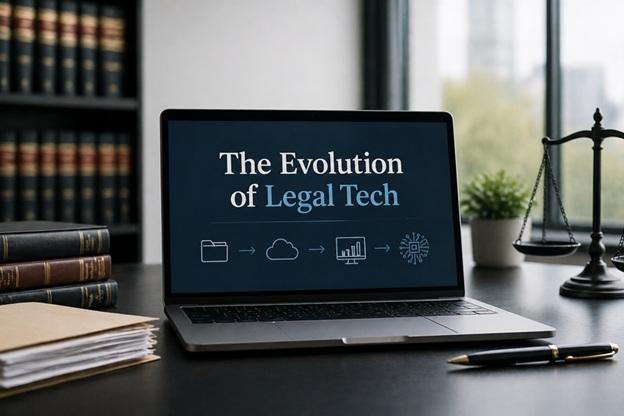
Legal work used to begin with a folder. Today, it begins with a dataset. Modern disputes can involve contracts, emails, GPS logs, cloud backups, payment records, security footage, chats, vehicle telematics, browser history, phone extractions, and AI-generated summaries. The legal question is still the same: What happened, who is responsible, and what evidence proves it? But the truth is now scattered across systems, devices, databases, and metadata trails.
This shift is pushing legal technology beyond document management and into data intelligence. Leading legal teams use software to preserve evidence, detect patterns, assess risk, test timelines, automate review, and turn fragmented information into defensible strategy.
Market estimates vary, but the trend is clear: legal work is becoming more digital, data-heavy, and dependent on technology infrastructure.
The First Stage: Legal Tech as Digital Storage
The first wave of legal technology solved a practical problem: paper was slow. Law firms, courts, insurers, corporate legal departments, and government agencies needed a better way to store, search, and retrieve legal documents.
Early legal tech systems focused on:
|
Function |
What It Replaced |
Why It Mattered |
|
Document management |
Physical filing cabinets |
Faster access to pleadings, contracts, letters, and exhibits |
|
Billing software |
Manual time sheets |
More accurate time tracking and invoicing |
|
Practice management tools |
Calendar books and spreadsheets |
Better deadline control and matter organization |
|
Legal research databases |
Print reporters and digests |
Faster case law and statute research |
|
E-filing systems |
Courthouse paper filings |
Lower friction in litigation administration |
This phase improved efficiency, but it did not fundamentally change how legal reasoning worked. Lawyers still reviewed documents one by one. Evidence still entered the case mostly as written material. Software acted like a better cabinet, not a strategic engine.
That model is now outdated because the legal file is no longer just a file. It is a living data environment.
The Second Stage: The Rise of E-Discovery and Evidence at Scale
E-discovery changed the legal profession by forcing lawyers to confront volume. A single commercial dispute or injury claim can now generate more digital material than an entire law firm once handled in a month.
Today, evidence may come from emails, Slack and Microsoft Teams chats, PDFs, spreadsheets, mobile data, SaaS records, system logs, and cloud documents. The challenge is no longer simply finding a document—it is identifying the right signal within millions of records while preserving privilege, chain of custody, and context.
The market reflects the scale of this shift. ComplexDiscovery projected e-discovery spending to grow from $16.89 billion in 2024 to $25.11 billion by 2029, driven by increasing data volumes, regulatory pressure, and demand for more advanced workflows.
This is where legal tech moved beyond storage. Modern review platforms now use:
- Analytics and clustering
- Duplicate detection
- Predictive coding and technology-assisted review
- Issue mapping and anomaly detection
As a result, legal teams can prioritize relevant material, group similar documents, and build stronger case strategies instead of reviewing everything sequentially. This evolution has also expanded the lawyer’s role, requiring fluency not just in relevance and privilege, but in data sources, preservation duties, metadata, collection scope, search validation, and review defensibility.
The Third Stage: Legal Data Becomes More Important Than Legal Documents
A document tells one version of events. Data can prove whether that version is complete.
In modern disputes, the most important evidence may not be a formal record. It may be a timestamp, a location ping, a deleted message, a file-access log, a sensor reading, or a pattern of communication across multiple systems. This is why legal tech has shifted from “find the document” to “reconstruct the event.”
For example, a personal injury dispute may involve police reports, medical records, insurance correspondence, vehicle data, phone location records, dashcam footage, weather conditions, repair invoices, and emergency response timelines. A firm working with a Denver personal injury lawyer may need to connect legal claims with digital evidence that shows movement, impact, timing, notice, or causation. The value is not in any single file. The value is in how the data points align.
That same logic applies across legal domains:
|
Legal Area |
Traditional Evidence |
Modern Data Evidence |
|
Employment disputes |
HR files and witness statements |
Access logs, chat records, productivity systems, device activity |
|
Contract disputes |
Signed agreements and emails |
Version history, approval workflows, CRM records, payment logs |
|
Personal injury |
Reports and medical records |
GPS data, telematics, surveillance video, phone metadata |
|
Cybersecurity litigation |
Policies and incident reports |
Network logs, SIEM alerts, authentication trails |
|
IP disputes |
Design files and testimony |
Repository commits, file metadata, source-code history |
|
Regulatory investigations |
Internal memos |
Audit trails, financial system logs, communication archives |
The legal file is no longer flat. It is relational. A case is built by connecting people, events, systems, locations, timestamps, and obligations.
Why AI Accelerated the Shift
Artificial intelligence did not create the legal tech revolution, but it accelerated it. AI became valuable because legal work already had a data problem.
Generative AI can help lawyers summarize long records, draft first-pass chronologies, compare contract clauses, extract obligations, identify inconsistent statements, and assist with legal research. The real transformation is not simply that AI can write legal documents. It is that AI can help lawyers interrogate large bodies of legal information faster.
The American Bar Association’s 2024 Legal Technology Survey shows that legal tech adoption is becoming ordinary infrastructure, not just an experiment for large firms. It reported that:
- 73% of firms used cloud-based legal tools
- 85% of litigators used electronic court filings
- 60% of firms had formal cybersecurity policies
- 80% of lawyers, according to Thomson Reuters’ 2025 Future of Professionals material, believe AI will transform their work within five years
But AI also creates a new legal risk: automation without verification. Courts have already seen problems with AI-generated filings and fabricated citations. That means legal AI cannot be treated as a general productivity shortcut. It must be governed by evidence standards, review protocols, source verification, privilege controls, and audit trails.
The New Legal Tech Stack
Modern legal technology is no longer one tool. It is a stack of interconnected systems.
|
Layer |
Purpose |
Practical Legal Value |
|
Intake and CRM |
Capture client, matter, and incident data |
Creates structured case information from day one |
|
Document management |
Store and organize legal materials |
Keeps pleadings, evidence, and correspondence searchable |
|
E-discovery |
Collect, process, review, and produce data |
Handles large-scale evidence review |
|
Legal research |
Find case law, statutes, and commentary |
Supports legal argument and risk assessment |
|
Analytics |
Detect patterns in cases, judges, claims, and outcomes |
Improves strategy and forecasting |
|
AI drafting and summarization |
Create first drafts and extract insights |
Reduces repetitive knowledge work |
|
Cybersecurity and compliance |
Protect confidential and privileged information |
Reduces breach and ethics risk |
|
Knowledge management |
Reuse internal expertise |
Prevents institutional knowledge loss |
The strongest legal organizations do not buy tools randomly. They design workflows. They define where data enters, how it is validated, who can access it, how it is preserved, and how it becomes evidence.
The Biggest Change: Legal Judgment Now Depends on Data Literacy
Legal expertise still matters. In fact, it matters more. But it now has to be paired with technical fluency.
A lawyer does not need to become a data scientist. But a modern legal professional must understand enough to ask better questions:
|
Legal Question |
Data-Aware Version |
|
Do we have the file? |
Do we have the complete source system, metadata, and version history? |
|
Is this document relevant? |
What event, actor, timestamp, or obligation does this record connect to? |
|
Can we produce this evidence? |
Was it collected defensibly and preserved with chain of custody? |
|
Did the other side disclose everything? |
Are there gaps in communication patterns, file sequences, or system logs? |
|
Can AI summarize this? |
Can the summary be traced back to reliable source material? |
This is the real evolution of legal tech. It is not about replacing lawyers with software. It is about replacing guesswork with structured, verifiable intelligence.
The Risks Legal Teams Cannot Ignore
The move from case files to data models creates powerful advantages, but it also introduces serious risks.
First, privacy risk increases because legal teams often handle sensitive medical, financial, employment, location, and personal communications data. Second, cybersecurity risk grows because law firms are high-value targets. Third, AI risk emerges when tools produce confident but unsupported outputs. Fourth, evidentiary risk appears when teams mishandle metadata, fail to preserve original sources, or rely on incomplete exports.
The legal industry cannot treat technology as an administrative purchase anymore. Every tool must be evaluated through four lenses:
|
Risk Area |
Core Question |
|
Confidentiality |
Who can access the data and where is it stored? |
|
Defensibility |
Can the evidence process be explained in court? |
|
Accuracy |
Can outputs be verified against original sources? |
|
Governance |
Are there clear policies for use, review, retention, and deletion? |
Technology strengthens legal work only when it is controlled. Without governance, it can create new vulnerabilities faster than it creates efficiency.
What the Next Phase Looks Like
The next phase of legal tech will not be defined by simple document automation. It will be defined by legal intelligence systems that can connect facts, rules, timelines, risks, and outcomes.
Expect to see more development in:
- Matter-level data models that connect facts, claims, parties, evidence, deadlines, and damages.
- AI-assisted chronology builders that turn fragmented records into verified event timelines.
- Litigation analytics that compare judges, venues, motion patterns, and settlement behavior.
- Contract intelligence systems that monitor obligations after signing, not just during review.
- Evidence dashboards that combine documents, metadata, communication trails, and external data.
- Secure legal AI environments with permission controls, audit logs, and source-grounded answers.
The legal profession is moving from reactive review to proactive intelligence. Instead of waiting for a dispute to become unmanageable, better systems will flag risk earlier, preserve evidence faster, and help legal teams understand the factual landscape before positions harden.
Final Verdict
The evolution of legal tech is not a story about paper becoming PDFs. It is a story about legal work becoming data-driven.
Case files still matter, but they are no longer enough. The modern legal record includes structured data, unstructured communication, metadata, cloud activity, device signals, and machine-generated outputs. The legal teams that succeed will be those that can combine traditional judgment with technical discipline.
The future of legal tech belongs to firms and legal departments that treat every matter as both a legal problem and an information architecture problem. The lawyer’s role is not disappearing. It is becoming more analytical, more evidence-aware, and more dependent on the ability to turn complex data into clear, defensible legal truth.