
Early Market Clues: How Real-Time Activity Shapes Trading Decisions
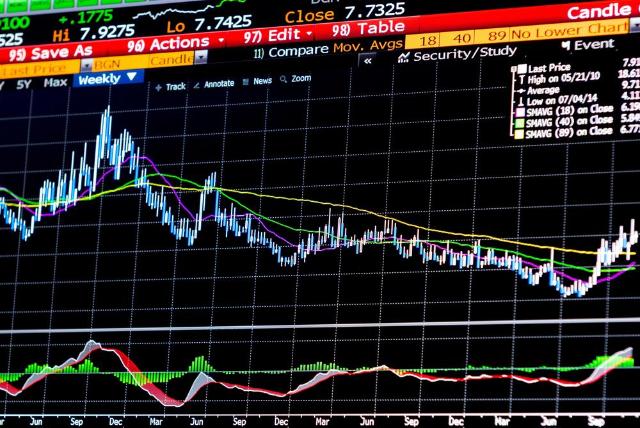
Image Source: depositphotos.com
Most traders rely on lagging indicators, metrics that confirm trends only after they’ve occurred. As Investopedia explains, these indicators “reflect the outcomes of past events,” leaving traders a step behind when momentum shifts. In contrast, leading indicators point to potential moves before they appear in price data — the kind of foresight that separates anticipation from reaction.
But what if you could see the market’s next move developing before it ever prints on a chart? The key isn't just reading the tape better; it's reading the real world better. For U.S. energy traders, the most potent hidden signals don't come from price action—they come from fundamental, on-the-ground events like a new well coming online or a change in pipeline flow. Having a real-time, granular view into this physical supply chain is the ultimate leading indicator.
Today, advanced platforms provide this deep visibility, leveraging a comprehensive oil and gas well database to help traders anticipate market shifts before they happen. This article will guide you through identifying these hidden signals, from classic technical patterns to the cutting-edge of AI-driven fundamental analysis, so you can start making proactive, high-conviction trading decisions.
Key Takeaways
- Early technical signals like volume spikes, key candlestick patterns, and MACD crossovers offer glimpses into shifting market momentum before overt price changes occur.
- Combining multiple, non-correlated signals—a practice known as confluence—significantly increases trade confidence and helps filter out market noise.
- The most powerful "hidden signals" in energy markets come from real-world, fundamental data, such as real-time oil and gas well activity monitored by AI and alternative data sources.
- Proactive trading based on early signals requires rigorous risk management, including defined stop-losses, disciplined position sizing, and clear exit strategies.
From Chart Noise to Market Intelligence: Decoding Early Technical Signals
Before a trend becomes obvious, it leaves footprints. These early technical signals are the first clues left by institutional investors and informed market players. Understanding how to spot them is the first step in shifting from a reactive to a proactive trading mindset. They provide a window into market psychology and momentum before the crowd catches on.
The Footprint of Smart Money: Why Volume is the Ultimate Truth Teller
Price can be misleading, but volume often tells the truth. Significant price moves almost always require the fuel of substantial trading volume. This is why experienced traders pay close attention to volume anomalies. A sudden surge in volume without an immediate, corresponding price jump can be a powerful hidden signal.
This pattern often indicates large-scale accumulation (buying) or distribution (selling) by institutional players. They are building or exiting a position quietly, and the volume is the footprint they can't hide. When you see volume spike near a key support or resistance level while the price remains relatively stable, it’s a clear alert that a significant move could be imminent.
The Momentum Precursor: Using MACD and Signal Lines
The Moving Average Convergence Divergence (MACD) indicator is a classic tool for gauging momentum. While many traders wait for the MACD line to cross the zero line to confirm a trend, the earliest signal comes from its relationship with the "signal line."
The MACD measures the relationship between two moving averages of an asset's price. A "signal line," which is a moving average of the MACD itself, is plotted on top. When the MACD line crosses above its signal line, it’s a bullish signal indicating that upside momentum is accelerating. Conversely, a cross below the signal line suggests downside momentum is building. This crossover often happens well before the price chart shows a clear change in trend, giving you a valuable head start.
Beyond technical indicators, traders gain a real edge when market signals are validated with on-the-ground intelligence. Real-time insights from U.S. oil and gas drilling activity reveal changes in rig counts, completions, and new production before they appear in public datasets. When combined with technical analysis, this operational perspective helps traders interpret momentum with greater context—turning early data into timely, confident market decisions.
The Confirmation Principle: Combining Signals for High-Confidence Trades
Relying on a single indicator is a recipe for disaster. The market is filled with noise, and any one signal can easily be a false alarm, leading to whipsaws and unnecessary losses. The key to building confidence and improving your win rate is the principle of "confluence"—seeking confirmation from multiple, non-correlated signals that all point in the same direction.
Confluence is about building a compelling case for a trade. Instead of acting on a single clue, you wait for several pieces of evidence to align. This multi-layered approach filters out random noise and elevates a potential trade idea from a low-probability guess to a high-conviction setup.
Consider this hypothetical scenario for an energy stock approaching a known support level:
- Signal 1 (Low Confidence): A single "hammer" candlestick forms, suggesting a potential bottom. This is a start, but it could easily be a false signal.
- Signal 2 (Medium Confidence): The hammer is accompanied by a significant surge in buying volume. Now, the signal is stronger. It indicates that institutions may be stepping in to defend this price level.
- Signal 3 (High Confidence): At the same time, the MACD indicator shows a bullish crossover below its signal line. This confirms that downside momentum is fading and upside momentum is beginning to build.
When all three signals align, the trade idea transforms from a "maybe" into a high-probability setup. While this technical confluence is powerful, the ultimate confirmation comes from aligning these chart-based signals with what's happening in the real world.
The Modern Edge: How AI and Real-World Data Uncover Signals First
Technical signals are powerful, but they are still derived from price and volume—data available to everyone. The true competitive edge in modern markets comes from seeing the fundamental drivers of price before they are widely reported and priced in. This is where artificial intelligence and alternative data sources have become game-changers, especially in the complex world of energy trading.
Traditional data sources, like the weekly inventory reports from the U.S. Energy Information Administration (EIA), are vital for understanding the market. However, they are inherently lagging; they tell you what has already happened. By the time an EIA report is released, the market has often already moved.
This is where AI and alternative data create an unparalleled advantage. AI algorithms can process vast, unstructured datasets in real-time—from satellite imagery and sensor readings to maritime vessel tracking—to detect subtle patterns that are invisible to the human eye. As financial researchers have noted, institutional traders and hedge funds are increasingly using this type of data to generate "alpha," or market-beating returns. One article from the Journal of Financial Data Science highlights how satellite imagery can be used to monitor economic activity, providing predictive signals long before official statistics are published.
Imagine seeing that bullish volume spike on an oil ETF again. By itself, it's just a signal. But if you can correlate it with real-time data showing an unexpected production outage at a major oil field, that signal transforms from a probability into a high-conviction trade thesis. You are no longer just reading the chart; you are understanding the fundamental reason why the chart is about to move.
Your Edge in a Reactive Market
The journey from a reactive trader to a proactive one is a transformational shift. It moves you from chasing price to anticipating the fundamental forces that drive it. This is achieved by first mastering early technical signals to understand market sentiment and then validating those signals with the ultimate confirmation: real-world, fundamental data.
In today's hyper-competitive US energy markets, the definitive advantage isn't found by staring harder at the charts. It's found by seeing the physical world of supply and demand with unparalleled clarity and speed. By leveraging innovative data and AI, you can move beyond mere reaction and begin to truly optimize your decisions, anticipating market shifts before they become common knowledge.