
Document Automation Best Practices for DevOps Reporting and Compliance
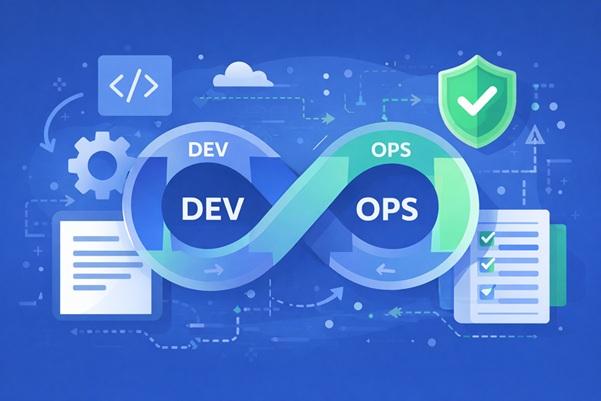
DevOps has streamlined how teams build, test, and deploy software, but reporting and compliance often remain outside the automated pipeline. Release summaries, test reports, and audit records are still frequently created manually, pulled from scattered tools, and updated only when needed. This slows delivery and increases the risk of inconsistency, especially as systems and compliance requirements grow more complex. To scale DevOps sustainably, documentation can no longer be treated as an afterthought—it needs to become a reliable, automated output of the pipeline itself.
Understanding the Role of Documentation in DevOps Pipelines
In many teams, documentation is still treated as something created after delivery, mainly for compliance or record-keeping. In reality, reports and compliance documents play a much deeper role in DevOps pipelines. They capture what was built, tested, deployed, and changed—making system behavior visible beyond the pipeline itself.
When documentation is generated directly from pipeline activities, it becomes a by-product of delivery rather than a separate task. This improves traceability, reduces manual effort, and ensures reports reflect what actually happened in each release. More importantly, well-structured documentation helps teams communicate across engineering, security, and operations without slowing the delivery process.
What Makes DevOps Reporting Hard to Scale
Reporting and compliance challenges in DevOps rarely come from a single issue. They usually emerge from a combination of system complexity, process gaps, and growing delivery pressure.
Fragmented data sources. Data used for reports often lives across multiple sources—CI pipelines, test frameworks, monitoring systems, and deployment logs—each with its own structure and update cadence. It makes consolidation slow and error-prone.
Evolving compliance requirements. Different teams, environments, and stakeholders expect different formats, while compliance standards continue to evolve. When reports rely on manual aggregation or rigid templates, even small changes introduce friction.
Limited traceability. Manually assembled reports make it difficult to trace results back to their original systems or timestamps.
What Effective Document Automation Looks Like in Practice
Effective document automation in DevOps is not about generating more documents. It’s about producing the right information at the right time, directly from delivery workflows. When it works well, teams experience clear, tangible outcomes:
- Reports are generated automatically using data from builds, tests, and deployments.
- Documentation follows a consistent structure across releases and environments.
- Changes in system behavior are reflected in reports without manual updates.
- Compliance records remain up to date and easy to trace over time.
- Engineers spend less time assembling reports, while stakeholders gain clearer visibility.
Best Practices for Automating Compliance Documentation
How it is specifically applied to compliance documents:
Best Practice 1: Generate Reports Directly from Pipeline Data
One of the most effective ways to reduce reporting friction is to generate reports directly from pipeline data instead of recreating them manually. Build results, test outcomes, and deployment metadata already exist in structured formats and should flow straight into reporting outputs.
By treating pipeline data as the single source of truth, teams reduce inconsistencies and improve traceability. Reports generated at this stage accurately reflect what was released and when, making them more trustworthy during audits and reviews. This approach also removes unnecessary manual steps that often become sources of delay and error.
Best Practice 2: Separate Data Logic from Document Structure
Compliance requirements change frequently, while underlying system data tends to remain stable. When data processing logic is tightly coupled with document formatting, even small reporting changes can create ongoing maintenance overhead.
A more sustainable approach is to keep data transformation and validation independent from document structure. This allows teams to adjust report layouts, templates, or compliance formats without reworking core automation logic. As a result, documentation workflows remain adaptable and easier to maintain over time.
Best Practice 3: Treat Compliance Documents as Living Outputs
Compliance documentation is often created only when audits or reviews are approaching.
In fast-moving DevOps environments, this reactive approach leads to gaps, outdated records, and unnecessary stress.
Instead, compliance documents should be treated as living outputs of the delivery process. Each deployment, test run, or configuration change can automatically update relevant records, creating a continuous history rather than a one-time snapshot.
This approach depends on the ability to edit and update documents programmatically, ensuring that documentation evolves alongside the system without manual intervention. It improves traceability and reduces the effort required to reconstruct events later.
When compliance evolves alongside the system, documentation supports delivery instead of slowing it down.
Best Practice 4: Build Automation for Auditors, Not Just Engineers
Automated reports often work well for engineering teams but fall short during audits. Logs are complete but hard to follow, data is accurate but poorly structured, and key decisions are buried in technical details.
Effective documentation automation considers the needs of auditors and compliance reviewers. Reports should follow a consistent structure, highlight relevant changes, and make it easy to trace outcomes back to pipeline activities. The goal is not to expose every internal detail, but to present clear, repeatable evidence.
In some cases, supporting records already exist in Word documents, such as approvals or policy acknowledgements. The ability to extract data from Word documents helps teams surface relevant evidence and align it with pipeline-generated reports, making audits faster and more reliable.
Common Pitfalls in DevOps Document Automation
One common mistake is focusing on file generation rather than clarity. Reports may be produced automatically, but without a clear structure or summary, they add little value to reviewers.
Another issue is over-automation. Complex workflows that are difficult to understand or modify often discourage teams from maintaining them, especially when reporting requirements change.
Finally, some teams automate reports but ignore versioning and traceability. Without a clear history of what changed and when, even automated documentation can fall short during audits or incident reviews.
How to Start Small Without Rebuilding Your Pipeline
Effective document automation does not require a full overhaul of existing DevOps workflows. Teams often see the most progress by identifying one recurring compliance document and automating its generation first.
Starting with a narrow, well-defined reporting task allows teams to validate assumptions, refine document structure, and build confidence in automation. Once the process proves reliable, it can be expanded incrementally to cover additional reports or environments—without disrupting delivery or introducing unnecessary complexity.
Conclusion
In mature DevOps practices, documentation is no longer a manual obligation added after delivery. When reports and compliance records are generated automatically from pipeline activity, they become reliable system outputs rather than sources of friction. This shift improves traceability, reduces operational risk, and allows teams to scale without slowing down. By treating documentation as part of the delivery process itself, DevOps teams can maintain speed while meeting reporting and compliance demands with confidence.