
From cloud costs to cloud value: The role of performance analytics in increasing ROI
Image Source: depositphotos.com
Many cloud providers offer services that scale with usage. However, unanticipated overutilization of compute instances, serverless functions, or managed databases can quickly drive up costs. Managing these resources effectively is crucial for keeping cloud spending predictable.
For example, a company using AWS Lambda noticed high monthly bills despite a modest number of function executions. Investigation revealed that the associated S3 storage and supporting services were generating additional charges. Similarly, a team on Google Cloud Platform (GCP) discovered that idle BigQuery queries and underutilized virtual machines were causing unexpected expenses. These incidents highlight how even minor components can lead to unforeseen costs if not properly monitored. Continuous monitoring across your cloud environment is therefore essential to avoid surprises.
How cloud performance monitoring maximizes ROI for businesses
According to the Flexera 2025 State of the Cloud Report, 84% of organizations struggle to manage their cloud expenses. Many businesses provision resources based on guesswork, react to problems post-facto, and overspend by up to 30%. Each delay, idle instance, or uncaught error bleeds money. Cloud costs aren’t rising because of mistakes—they’re growing because issues aren’t visible.
While native cloud tools can track surface-level metrics, businesses often miss the correlated view across services that drives smarter decisions and cost control.
The high cost of blind spots in cloud environments
Cloud environments are powerful and flexible, but they can become financial and operational liabilities without continuous visibility. Without comprehensive monitoring, teams operate reactively, discovering issues only after they’ve impacted performance, security, or budgets.
Here are three common and costly outcomes of insufficient monitoring:
Unexpected cost spikes
Overprovisioned compute instances, idle resources, or non-production services running 24/7 can cause small missteps to compound quickly. For example, AWS EC2 instances left running overnight or GCP Compute Engine VMs in testing environments can significantly inflate monthly bills.
Performance degradation
Bottlenecks in applications, databases, or APIs go unnoticed until users are affected. Continuous monitoring helps identify issues before they escalate. For instance, monitoring multi-region Kubernetes clusters across AWS, GCP, and Azure ensures workloads remain performant even under heavy traffic, avoiding downtime or slow application response times.
Security vulnerabilities
Security misconfigurations or anomalous activity can go undetected for months without proper monitoring. Observability platforms can detect anomalies in CPU usage, network traffic, or access events across any cloud, enabling faster threat triage. For example, a GCP user detected an unusual spike in BigQuery queries that turned out to be an unauthorized third-party integration; timely alerts prevented larger data exposure.
Tips for maximizing ROI with cloud monitoring
Visibility drives efficiency. To achieve measurable ROI, businesses need more than data collection—they need actionable insights, automation, and smart resource management. Here’s how to implement effective cloud monitoring:
Implement comprehensive monitoring tools
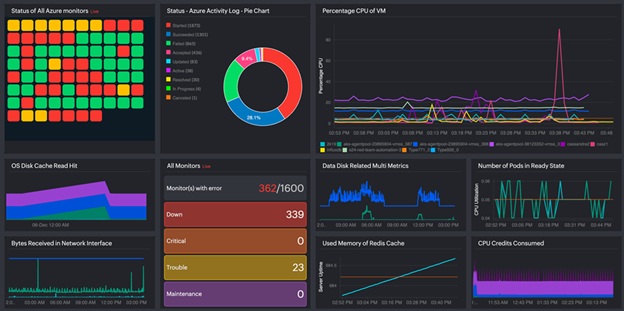
Modern cloud monitoring tools provide full-stack observability across compute, storage, serverless functions, and managed databases. Unified dashboards can visualize performance, availability, and utilization metrics across multiple clouds. End-to-end traceability across applications helps identify issues before they impact users.
Optimize resource utilization
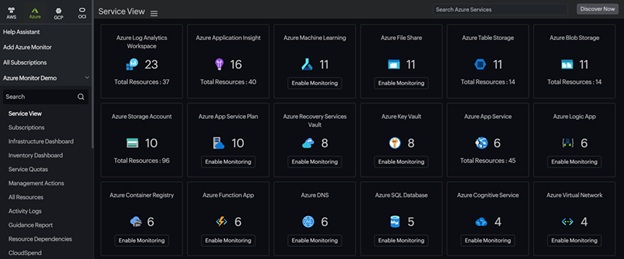
Anomaly detection capabilities help identify unusual spikes in usage or performance issues, allowing teams to prevent crises proactively. Monitoring tools can provide capacity planning insights, dynamic thresholds, and trend analysis to ensure resources match actual needs across AWS, Azure, GCP, or hybrid environments.
Enhance security posture with continuous monitoring
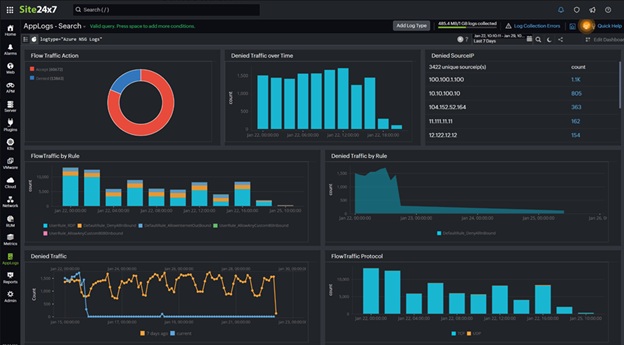
Monitoring platforms track access logs, events, configuration changes, and network activity. Monitoring cloud-specific logs augments visibility and allows IT and security teams to detect suspicious login attempts, privilege escalations, or unauthorized resource usage quickly. Multi-cloud monitoring ensures consistency in security posture regardless of the provider.
Automate alerts and remediation workflows
Downtime is costly. Automated incident management, integrations with IT service management (ITSM) tools, and auto-remediation scripts minimize operational disruptions. Alerts can be customized for severity and delivered via multiple channels, with automated actions triggered to maintain service availability across clouds.
Leverage cost optimization analytics
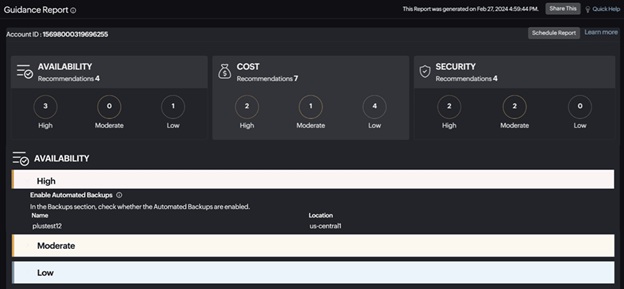
Cost analytics tools visualize consumption patterns and map actual usage to billing data. Teams can detect underutilized instances, oversized plans, and redundant services across multiple clouds. Alerts on unusual cost spikes enable proactive budget control, ensuring cloud spending is aligned with business needs.
Conclusion
A structured monitoring strategy allows businesses to not only identify problems but also solve them faster, prevent recurrence, and optimize resources. Visibility, performance optimization, security monitoring, and cost analytics all contributes directly to cloud ROI. By eliminating resource waste, catching anomalies early, and aligning usage with actual demand, businesses extract maximum value from their cloud investments.
Cloud monitoring tools empower IT, DevOps, and finance teams to transform data into actionable insights, driving performance, cost efficiency, and operational excellence across AWS, Azure, GCP, OCI, and hybrid environments. Site24x7's cloud montioring tool provides a comprehensive observability platform that enables organizations to monitor applications, infrastructure, and cloud resources in real time, detect anomalies, automate remediation, and optimize costs—all from a single unified dashboard. With Site24x7, businesses can turn monitoring into measurable ROI, ensuring that every cloud investment delivers tangible business value.