
Best Junk Removal Companies for E-Waste Disposal
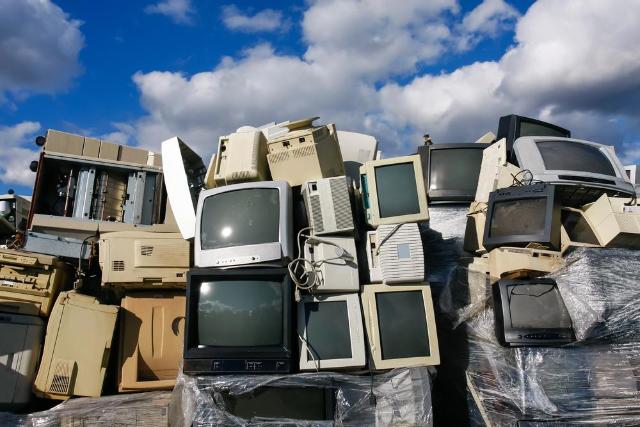
Image Source: depositphotos.com
In offices and homes across the country, a silent digital graveyard is growing. It lives in overflowing IT closets, in basements stacked with obsolete monitors, and in the ubiquitous "junk drawer" filled with old smartphones and tangled chargers. This accumulation of electronic waste, or e-waste, is more than just clutter; it represents one of the most significant and complex operational challenges for modern businesses and households. The sheer volume of discarded electronics is staggering, with global e-waste generation expanding at an alarming rate. For operations managers and IT professionals, this is not a simple disposal task—it's a multifaceted problem that touches upon environmental responsibility, data security, and regulatory compliance.
The stakes involved in mishandling e-waste are incredibly high. Buried within the sleek casings of our devices are a host of toxic materials, including lead, mercury, cadmium, and other hazardous substances that can leach into soil and groundwater if sent to a landfill, causing significant environmental damage. This environmental risk is compounded by a critical security vulnerability. Every discarded hard drive, company phone, or server contains a ghost of its former life: data. Without certified destruction, this data can be recovered, creating a potential data breach that could expose sensitive corporate information, customer details, and intellectual property. For any business, the consequences of such a breach can be catastrophic, both financially and reputationally.
This is where professional junk removal and e-waste disposal services become essential. They offer more than just a truck and a crew; they provide a form of outsourced risk management. The right partner can transform a complex operational burden into a streamlined, compliant, and secure process. This guide is designed for the modern operations leader, providing a comprehensive analysis of the e-waste disposal market. It will dissect the different service models available, evaluate the key players, and offer a clear framework for selecting a partner that aligns with your company's operational, financial, and ethical standards.
How to Vet Your E-Waste Disposal Partner
Selecting an e-waste disposal partner is a strategic decision that reflects a company's operational values and brand identity. It's not merely about finding the lowest bidder to haul away old equipment. And to make an informed choice, a clear evaluation framework is necessary. The following criteria represent the modern checklist for vetting a potential partner, moving beyond simple cost-per-pound metrics to assess true operational value and risk mitigation.
1. Environmental Stewardship & Sustainability
A company's commitment to sustainability is no longer a footnote in an annual report; it's a core component of its brand and a critical expectation from customers and stakeholders. A disposal partner's environmental practices should mirror this commitment. True recycling extends far beyond simply diverting waste from landfills. Top-tier providers should be able to offer detailed documentation and reporting that can support initiatives like LEED (Leadership in Energy and Environmental Design) certification for green building projects. This demonstrates a verifiable commitment to sustainable practices.
2. Data Security Protocols
In the digital age, a discarded hard drive is not just a piece of hardware; it's a potential liability. Therefore, a disposal partner's approach to data security is non-negotiable. It is crucial to differentiate between "secure transport" and "certified data destruction." While many services ensure that your equipment is transported securely to a recycling facility, this does not guarantee that the data on those devices has been rendered unrecoverable.
3. Operational Footprint and Scalability
The operational model of a disposal partner directly impacts its ability to meet your needs, especially if your business operates across multiple locations. The market is comprised of several distinct models, each with its own strengths and weaknesses. National franchises offer brand consistency and a standardized service experience, but this can sometimes come at the cost of flexibility. Large, vertically integrated corporations possess immense infrastructure but may lack the agility for smaller, on-demand projects. Local, independent providers offer deep regional knowledge and personalized service but have a limited geographic reach.
For a business with a national or regional footprint, the primary operational challenge is managing this fragmented landscape. The choice is often between juggling multiple local vendors, each with different pricing, scheduling systems, and compliance standards, or committing to a single national provider that may not be the best fit for every location. The ideal solution is one that can bridge this gap, offering the simplicity of a single point of contact with the scalability and local expertise needed to service a distributed network of offices or facilities.
A Look at National Full-Service Haulers
The junk removal landscape includes several prominent national brands, each with a distinct operational model. Understanding these players is essential for contextualizing the market and choosing the right fit for your specific e-waste disposal needs.
1. Grunber: The Modern Logistics Platform
Grunber takes a different approach from traditional haulers. Instead of operating its own fleet of trucks, it functions as a technology-driven logistics platform. This model connects customers with a nationwide network of vetted, insured, and locally-owned hauling professionals. For businesses and individuals, Grunber serves as a single point of contact for scheduling and support, while the on-the-ground work is handled by a local expert who knows the area's specific disposal facilities and regulations.
This asset-light structure offers unique flexibility. It's designed to provide the reach of a national company with the on-the-ground knowledge of a local service, which can lead to more efficient routing and competitive pricing. For e-waste, Grunber's model smartly separates the logistics of removal from the sensitive task of data destruction. This allows companies to manage their own data wiping or shredding in-house or with a specialized ITAD vendor before pickup, giving them full control over their security protocols. This makes Grunber a highly adaptable option for a wide range of junk removal needs, from a few household items to complex, multi-location corporate cleanouts.
2. 1-800-GOT-JUNK?: The On-Demand Speedster
Operating on a national franchise system, 1-800-GOT-JUNK? has built its brand on the promise of speed and convenience. Their "same-day service" offering has set the industry standard for rapid response, making them an excellent choice for time-sensitive situations. Their model is ideally suited for residential cleanouts or small office purges where the primary goal is the swift removal of general bulky items, which can include consumer electronics. The process is user-friendly: customers book an appointment, a two-person team arrives to provide an on-site, no-obligation estimate, and if the price is accepted, they haul the items away immediately.
Their pricing is transparently volume-based, determined by how much space the items take up in their truck. While the company is committed to responsible disposal and makes every effort to recycle or donate items, it is fundamentally a generalist junk removal service. It is not a specialized e-waste processor. For large-scale corporate IT asset disposition that requires detailed tracking, chain-of-custody documentation, or certified data destruction, their standardized model may not provide the necessary level of specialized service and reporting.
3. Waste Management (WM): The Industrial Behemoth
Waste Management is in a category of its own, operating as a massive, vertically integrated corporation that owns and manages its own landfills, transfer stations, and recycling facilities. This gives them an unparalleled level of control over the entire waste stream and an infrastructure that is unmatched in the industry. WM is the go-to partner for large commercial, industrial, and municipal contracts that require comprehensive, long-term waste management solutions. Their services extend far beyond simple pickup, encompassing everything from dumpster rental San Diego to complex industrial waste processing.
For e-waste, WM offers specialized corporate services and a particularly convenient "Recycle by Mail" program. This service provides businesses and individuals with prepaid shipping boxes to mail in smaller electronics, light bulbs, and batteries for proper recycling, effectively keeping harmful materials like mercury out of the environment. Their pricing for commercial clients is typically contract-based, reflecting a more integrated, long-term partnership model. However, this industrial scale can make them less agile and potentially more expensive for smaller, on-demand jobs. The corporate structure, while efficient for large accounts, may feel less personal and responsive compared to smaller, more specialized operators.
4. College Hunks Hauling Junk & Moving: The Customer-Service Champion
College Hunks Hauling Junk & Moving has carved out a significant market share by building its brand around a core promise of professionalism and exceptional customer service. Their acronym, H.U.N.K.S. (Honest, Uniformed, Nice, Knowledgeable, Service), encapsulates their business philosophy. Like 1-800-GOT-JUNK?, they operate on a national franchise model, ensuring a consistent service experience across their locations. They consistently receive high marks for the courtesy and professionalism of their teams.
A key strength of their model is a strong emphasis on donation. College Hunks has established robust partnerships with charitable organizations like Goodwill, making them an excellent choice for removing functional items, including electronics, that can be given a second life. This aligns perfectly with the "reuse" tenet of the sustainability hierarchy, often the most environmentally beneficial option. Their pricing model is also based on on-site, volume-based estimates. However, like other generalist haulers, they are not specialists in the complexities of e-waste. While they will responsibly handle and recycle non-functional electronics, they do not offer services like certified data destruction or detailed asset tracking required for corporate IT compliance. Their primary value lies in their service quality and their ability to divert usable goods from the waste stream.
The Final Verdict: Matching the Model to Your Mission
The journey through the e-waste disposal landscape reveals a clear truth: there is no single "best" company, only the best model for a specific mission. The optimal choice is a direct function of your organization's unique priorities, whether they be breakneck speed, industrial scale, ironclad data security, or an agile, modern approach to logistics. The selection process, therefore, begins with an internal assessment of what matters most to your operation.
Recapping the archetypes, the path to a decision becomes clearer. The on-demand national franchises like 1-800-GOT-JUNK? are built for speed, offering an unparalleled solution for simple, urgent cleanouts where convenience is the primary driver. The industrial titans like Waste Management provide the comprehensive, integrated infrastructure required for large-scale, long-term corporate contracts. Service-oriented franchises like College Hunks excel when items have a potential second life, leveraging strong donation partnerships to prioritize reuse. For businesses that need a blend of national reach and local flexibility, the technology platform model offered by companies like Grunber provides a modern alternative by connecting customers to a network of vetted local haulers. And for organizations in highly regulated fields, the certified, auditable processes of a dedicated ITAD specialist are non-negotiable.
Each of these models, however, involves a trade-off. Speed can come at the expense of specialization. Scale can limit flexibility. A focus on donation is only viable for functional items. This complex interplay of strengths and weaknesses can be distilled into a clear comparative framework.