
9 Third-Party Risk Monitoring Tools That Actually Cut Vendor Assessment Time

Nearly one in three cyber breaches now start with a supplier, McKinsey found in 2024. A single vendor review cycle often spans 3 to 5 weeks due to manual evidence chasing, according to Forrester’s 2024 State of Third-Party Risk Report. And a May 2025 Gartner brief warns that this “perfect storm” of attacks, supply-chain shocks and new regulations is forcing boards to modernize third-party risk—fast.
We’re here to help. Below, you’ll meet nine tools that shrink weeks of spreadsheet back-and-forth to same-day insight by automating evidence collection, reusing shared data or monitoring vendors 24/7. Short read, clear examples—let’s get to work.
Why segments beat one-size-fits-all lists
Security teams handle about 45 cybersecurity tools on average, according to Gartner’s 2024 research. Add nine more TPRM platforms to a single “top 10” list, and buyers end up comparing questionnaire bots with 24/7 threat radars that solve very different problems.
Grouping the nine platforms by their main bottleneck—paperwork automation, assessment reuse or live monitoring—reflects how teams actually shop for help. Nearly 38 percent of risk-software buyers are still stuck in spreadsheets, Gartner’s 2025 survey found. Others drown in duplicate questionnaires or chase headline-driven breaches. Segments let you jump straight to the right fix, trimming decision time before the next vendor-onboarding request hits your inbox.
How we picked the nine time-saving standouts
Gartner Digital Markets lists more than 1,000 risk-management products today (see the 2024 Gartner Digital Markets analysis). We trimmed that universe to a longlist of 45 TPRM platforms and then applied three filters:
- Clock impact. We mapped each assessment step (evidence collection, questionnaire scoring, monitoring, remediation) and kept only tools that documented hours saved at any point.
- Independent proof. Each platform needed analyst coverage, a sizable customer base or public case studies that showed double-digit time cuts. Marketing claims alone didn’t count.
- Breadth at scale. Finalists had to excel in at least one lever—automation, continuous monitoring, exchange data reuse, compliance mapping or guided remediation—and deliver that value for hundreds of vendors, not just a few.
These filters narrowed 45 contenders to the nine you’re about to meet.
End-to-end automation & AI platforms
Manual vendor reviews still consume about 15–20 hours of administrative time per supplier, according to Gartner’s 2024 Market Guide for VRM. Vanta’s telemetry shows customers who automate third-party reviews spend up to 50 percent less time on each assessment, and customer telemetry data indicates approaching 90 percent when AI handles the evidence mapping.
Put simply, automation can turn a 47-hour slog into a same-day task.
Why automation & AI slash assessment cycles
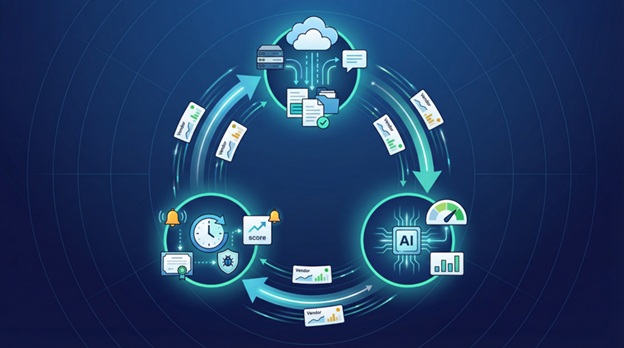
- Evidence on autopilot. Tools connect to cloud consoles, ticketing systems and audit repositories, then collect proofs without an email tag.
- Instant scoring. AI maps each artifact to SIG, ISO or NIST controls and surfaces gaps while you work on other tasks.
- Continuous refresh. Scores update when a certificate expires or a new CVE appears, so you never start from zero.
Result: reviews that once clogged the calendar land in hours, not weeks.
Vanta — automated third-party risk in real time
Early users of Vanta’s third-party risk management platform reported 50–90 percent faster reviews thanks to automatic evidence collection, according to BetaNews coverage from 2024. Connect Vanta to a supplier’s cloud stack, and the platform pulls proofs, maps them to controls and flags gaps the moment they appear. Dashboards roll every signal into an executive-ready score, while workflows nudge vendor contacts and track remediation. You stay in oversight mode, not chase mode.
Black Kite — AI answers the questionnaire for you
The UniQuE AI engine ingests a vendor’s policies and audits, then maps them to SIG and ISO controls, cutting a four-to-six-week task to about 60 minutes, Elasticito’s 2024 field test showed. Continuous external scans, dollar-loss estimates and compliance gap maps appear in one pane, so you stop juggling multiple tools.
Panorays — tailored questionnaires that adjust on the fly
Panorays starts with an external scan, scores baseline hygiene and lets that score decide the next questions. A low-risk SaaS gets a lighter questionnaire, while a shaky payments provider receives deeper scrutiny. Card Processing International compressed weeks of work to one day across 200 vendors, and Markerstudy now vets 500 suppliers a year while saving more than 100 hours each week.
Prevalent — automation plus human expertise on tap
Prevalent pairs always-on software with on-call specialists. Customers report spending 50 percent less time on assessments and receiving responses 8.3 days faster on average, according to Prevalent case studies. The platform auto-scores SIG, ISO or NIST questionnaires, tracks breach chatter and dark-web leaks, and offers analyst “health checks” when vendors stall. Software handles routine tasks; experts catch the edge cases.
Shared-data / exchange networks
Why create a fresh questionnaire every time when someone else already did the heavy lifting? Exchange platforms turn completed assessments into a shared utility. OneTrust’s Exchange connects you to thousands of pre-populated risk profiles, focusing on deep, attested data rather than just passive scans. CyberGRX reports that its marketplace model cuts completion time and validation effort without extra headcount.
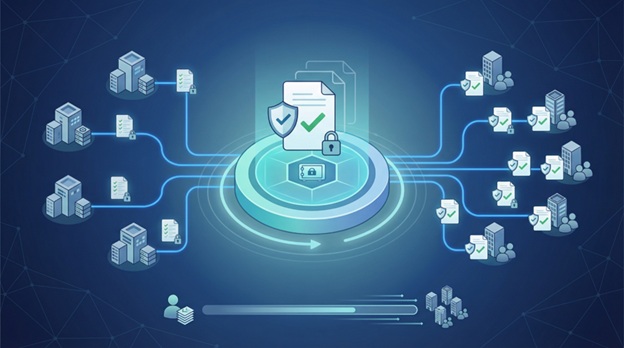
Why reusing risk intelligence beats reinventing the wheel
Most teams still rebuild the same questionnaire dozens of times, a task Gartner says consumes 30 to 40 hours per vendor. Exchange networks flip that effort into a shared asset:
- Vendors complete one deep, attested assessment and publish it to a secure marketplace.
- The exchange keeps the file current and alerts customers to any changes.
- You pull the latest package, review the differences and move straight to mitigation—no inbox volleyball.
Scale makes the payoff clear. OneTrust’s exchange lists more than 70,000 vendor profiles, and CyberGRX offers 14,000 validated assessments covering 250,000 companies. Reusing just one assessment saves a full review cycle; multiplying that across hundreds of suppliers turns months of clerical work into an afternoon of validation.
OneTrust — reuse 70,000-plus vendor assessments instead of starting from zero
Each profile in OneTrust’s Third-Party Risk Exchange can include a SIG questionnaire, evidence pack and risk score. Teams often trim review cycles from weeks to days across repeat suppliers. When a vendor is missing, OneTrust still accelerates the process with automated workflows that send questions, auto-score answers and map them to GDPR, HIPAA and other frameworks. For healthcare programs, the same auto-mapping can shave days off a HIPAA risk assessment by turning manual checklists into click-to-approve tasks.
CyberGRX — one assessment, many customers
CyberGRX validates each vendor submission, layers analytics on top and publishes the profile to an exchange holding 14,000 attested assessments and risk data on 250,000 companies. Portfolio analytics add lift: in one study CyberGRX found that 18 percent of third parties lacked an incident-response plan, letting the customer focus on the riskiest outliers. Updates flow automatically, so one vendor fix benefits every subscriber.
Continuous external ratings & monitoring
Questionnaires capture a vendor’s security posture on a single day; attackers work around the clock. Security-rating services scan the public web every 24 hours, flagging open ports, leaked credentials and unpatched CVEs long before the next audit. Gartner found that organizations with continuous monitoring detect third-party issues two to three weeks sooner on average than those relying on annual reviews.
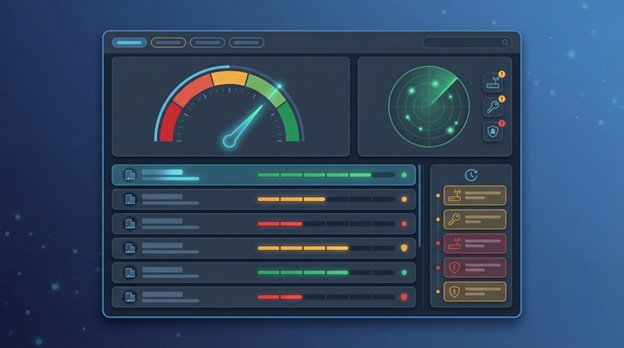
With an instant security “credit score” for each supplier, you triage risk in minutes. A score drop prompts action; a rebound closes the ticket. No spreadsheets, no calendar reminders—just a live pulse on every partner.
Why always-on visibility beats annual check-ins
Manual questionnaires freeze posture in time, yet 83 percent of risk teams rate continuous monitoring as “very or extremely valuable” for catching issues sooner, according to Gartner. Daily scans surface threats before they snowball, and the live score lets you act today, not next quarter—an essential step in third-party risk mitigation.
BitSight — the original cyber credit bureau
BitSight’s massive data engine now rates over 325 million organizations daily for more than 3,300 customers worldwide, according to PR Newswire. The platform analyzes billions of signals, then converts them into a 250-to-900 score (higher is healthier).
Onboarding is instant: type a vendor’s name and get a score with supporting evidence. Many teams set a policy floor of 700 and fast-track vendors above it, trimming days from due diligence. If a supplier’s score plunges after a breach, BitSight sends an alert so you can demand fixes before the incident spreads.
SecurityScorecard — letter grades everyone understands
SecurityScorecard rolls ten risk factors into A-through-F grades, a format two-thirds of non-technical stakeholders prefer for board reports. The platform now tracks 12 million companies and serves more than 25,000 customers worldwide.
Scores refresh daily. Drop from an A to a C overnight, and your team receives an alert before the next stand-up. Many programs block contracts below a B, cutting negotiation cycles. The Atlas module cross-checks questionnaire answers against live scan data, exposing gaps such as single-factor logins that masquerade as MFA.
UpGuard — one portal for scores, surveys and fixes
UpGuard unifies ratings, questionnaires and remediation in a single screen. A 2024 case study shows the platform saves about two hours per vendor and 8 to 10 hours each week for a team managing 1,000 suppliers.
- External scans generate live scores; sort vendors by grade and target the bottom quartile with focused surveys.
- When leaked credentials or an exposed database appear, UpGuard opens an issue, tags the vendor contact and starts the countdown.
- Vendors patch and watch their score rise, which short-circuits endless email chains.
Everything is timestamped and audit-ready, so continuous oversight becomes routine instead of a quarterly fire drill.
Quick-glance cheat sheet
Last verified: December 2025
|
Platform |
Automation / AI |
Continuous monitoring |
Exchange or shared data |
Compliance mapping |
Built-in remediation |
|
Vanta |
✔ |
✔ |
– |
✔ |
✔ |
|
Black Kite |
✔ |
✔ |
– |
✔ |
✔ |
|
Panorays |
✔ |
✔ |
– |
✔ |
✔ |
|
Prevalent |
✔ |
✔ |
– |
✔ |
✔ |
|
OneTrust |
✔ |
– |
✔ |
✔ |
✔ |
|
CyberGRX |
– |
– |
✔ |
✔ |
✔ |
|
BitSight |
– |
✔ |
– |
– |
– |
|
SecurityScorecard |
– |
✔ |
– |
– |
✔ |
|
UpGuard |
✔ |
✔ |
– |
– |
✔ |
Tip: drowning in duplicate questionnaires? Start with OneTrust or CyberGRX. Need live breach alerts? BitSight, SecurityScorecard or UpGuard tighten the net. No single tool covers every column, so mix and match to fit your vendor count and workflow.
Choosing your fastest path forward
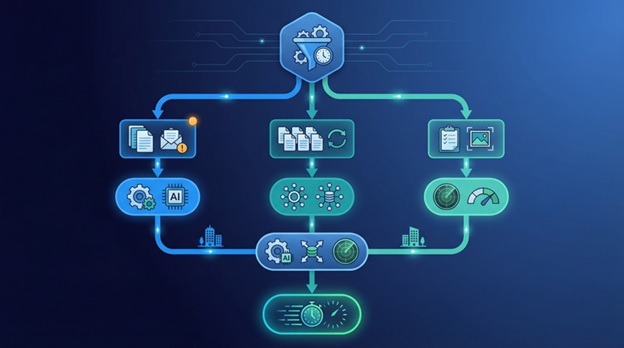
First, pinpoint the bottleneck:
- Paperwork overload? Automation and AI tools trim evidence wrangling. Start with Vanta or Black Kite; use Panorays or Prevalent to right-size questionnaires.
- Duplicate assessments? Exchange networks such as OneTrust or CyberGRX let you reuse reports instead of working from scratch.
- Real-time vigilance? Continuous-rating feeds from BitSight, SecurityScorecard or UpGuard flag issues days—sometimes weeks—before the next audit.
Many teams combine feeds and automation. Pilot with a dozen suppliers, track the hours you save (customers report 40 to 60 percent cycle-time cuts after 90 days) and then scale with confidence.
Conclusion
Modern third party risk is no longer a single problem with a single fix. The fastest wins come from matching the tool to the bottleneck. Automation trims paperwork. Exchanges erase duplicate assessments. Continuous monitoring catches issues long before the next audit. Start by identifying where your team loses the most time, pilot with a small vendor group and measure hours saved. Most programs see cycle time drop by 40 to 60 percent within a quarter. The goal is simple: fewer spreadsheets, faster decisions and a third party ecosystem you can trust at a glance.
FAQ
What is the biggest time sink in third party risk today?
Most teams lose time collecting evidence and managing questionnaires. This can consume 30 to 40 hours per vendor. Automation tools reduce that load quickly.
Why use exchanges like OneTrust or CyberGRX?
They let you reuse validated assessments instead of creating new ones. This often cuts review cycles from weeks to days.
Are continuous monitoring tools enough on their own?
No. They show real time security posture but do not replace questionnaires or compliance checks. Most mature programs combine monitoring with automation or exchange data.
How many tools do teams typically use?
Many use two. A primary automation or exchange platform plus a monitoring feed for daily signals. Very large programs may add a second feed for cross checking.
What is the fastest way to start improving my review cycle?
Run a pilot on 10 to 15 vendors. Measure hours saved using automation, monitoring or exchanging data. Expand once you see clear reductions in cycle time.