
12 Proven Strategies to Improve Warehouse Efficiency in 2026
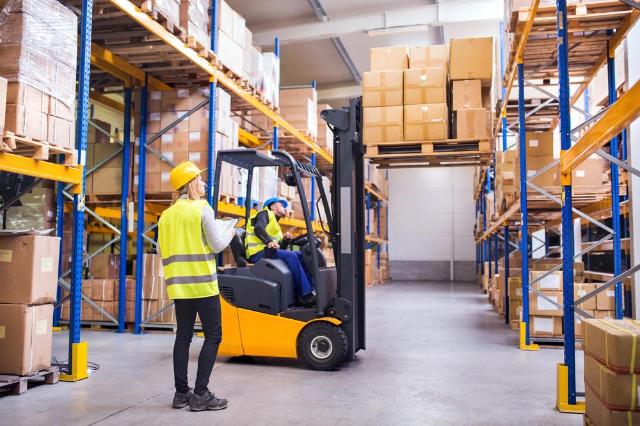
Image Source: depositphotos.com
Doing more with less isn’t a slogan; it’s the empirical fact for warehouses moving into 2026. Order volumes are fluctuating, customer expectations are constantly increasing, and adding more staff isn’t always the way out.
Efficiency has been made the most manageable lever. Not by cost-cutting, but through improved decisions: where automation brings value, how layouts reduce wasted movement, and how teams are enabled to work more efficiently. That shift is reflected in investment trends, with the warehouse automation market expected to exceed $41.27 billion by 2029.
This article explores practical and proven strategies warehouses can use to gear up performance in 2026; keeping things efficient, not overbuilt, and steering clear of flashy trends that add no real value.
How Smart Technology Is Reshaping Warehouse Operations
Modern warehouse technology is all about what the technology can achieve; automation, AI, connected systems, and real-time data all working seamlessly together to increase output, reduce errors, empower people, and enable teams to respond quickly without the need for additional complexity during demand spikes as well as in daily operations.
-
Automating repetitive warehouse tasks for the biggest wins
Automation is most beneficial when it is used to deliver on repetitive and error-prone tasks. AMRs take care of picking, transport, and sorting, whereas robotic arms deal with packing and palletizing at peak hours.
The regularity of their operation raises both throughput and accuracy levels. Instead of substituting human workers, automation liberates employees to engage with the handling of exceptions, quality checks, and making decisions that need human judgment.
-
Using AI and Machine Learning to stay one step ahead
AI and machine-learning technologies are the main tools that can bring warehouses to a level where they not only react to a given situation but can also predict the best way to proceed. Hence, they are able to promote almost real-time demand forecasting, inventory optimization, and slotting.
Most of the best inventory management systems, including industry-favorites like MRPeasy, have already taken the initiative, leveraging intelligent forecasting models and automation to reduce stockouts and increase responsiveness to changes in demand. This works especially well for growing operations that need room to adjust without piling on extra complexity.
-
Strengthen operations with a warehouse management system (WMS)
Modern warehouse management systems do way more than keeping track of stock levels. A contemporary WMS links inventory, orders, labor, and equipment in almost real-time. The scaling of cloud-based platforms becomes less complicated with their use, whereas IoT integrations allow for the visibility of the movement and the condition.
It’s a consequence that a single source of truth is available; a necessity for the coordination of people, processes, and automation in such a way that operational friction is not increased.
-
Turning warehouse data into actionable insights
Data in itself is of no use unless it is usable. Live dashboards enable departments to track their main performance indicators (KPIs) like order accuracy, throughput, and labor productivity while the work is going on. Analytics, on the other hand, are able to show such trends over time, which in turn help to identify bottlenecks and inefficiencies.
Continuous improvement will automatically become a part of the daily routine of the business when data is made available and presented in a clear manner. It will no longer be a quarterly exercise.
Designing Layouts and Processes That Actually Save Time
Technology is the main focus most of the time but it is actually the layout and the process that are responsible for the fast efficiency gains. Agile, properly planned workflows can respond to the variances in the demand, and small, intentional changes bring continuous, quantitative progress over time.
-
Making Better Use of Every Square Meter
In a warehouse, space costs a fortune. You feel it every time a pallet sits too long in the aisle. Vertical storage systems squeeze every inch of space upward, boosting capacity without taking up more floor space. Pairing this with automated pallet storage systems takes it a step further, letting warehouses stack and retrieve loads with minimal manual handling." With flexible racking, teams can quickly rearrange shelves as product sizes shift or boxes start to stack higher.
How you slot things makes a difference. The right strategy can keep the whole plan snapping neatly into place. Keep fast-selling items near the packing station, where you can grab them in a hurry; stash the slower ones farther back on the shelves. Checking slotting data often cuts down picker travel time and eases congestion, shaving off minutes per order that pile up fast.
-
Smarter Picking and Packing Without Overcomplicating Things
No single picking method works for every operation. Zone picking shines when you’re handling a flood of varied SKUs, while batch picking reduces walking time for orders that look alike; think rows of nearly identical boxes lined up and ready to go. Pick-to-light and voice-picking systems boost accuracy in places where mistakes are expensive.
What matters most is staying in sync. Pick methods that fit your order patterns, match your team’s skill set, and work smoothly with the layout. When you overengineer how items get picked, you end up adding friction. Good-fit solutions make the work smoother, cut down on errors, and keep production flowing at a steady pace.
-
Applying lean thinking to warehouse operations
Lean warehousing focuses on eradicating hidden wastes. This includes extra steps across the floor, long pauses at the loading dock, and needless rework. Also, the waste is caused by the inventory that is gathering dust. One of the ways is by having clear, consistent processes that cut down on differences and make training smoother.
Continuous improvement doesn’t necessarily mean that a complete change has to be made. Incremental changes, which are tested and fine-tuned over time, allow warehouses to remain adaptable to the changing demands without overwhelming their staff or systems.
-
Removing bottlenecks with better workflow design
Workflow mapping helps teams identify the places where work slows down. Warehouse execution systems (WES) manage the tasks that are being done both by automation and manual processes; thus, keeping the goods flowing smoothly.
The elimination of delays and confusion is ensured by the close cooperation of receiving, picking, packing, and shipping. Efficiency rises when workflows are planned from the first to the last stage without making the system more intricate.
Getting the Best Performance from Your Warehouse Team
Technology pays off only when people get real support and hands-on training. In 2026, people‑focused warehouses will lean into automation, sharpen workers’ skills, ease fears about new tech, and keep more employees on board even as the job market tightens.
-
Smarter Labor Management and Ongoing Skills Development
Labor management systems (LMS) track how teams perform, spot where skills fall short, and keep workloads balanced. Continual training helps employees stay flexible when new technology rolls in.
When incentive programs match real, measurable goals, they lift morale and don’t push people into risky shortcuts. When growth never stops, teams hold their confidence, even when the rhythm of daily work shifts.
-
Tracking the Metrics That Actually Matter
Having an excessive number of metrics to measure can lead to the confusion of the teams. Well-performing warehouses limit their KPIs to a few: these are throughput, order accuracy, and labor productivity.
Benchmark levels must be within reach and checked regularly. Information coming from WMS and LMS platforms gives the possibility to managers to see the changes at an early stage and to make the decisions for the adjustment of the situation without the need for direct control.
-
Helping People and Technology Work Better Together
Human and automation teams do their best work when everyone knows exactly what to expect, no mixed signals, just clear goals. Employees need to see how the new systems make their jobs easier, not worry that they’re being swapped out.
When people share information openly, like explaining a tough decision instead of leaving others guessing, it calms nerves and strengthens trust. Training that shows the “why,” not just the “how,” sparks real buy-in and keeps performance strong long after the first day.
-
Building a Safer, More Ergonomic Warehouse
Without safety, productivity cannot be achieved. Workstations designed ergonomically will result in less fatigue and fewer injuries. The use of wearable devices to detect physical strain is on the rise.
Safety rules followed correctly will give the employees a sense of security and also keep the company running smoothly. A safer warehouse, therefore, becomes more stable, more efficient, and ultimately, capable of long-term growth.
Preparing Your Warehouse for 2026 and Beyond
Warehouse efficiency is tilting toward making thoughtful, connected upgrades across technology, layout, and the way people work. Automation and AI make work faster and sharper. Good layouts save time and cut out wasted effort. Teams with solid support turn complex systems into real results.
The best-run warehouses tie these pieces directly to clear business goals. They put their money where results can be tracked, adjusting quickly when the ground shifts beneath them. When done right, efficiency becomes a lasting skill that keeps operations sharp and competitive beyond 2026.
Author Bio:
Rilwan Kazeem is a creative writer. He has worked in social media, content marketing, and SEO for four years. He has covered topics in multiple niches, including digital marketing, HR, emerging technologies, and their intersection with business. In his leisure, he loves to meditate and spend time with his family.