Operations | Monitoring | ITSM | DevOps | Cloud

Komodor Introduces New Companion Tool For Helm

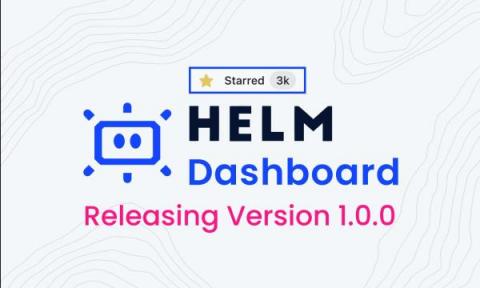
Today, I am happy to see the public release of Helm-Dashboard, Komodor’s second open-source project, after ValidKube, and my first since joining the team as Head of Open Source. It’s a compelling challenge to try and solve the pain points of Helm users, but more than anything it’s a labor of love. So it is with love that we’re now sharing this project with the community, and I’m excited to imagine where it will go from here.

SUSE Rancher and Komodor - Continuous Kubernetes Reliability

With 96% of organizations either using or evaluating Kubernetes and over 7 million developers using Kubernetes around the world, according to a recent CNCF report, it’s safe to say that Kubernetes is eating up the world and has become the de-facto orchestrating system of cloud-native applications. The benefits of adopting K8s are obvious in terms of efficiency, agility, and scalability.

Practical Guide on Setting up Prometheus and Grafana for Monitoring Your Microservices

Observability is a very important aspect of software that’s often taken for granted. You need to have visibility into what your application is doing at different levels to better understand an issue when it occurs. There are multiple open-source tools and initiatives to help you achieve improved visibility. When we talk about observability, there are three parts to consider: logs, traces and metrics.

The 2022 Managed Kubernetes Showdown: GKE vs AKS vs EKS

Kubernetes may provide an abundance of benefits, but those who are using it may be well aware that it often requires quite a bit (or even a lot!) of effort and skill to run the platform independently. So – rather than having to put up with it on their own, organizations are able to pay for a managed Kubernetes service instead. This is where Google Kubernetes Engine (GKE), Azure Kubernetes Service (AKS), and Amazon Elastic Kubernetes Service (EKS) come in.

Taking Your Kubernetes Helm Charts to the Next Level

Helm is a deployment tool for Kubernetes objects that supports package management, dependencies, and templating. In this article, we will explore how to optimize your Helm charts. To follow along, you’ll need a basic understanding of Helm and will have ideally written and deployed some basic Helm charts.

The 4 Golden Signals for Monitoring Kubernetes: Everything You Need to Know

Kubernetes is currently the de-facto container orchestration system on the market. Both small and large companies adopt it, and all major cloud providers offer it as a service. However, Kubernetes is a complex and layered platform, so you can’t just jump into it. There are three essential stages for each application: design, deployment, and operation. This blog post will focus on operation, where you need to monitor and troubleshoot your deployed applications.

CI/CD Pipelines for Kubernetes: Best Practices and Tools

Kubernetes is today’s leading container management platform, due to its comprehensive API and developer-friendly features. Using Kubernetes, you can create scalable and reliable applications that run on-premises systems and public clouds. Its out-of-the-box features allow it to distribute hundreds of instances over data centers and keep them up and running. In order to catch up with the automation level of Kubernetes, developing and deploying applications requires more autonomy.

Kubernetes Health Checks: Everything You Need to Know

When you’re using an application or tool, it’s very important to make sure things are working as they should. For this reason, health checks are critical. A health check is when an application or tool checks its own components and dependencies, then either publishes or exposes a notification method if there is a problem.