Operations | Monitoring | ITSM | DevOps | Cloud

Open-Source Monitoring With SolarWinds AppOptics

In software terms, “open source” means applications and their source code are available for the public to download and modify free of cost. Anyone can access, edit, and supplement the code to create an enhanced version of the application. Vendors often do this by forking the source code to create their own version of the application, marketing their version commercially.

Overprovisioned and Overspent: Optimize Before You Lift and Shift

Do you know what’s wrong with “lift and shift?” Everything. But why? In this video, SolarWinds Head Geek Leon Adato and Technical Content Manager for Community Kevin M. Sparenberg dig into what goes wrong during on-prem to cloud migration of applications and systems in many organizations and how monitoring can help not only avoid those problems but improve the overall outcome as well.

Why SQL Server Monitoring Is the First Step in Improving Performance

SQL Server monitoring is continuous collection and analysis of usage, performance, and event metrics for Microsoft SQL Server. It’s the first step in optimizing performance for applications that depend on your data platform. Highly effective monitoring gives a bird’s-eye view of your entire data estate. It also provides the deep analytics necessary to perform root cause analysis on the most challenging performance problems.

Spotting and Avoiding Database Drift

Managing any database ecosystem is difficult enough: taking backups, maintaining statistics, and doing performance tuning all tax the time of the DBA or database developer. The job is complex even without considering the work you do to manage the various schema and data drifts that can occur. Unless you operate in a vacuum or within a single person organization (and even then, schema drift can occur), drift is going to manifest naturally and as the size of the environment expands.

Cloud or On-Prem? With Monitoring, It's Both-And, Not Either-Or

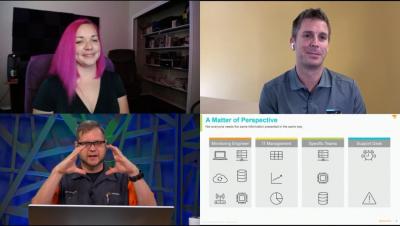
Despite the migration of services and systems to cloud (either all or in part), many of the fundamental aspects of the day-to-day work IT practitioners do hasn’t changed. It’s just moved. In this session, SolarWinds Head Geek Leon Adato and Technical Content Manager for Community Kevin M. Sparenberg discuss that state of affairs, as well as what monitoring can do to help view those resources as a contiguous whole, despite possibly being split across the on-prem/cloud divide.

Finding the Gaps in Your Data Causing Data Drift

When drift happens within a database, it can occur at a couple of different levels. Drift refers to entities—tables, views, or even data—out of synchronization with each other. This could be a difference in schema structure, data, or even operational metadata like permissions. Often, drifts happen between two different environments like development and staging databases.

Why Change Control for Your Servers Is Important, and How to Do It

The shared responsibility model doesn’t mean cloud customers don't have to worry about changes on their systems. In a brief 10-minute conversation, SolarWinds Head Geek Leon Adato and Technical Content Manager for Community Kevin M. Sparenberg share some statistics highlighting the risks of not managing change in your environment and show a few ways to get control and turn the chore of change control into actionable insights.

Investigating the Database Family Tree

Investigating your family tree can be an interesting experience. For example, what if you discovered you were related to a famous person who won a Nobel Prize or performed a heroic act? Conversely, what if you realized you had an ancestor who was an infamous criminal? Much like examining your genealogy can be an exciting adventure, looking at the family tree of your database can prove to be just as rewarding. Databases occasionally undergo a phenomenon known as drift.

Shortcut to Value With Loggly

In this video, we will show you how Loggly is laid out and demonstrate the major functions that will have you leveraging the out-of-the-box functions immediately. The SolarWinds® Loggly® log management service integrates into the engineering processes of teams employing continuous deployment and DevOps practices to reduce mean time to resolution (MTTR), improve service quality, accelerate innovation, and better use valuable development resources.