Operations | Monitoring | ITSM | DevOps | Cloud

Why Packaging Procurement Is Becoming a Supply Chain Decision, Not Just a Design Decision

A procurement team locks in a favorable per-unit price on printed pouches by committing to a full year of volume in a single production run. Six months later, marketing updates the front panel artwork, a regulator changes a required disclosure, or a regional distributor asks for a different language variant. The company is now sitting on pallets of packaging that cannot be used for current production, and someone has to explain why a decision that looked efficient on a spreadsheet turned into a warehouse full of obsolete inventory.

How Conditional Legal Fees Work in Injury Claims

Legal fees can be a significant concern when you are considering a personal injury claim, particularly if an injury has already affected your income or created additional expenses. A conditional legal fee arrangement changes when certain solicitor fees become payable by linking payment to an agreed outcome. Understanding exactly what is conditional, what may still be payable and how success is defined helps you assess the financial implications before proceeding.

Data-Driven Decisions Accelerate IT Results

Modern IT teams, having moved beyond the traditional reliance on hunches and personal experience that once shaped their day-to-day choices, no longer operate on intuition, since every meaningful decision now rests upon measurable, verifiable evidence gathered from their systems and workflows. Every deployment, capacity change, and incident response now depends on measurable evidence, not guesswork. Companies that base their operations on concrete numbers ship faster, recover quicker, and allocate budgets with far greater accuracy.

Causes of Claims Denials in Epic Billing and How to Fix Them

Epic powers clinical documentation and scheduling for thousands of hospitals and practices, yet the same system that streamlines patient care often becomes the source of costly claim denials. A 2024 Change Healthcare industry report puts the average claim denial rate at 10-15%, and organizations running Epic are not exempt. The problem rarely lies with Epic itself. It lies in how billing teams configure, use, and audit the system's revenue cycle modules.
Sponsored Post

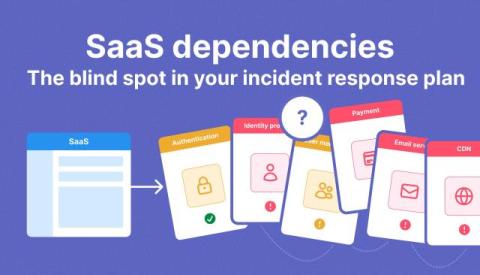
SaaS dependencies: the blind spot in your Incident response plan

So let's talk about the incidents that weren't yours to fix. It's 12:26 UTC on August 14, 2026. Outbound email starts bouncing. Inbound messages from partners stop arriving. Your team checks the obvious things first: mail server logs, recent deploys, firewall rules, your own DNS zone records. Everything on your side looks clean. By 12:48 UTC, an Early Warning Signal by StatusGator has already flagged a spike in reports pointing at Proofpoint. But if you're not watching for that signal, you don't know it exists yet.
Sponsored Post

Eliminate Data Transfer Fees from Your AWS Log Costs

As businesses generate, capture, and seek to analyze more data than ever before, they often find themselves limited by high data storage costs, expensive data processing fees, and high management overhead. For organizations who wish to expand their log analytics programs and become more data-driven, maximizing cost efficiency has become a critical operational objective.

S3 Access Denied: AI SRE Agent AURA Finds the Missing Permission

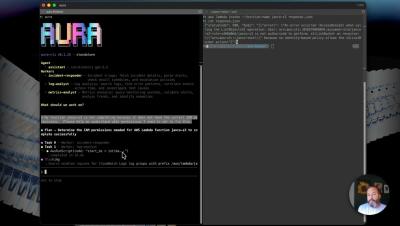
The bucket is right there and the function still cannot read it. AURA reads the failure, names the one missing action, and returns the policy to add. A permissions failure gives you the symptom and not the action name. The usual path is reading the error, guessing which actions the execution role is short, and widening the policy until the call goes through. Greg hands AURA a Lambda function that fails when it tries to reach an S3 bucket. AURA identifies the missing ListBucket permission on that particular bucket and returns the minimum policy needed to allow it.

Now Available: env zero Environment Tagging

Environment Tags are now available in env zero. You can attach key-value tags to any environment, like team=payments or cost-center=1042, to record ownership, cost attribution, or any other classification your project hierarchy doesn't express. Tags can be set in the UI or defined as code, filtered on across your estate, changed in bulk, and queried alongside your deployed infrastructure. The request came from customers managing ownership outside the platform.