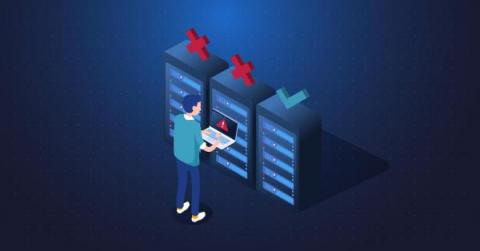
Owning an IT business isn't for the faint of heart. Risk naturally comes with the territory, but according to successful MSP veterans, owners can do several key things to mitigate their risk and give themselves a foot up over the competition. Instead of preparation and proactivity, many businesses find themselves where quick reactions to risks that arise are the only way forward—business whack-a-mole, for lack of a better term.
When Grafana Labs CEO and co-founder Raj Dutt announced to the team that the company would be launching Grafana Mimir, we knew that along with the public announcement, we would want to publish a Q&A. We collected questions from Grafanistas and Raj has answered them here.
Elastic Security’s developer support team has recently seen a surge in reports from customers about sluggish performance in our UI. Our initial inspection of logs for troubleshooting provided some insights, but not enough for a true fix. Luckily, we have Elastic Observability and its APM capabilities to dive in deeper and look under the hood at what was really happening within Elastic Security. And, more importantly, how we could improve its performance for customers.
Getting started with software can be confusing – depending on the complexity of the software, of course. Despite the extensive documentation available for Charmed Operator SDK and Juju some just prefer to watch video material to start with. So, let’s take the opportunity to have a look at available tutorials and presentations available on the Internet.
In part 1 of our synthetics series, we looked at tracking network performance to drive better business outcomes. Here in part 2 of our series, we’ll dig into the very first and most basic business outcome of using digital experience monitoring (DEM). That is, we’ll look at how to protect and grow revenue by proactively monitoring the health, availability and uptime of your critical applications and services, so you can fix issues before your customers’ experience suffers.
Business continuity is a crucial part of any scalable operations plan, but many businesses fail to realize how important it is until their first critical emergency. Only then does business continuity management come to the forefront of planning exercises, and stakeholders are forced to reflect on what went wrong, why it went wrong, and determine if they can avoid it happening again, or be better prepared if it does. The true business continuity management lifecycle begins long before an incident.
The global march towards delivering operational resilience across the financial sector steadily continues.
In this k6 series I have covered HTTP request testing with k6 and performance testing with k6. I designed these tutorials to introduce you to k6 and to show you how to use k6 for performance testing of microservices. As the third tutorial in the k6 series, this will cover how you can store your k6 test results locally and also how to schedule your load tests using CircleCI’s scheduled pipelines feature.