Operations | Monitoring | ITSM | DevOps | Cloud

You Don't Need Three Pillars, You Need Single Threads

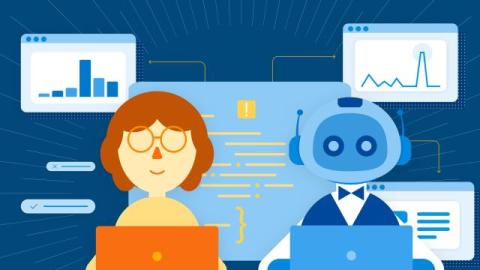
Last week was a great reminder for me about the challenges of the traditional model of observability defined by the “three pillars” of metrics, logs, and traces. One of the customers I’m currently working with is a large financial institution that has a robust three pillar implementation. Every critical application ships their telemetry to either or both their cloud-native tool and a central tool.

ICYMI: Is This Code Worth Running? Here's How to Know

Over the last three months, we’ve been exploring what about software development and observability changes with AI, and what doesn’t. Our conclusion: these five principles will still remain true, even when 90% of the code is AI-driven. The agentic AI space is moving fast. Models are improving, context windows are expanding, and the ways people build and operate agents are changing so fast that any thoughts we share could feel dated by the time you read this.

Optimizing the OpenTelemetry Python SDK for LLM Workloads

Agentic workloads thrive with precision tooling. Just like developers, they need the rich context, high cardinality, and fast feedback loops that allow them to ask exploratory open-ended questions of their code. But instrumentation is costly, and from the dawn of software, developers have tried to do the most possible with the least amount of resources.

Uncertainty and Change Are Everywhere in Software Development

If you’re like everyone else who works in software development, it’s a good bet that almost every single thing that you thought you knew about your business and engineering has changed as a result of the advent of modern LLMs. How should you respond to these changes? How should you change how you and your team develop software?

The Fundamentals: Fast, Deep, and Ready for What Comes Next - Part 3

The previous two posts in this series have looked at some of the use cases Honeycomb customers are implementing to observe LLMs in production and power agentic observability workflows. In this third and final post, we’ll take it back to basics and look at how the fundamental capabilities and infrastructure of Honeycomb provide the comprehensive data and fast performance that makes these use cases work at production scale. AI capabilities built on a weak observability foundation fall apart fast.

AI Working for You: MCP, Canvas, and Agentic Workflows - Part 2

In our previous post in our series on observability for the agent era, we looked at how Honeycomb provides unique visibility into LLMs operating in your production environment. Now, let’s flip it around and explore how Honeycomb provides observability insights uniquely suited to helping your AI agents rapidly diagnose and fix production issues, and build production feedback into the next round of development.

KubeCon + CloudNativeCon EU 2026: What We Learned About AI, Observability, and Fast Feedback Loops

Honeycomb was excited to attend KubeCon + CloudNativeCon Europe, where one theme stood out across sessions: as AI reshapes how software is built and run, teams are being pushed to rethink how they understand their systems. Without strong observability and feedback loops, AI can accelerate confusion, misalignment, and operational risk.

From Honeycomb Customer to Bee: An Observability Champion's Journey

One of the most important and meaningful cornerstones that has defined and powered my career so far has been how I try to use my skills and talents to make the people around me stronger and achieve positive outcomes. My roles in tech have predominantly been in the ops engineering domain. I consider myself an ops engineer; a title I wear with pride.