Kubernetes is the de facto container-management technology in the cloud world due to its scalability and reliability. It also provides a very flexible and developer-friendly API, which is the foundation of its control plane. The effectiveness of the Kubernetes API comes from how it manages the Kubernetes resources via metadata: labels and annotations. Metadata is essential for grouping resources, redirecting requests and managing deployments.
Less than 24 hours ago, the world came to a “social standstill” as Facebook, and its sister companies, WhatsApp and Instagram, became unavailable, leaving its 3.5 billion users in a flap. The outage, which lasted almost 6 hours, shut off access for users and businesses all over the world and caused ripple effects that we will likely continue to see in the immediate (and perhaps not-so-immediate) future.
The life of a developer these days is more complicated than ever, as they are increasingly required to expand their knowledge across the stack, understand abstract concepts, and own their code end-to-end. A major (and very frustrating) part of a developer’s day is dedicated to fixing what they’ve built – scouring logs and code lines in search of a bug. This search becomes even harder in a distributed Kubernetes environment, where the number of daily changes can be in the hundreds.
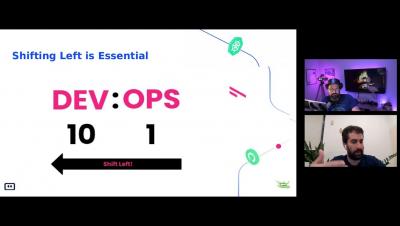
Below are main highlights from a recent Clubhouse talk featuring Elad Aviv, a software engineer at Komodor. The session was hosted by Kubernetes heavy-hitters; Mauricio Salatino, Staff Engineer at VMware, and Salman Iqbal, Co-founder of Cloud NativeWal.
We recently attended the 2021 Cloud-Native Days Summit, where our co-founding CEO Ben Ofiri gave a lightning round talk on How to Troubleshoot Kubernetes With Confidence. In case you missed it, here’s a recording and transcript for your convenience.