Operations | Monitoring | ITSM | DevOps | Cloud

Top tips: 3 surprising ways generative AI can boost your data analysis

Top tips is a weekly column where we highlight what’s trending in the tech world and list ways to explore these trends. When you think about generative AI, what instinctively comes to your mind is content and image generation. But, in this week’s Top tips column, let’s look at a less-explored facet of generative AI: data analytics. There are a lot of conversations about data and its benefits.
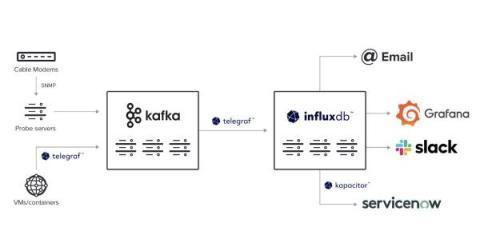

How WOW! Modernized Legacy Infrastructure Monitoring with InfluxDB and Kafka

With over 500,000 residential, business, and wholesale customers across multiple markets in the United States, WideOpenWest (WOW!) is one of the United States’ largest broadband providers. They aim to connect homes and businesses to the world with fast and reliable internet, TV, and phone services.

Pepperdata Reduces the Cost of Amazon EMR on EKS by 42.5%

With Kubernetes emerging as the de facto operating system of the cloud, capable of running almost anything, it’s not a surprise that many enterprises are rapidly porting their Apache Spark workloads to Kubernetes. This includes migrating Amazon EMR workloads to Amazon EKS to gain the additional deployment and scaling benefits of a fully managed service like Amazon EKS.

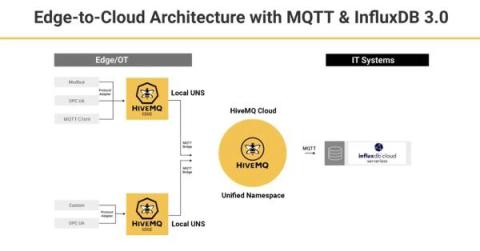
Webinar Recap: Build an Edge-to-Cloud Architecture Using MQTT and InfluxDB

Industrial IoT (IIoT) machines and sensors generate valuable time series data. It’s impossible to derive the insights necessary to inform decisions as a company to produce or operate more efficiently without sending operational technology (OT) data to informational technology (IT) systems.

Flight, DataFusion, Arrow, and Parquet: Using the FDAP Architecture to build InfluxDB 3.0

This article coins the term “FDAP stack”, explains why we used it to build InfluxDB 3.0, and argues that it will enable and power a generation of analytics applications in the same way that the LAMP stack enabled and powered a generation of interactive websites (by the way we are hiring!).

Querying Arrow tables with DataFusion in Python

InfluxDB v3 allows users to write data at a rate of 4.3 million points per second. However, an incredibly fast ingest rate like this is meaningless without the ability to query that data. Apache DataFusion is an “extensible query execution framework, written in Rust, that uses Apache Arrow as its in-memory format.” It enables 5–25x faster query responses across a broad range of query types compared to previous versions of InfluxDB that didn’t use the Apache ecosystem.