Operations | Monitoring | ITSM | DevOps | Cloud

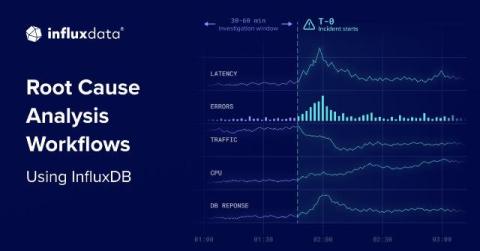
Root Cause Analysis Workflows Using InfluxDB

Summary When production incidents strike, distributed systems can mask issues under a collection of fragmented logs. But all your services share a universal metric: time. That’s good news, because root cause analysis (RCA) is inherently a time series problem. InfluxDB is your central telemetry hub, allowing you to reconstruct operational failures using a reliable, four-step workflow: Table of Contents It’s 2:00 AM, and your monitoring system fires a critical alert.

Modernize Your Data Historian with InfluxDB

In this video, Dev Advocate Cole Bowden walks you through where traditional data historians fail, and why a dedicated time series database like InfluxDB can streamline your operations. With an AI-powered demo showcasing an automative plant's data, you'll see the value of InfluxDB and where it can power insights that Data Historians can't handle on their own.

Q3 2026 Recap: Up to 4x Faster Single-Series Queries, Distributed Compaction, and Telegraf Controller High Availability

Q3 was a packed quarter, with releases across InfluxDB, Telegraf, and Amazon Timestream for InfluxDB that help deployments and fleets grow without slowing down. InfluxDB 3.11 brought performance improvements for heavier, more complex workloads to GA in InfluxDB 3 Enterprise. InfluxDB 3.12 followed with roughly 3x faster bulk imports, distributed compaction in beta, per-database schema enforcement, and generally available role-based access control.

Why Automotive Manufacturers Are Augmenting Data Historians, Not Replacing Them

Summary Automotive manufacturers face rising costs and scaling limits with per-tag-priced data historians as sensor counts and sampling rates grow. Instead of rip-and-replace, manufacturers are augmenting traditional data historians by routing new telemetry to InfluxDB (via Telegraf or Litmus or consolidating siloed historians, while the historian continues handling SCADA and regulatory data. Table of Contents.