Operations | Monitoring | ITSM | DevOps | Cloud

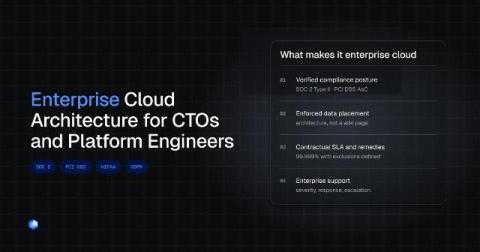
Enterprise Cloud Architecture for CTOs and Platform Engineers

Most teams that say they have an enterprise cloud strategy mean that they have workloads running on a hyperscaler and a set of compliance controls documented somewhere. That is a cloud deployment, but it is not necessarily an enterprise cloud operating model. Google Cloud’s 2025 platform engineering research with ESG describes platform engineering as a strategic discipline tied to delivery, governance, and operational outcomes, rather than simply another infrastructure cost.
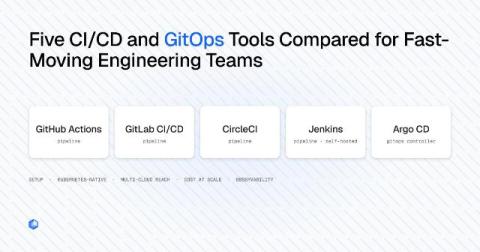
Five CI/CD and GitOps Tools Compared for Fast-Moving Engineering Teams

Your pipeline works. The build passes, the image lands in the registry, and the job turns green. Then someone asks why production still runs the old version, and you spend the next two hours determining whether the problem is a deployment configuration, a runner, an approval rule, or the runtime itself. That is the wrong-tool tax.

Akamai Cloud Partners with Control Plane to Leverage Universal Cloud Identity

Control Plane is now a technology partner of Akamai Cloud. You can add regions from Akamai Cloud to your Global Virtual Cloud in Control Plane. And by leveraging Control Plane’s Universal Cloud Identity, workloads running on Akamai Cloud regions can still consume any service of AWS, GCP, or Azure with no credentials embedded in the workload.

Minga's developers point AI tools at their own infrastructure

Matt Zytaruk, VP of Technology at Minga, on what changed once his developers could point their AI tools at their own infrastructure. Minga checks in 1.5 million students across the eastern seaboard every school morning. They run that platform on Control Plane, which gives their team an MCP server, a CLI, and Terraform-native resources — so a developer can investigate an issue and generate the code for the change without waiting on anyone.

How to Reduce Resource Waste with Kubernetes

Kubernetes has changed the way teams deploy and scale applications, but many organizations overlook a critical aspect of running it well: resource utilization. Kubernetes excels at scheduling and scaling workloads. Making sure those workloads actually use the resources they reserve still falls on operations teams.

You Vibe Coded an App...Now What?

"Hey, I built this over the weekend. I want to get it in front of customers." And it always hits architecture, security, and infrastructure. Ross Hendrickson, CTO at Inspectiv, calls that gap the chasm. His team crosses it on Control Plane: AI-written code secured, reviewed, and released in a day. Control Plane combines AWS, GCP, Azure and your own hardware into one virtual cloud shaped to your workloads.

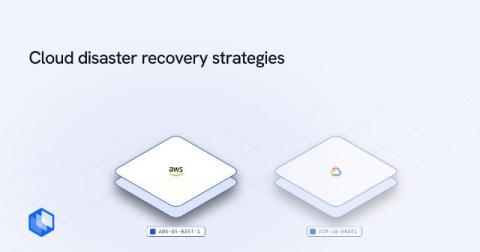
Cloud disaster recovery strategies, RTO/RPO targets, and best practices

Most DR plans have a fatal assumption baked in, namely that the cloud provider stays up. Your runbook says “failover to us-west-2.” That works until the provider’s control-plane services degrade and the credentials, APIs, or DNS management your failover workflow depends on become unreliable. Single-provider DR is disaster deferral.

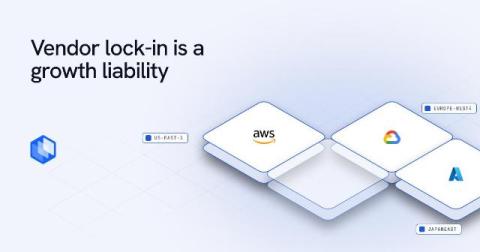
The Case for Multi-Cloud: Why Vendor Lock-In Is a Growth Liability

Multi-cloud architecture protects engineering organizations from three compounding liabilities that single-cloud stacks accumulate silently: a narrowing hiring pool, data residency exposure that surfaces the moment you sign a regulated enterprise customer, and eroded pricing power at exactly the point your cloud spend is accelerating fastest. Redundancy is a side benefit, not the reason to adopt it. The redundancy argument for multi-cloud is the wrong argument to make early.