Operations | Monitoring | ITSM | DevOps | Cloud

Why SRE agents need orchestration, not just more tools

Single agents are a useful starting point for SRE workflows. They are not where the architecture should end. The first version is simple enough: connect an LLM to a few tools, give it a system prompt, and point it at your infrastructure. It can summarize an alert, pull logs, answer questions, and draft a useful next step. Then the workflow gets real. You add GitHub for runbooks, Kubernetes for cluster state, PagerDuty for incident context, Prometheus for metrics, and Mezmo for telemetry.

When your agents hallucinate at 2 am, it is not a model problem

The first time an AI assistant suggests "restart the service" during a live incident and nobody on the bridge can tell whether that suggestion came from a current runbook, a stale wiki page, or thin air, you stop caring about model benchmarks. You start caring about what the agent actually knew, where that knowledge came from, and whether you can trust the chain of reasoning behind it.

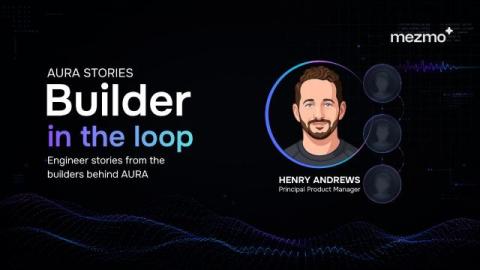
Builder in the loop: Henry Andrews on building AURA like production software

An interview series with the people building Mezmo’s open-source agentic harness for production operations. Builder in the loop is a Mezmo interview series focused on the engineers, product leaders, and operators shaping AURA, our open-source, MCP-native agentic harness for production operations. The goal is to get past the polished product layer and talk through the decisions that matter when AI starts interacting with real systems. What should agents be allowed to do?

AURA in Practice: Mezmo's SRE bot, demo walkthrough

A walkthrough of the Slack-based SRE bot Mezmo's engineering team built on AURA, the open-source agent harness, running against Mezmo's own production tooling. Adrian Furlong shows the bot answering questions in a DM with tool calls visible inline, then in a shared channel where it reads the conversation before responding. He opens a fresh PagerDuty incident on camera. The webhook fires AURA, and within seconds, the agent posts a triage note back on the incident and a structured analysis in the dedicated incident channel.

The Journey to Production AI: Five Steps for SRE and Platform Teams

In a recent webinar, The Journey to Production AI, Andre Elizondo walked through what separates a working agent demo from an agent worth trusting on a 2 a.m. page. Live polls during the session put numbers behind a pattern most platform teams already feel. ‍ ‍ Most teams are early. The ones who are further along did not get there by shipping a flashier demo. They got there by treating production AI as a platform problem.