Operations | Monitoring | ITSM | DevOps | Cloud

Get Lightrun AI Skills: Expert Workflows for AI Agents

Today we’re launching Lightrun AI Skills, structured, repeatable investigation workflows built for AI coding agents. With Lightrun MCP, agents like Claude Code, Codex, and Cursor can already instrument live production services and reason over live runtime evidence without a redeployment. But AI agents remain non-deterministic by design, using the same tool differently every session.


Why Alert Fatigue Solutions Still Miss the Root Cause

Alert fatigue solutions have never been better, but on-call engineers are still burning out. Threshold tuning, AI triage, and alert correlation reduce the noise, but every alert that clears filtering lands with the same incomplete telemetry and triggers the same manual investigation cycle. This post explains why the evidence gap survives every fix, and how runtime context changes that.

Why Blast Radius Analysis Does Not End When Alerts Fire

Modern distributed systems fail in ways that can bypass even well-designed isolation patterns. When a failure is actively propagating across services at four in the morning, the question shifts from “how do we limit the blast radius” to “how do we confirm what it actually is.” Monitoring shows which services are in the impact zone, but it cannot show what code path caused the failure to spread, or whether it has stopped.

How to Prevent AI Agents From Deleting Production Data

There’s a new question teams are asking. How can we prevent AI agents from deleting production. When Cursor deleted PocketOS’s entire production database in nine seconds, the agent wasn’t malfunctioning. It had full technical capability, but it was inferring operational authority from static code rather than live environment state. That gap between capability and context is the root cause. This article breaks down exactly how that happens, and what runtime visibility does to stop it.

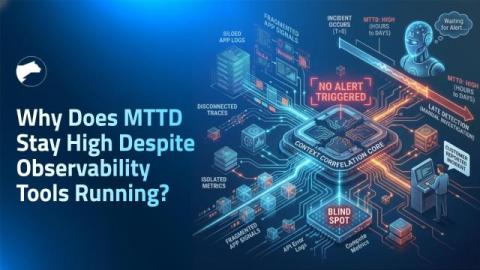
Why Does MTTD Stay High Despite Observability Tools Running?

Monitoring coverage, anomaly detection, and SLO-based alerting have significantly narrowed detection windows for most failure types, but MTTD remains stubbornly high for a specific silent failure. This blog covers why type mismatches, swallowed exceptions, and values that pass validation without occurring without triggering errors, and what changes when your monitoring stack can generate those signals without waiting for a failure to surface them.