Operations | Monitoring | ITSM | DevOps | Cloud

Fix What Matters: SUSE Application Collection Adds Real Context to CVEs With OpenVEX

If you’re working with containers, SBOMs or any kind of vulnerability scan, you know the drill. Every scan lights up like a Christmas tree. Critical, high, medium and low vulnerabilities. It feels that the list will always go on. The goal is always zero CVEs. And while that sounds great, it’s not realistic. They come at such a high pace, and sometimes they are really hard to resolve. Teams are spending time chasing vulnerabilities that don’t matter.

Harvester 1.5 Extends Kubernetes-Native Virtualization to ARM64and CSI-Compliant Storage

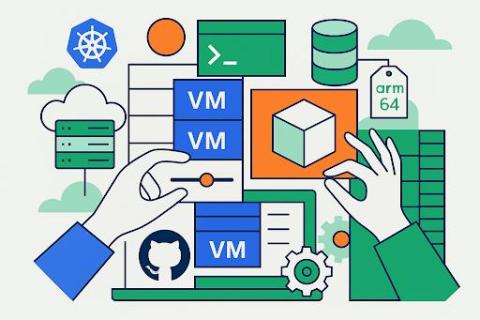
As organizations move beyond traditional hypervisors, Harvester continues to lead the way as an open source, Kubernetes-native virtualization solution. With the release of Harvester 1.5, users now have greater flexibility and ecosystem alignment than ever before—with General Availability (GA) for ARM64 and support for CSI-compatible storage backends. Harvester is part of a growing shift toward cloud-native infrastructure that unifies VMs and containers under the Kubernetes API.

Is observing TLS traffic through eBPF a security risk?

Monitoring deployed applications with eBPF is quickly becoming the standard for good reasons, eBPF: Revolutionizing Observability for DevOps and SRE Teams. Not in the least because it allows monitoring to be a purely operations affair, instead of having to instrument each and every application individually. The security-conscious SRE and SRE manager will immediately ask the question: is this secure? And how about this claim that HTTPS traffic can be monitored?

Stop Guessing, Start Measuring: Optimizing Rancher Continuous Delivery With Fleet Benchmarks

Rancher Continuous Delivery (known as Fleet) can be used in a workflow to deploy applications to many clusters. With its GitOps support, it enables downstream clusters to pull updates from a Git repository. We know of users that monitor several hundred Git repositories and deploy to a thousand clusters. To make this scale possible, several intermediate steps are necessary. First, the application is converted into separate bundles, which are then targeted at clusters.

Shut Down Cryptojackers and Strengthen Kubernetes Security with NeuVector

The threat landscape for cloud-native environments like Kubernetes is always on the move. Attackers continuously apply sophisticated techniques. Cryptojacking, the unauthorized use of computing resources to mine cryptocurrency, is a particularly concerning threat. Cryptojacking can lead to performance degradation, increased operational costs, and potential security breaches. Recent high-profile incidents underscore the importance of addressing these threats.