Operations | Monitoring | ITSM | DevOps | Cloud

Full Guide to Linux Disk IO Monitoring, Alerting and Tuning

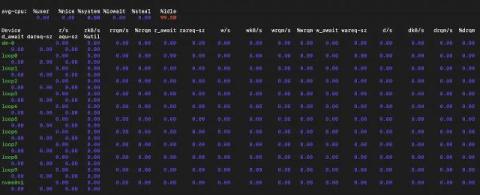
Disk IO (Input/Output) is a core aspect of system performance. Whether you’re managing a database, a web application, or a cloud server, how efficiently your system reads and writes data affects everything from response times to stability. Unlike high CPU usage or memory bottlenecks that often manifest immediately, disk IO issues tend to creep up silently—until they slow down critical processes.

How to Stop Memory Leaks Before they Crash Your Linux System

Imagine you’ve got a leaky faucet in your kitchen. At first, it’s just a drip here and there—annoying, sure, but not enough to ruin your day. But leave it unchecked, and soon that drip turns into a steady trickle. Your water bill skyrockets, the sink overflows, and before you know it, you’re ankle-deep in chaos. Now, replace that faucet with a Linux system, and you’ve got a memory leak.

5 Ways to Prevent CPU Overload on Linux Servers

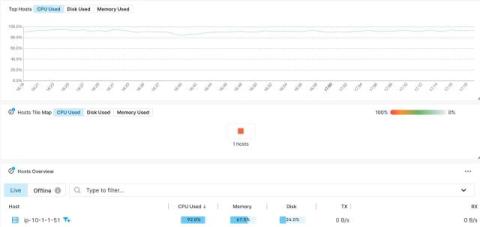
Every server administrator’s nightmare starts with a message: “CPU usage at 100%” It’s that critical moment when your Linux server transforms from a reliable workhorse into a sluggish mess, taking your applications and user experience down. We’ve all been there… staring at a terminal, watching load averages climb, while frantically trying to figure out which process decided to throw a CPU-hungry party on our server.

Introducing Logsene CLI

In vino veritas, right? During a recent team gathering in Kraków, Poland, and after several yummy bottles of țuică, vișinată, żubrówka, diluted with some beer, the truth came out – even though we run Logsene, a log management service that you can think of as hosted ELK Stack, some of us still ssh into machines and grep logs! Whaaaaat!? What happened to eating our own dog food!?

Java Logging Basics: Concepts, Tools, and Best Practices

Imagine you’re a detective trying to solve a crime, but all the evidence is invisible. Sounds impossible, right? That’s exactly what it’s like trying to debug a Java application without proper logging. Java logging is your magnifying glass, your fingerprint kit, and your trusty notepad all rolled into one. It’s the unsung hero that helps you understand what’s going on under the hood of your application. But logging isn’t just about catching bugs.

Best Logging Practices: 14 Do's and Don'ts for Better Logging

Ever found yourself drowning in a sea of log data, struggling to make sense of the overwhelming noise? Or perhaps faced a major system breakdown, only to find that your logs didn’t provide the answers you needed, leaving you in the dark? Effective logging is a critical yet often overlooked aspect of software development and operations, highlighting why logging is important – it’s the foundation upon which observability, troubleshooting, and system maintenance are built.

Log Formatting: 8 Best Practices for Better Readability

Logs act as silent sentinels, recording every whisper of your application’s activity. They are invaluable chronicles illuminating system behavior, diagnosing issues, and providing crucial insights into your application’s health. However, the true power of logs lies not just in their existence, but in how they are formatted. Log formatting is pivotal in transforming these raw data streams into actionable intelligence.

Kubernetes Alerting: 10 Must-Have Alerts for Proactive Monitoring

Running a Kubernetes cluster includes keeping an eye on it to make sure your apps and services are healthy. You don’t want to be staring at a bunch of Kubernetes dashboards all day, though. You want to set up kubernetes alerting with appropriate alerts instead, right? With k8s alerts, you will spot problems quickly in your Kubernetes cluster and hopefully fix them quickly as well. But what should you alert on? Here are the top 10 most important alerts you should set up for your Kubernetes cluster.

How to monitor a mobile App's store ratings with Sematext

Launching a mobile App is no walk in the park, especially when it comes to your App’s store position and ratings. One of the trickiest parts is maintaining a good App store rating. An App’s store ratings are the key to its success. If you’re serious about your App succeeding in an oversaturated market, it is vital to implement strategies to both increase and maintain your App’s store ratings.