Operations | Monitoring | ITSM | DevOps | Cloud

Top 12 Kubernetes Risks

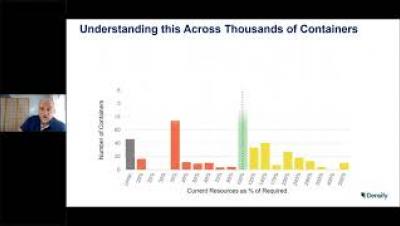
What’s putting your K8s workloads at risk? You probably didn’t immediately think of memory and CPU resources—yet, these pose significant threats to cost and performance in your public cloud Kubernetes and OpenShift deployments. Learn about the top 12 K8s risks and how you can visualize the spread of risk in your containers deployment. You'll also hear a methodology for drilling down to individual misconfigurations and resolving them.

Surviving the Server Chip Shortage

The global chip shortage, which began in 2020, continues as demand for semiconductor chips continues to far outpace production. Intel CEO Pat Gelsinger recently forecast shortages to be sustained through at least the remainder of 2022. As a result, IT operations teams at almost every company we’ve talked with have felt the crunch in the form of skyrocketing prices and delays of up to a year for procurement of physical servers.

FinOps Tools: Supercharge Your Investment with Optimization

Cost analysis and allocation tools like CloudHealth, CloudCheckr, and Cloudability play an important role in many organizations’ FinOps journeys by assisting with keeping Finance informed, enabling forecasting, and driving accountability. These tools may also help provide visibility and direction around long-term purchases like Savings Plans and RIs. But, slicing and dicing your cloud costs is only the tip of the FinOps iceberg: 85%+ of your cloud savings potential lies beyond refining how you buy cloud services. You also need to optimize what you’re actually purchasing.

Forecasting Kubernetes Costs

The benefits of containerizing workloads are numerous and proven. But, during infrastructure transformations, organizations are experiencing common, consistent challenges that interfere with accurately forecasting the costs for hosting workloads in Kubernetes. Planning the proper reservations for CPU and memory before migrating to containers is a persistent issue Densify observes across our customers.

Bulletproofing Your Kubernetes Build

Most containers, pods, and namespaces in Kubernetes and OpenShift have been deployed with incorrect CPU and memory resource specifications. It isn’t just suboptimal DevOps—it’s dangerous from a service delivery perspective. Watch and see how managing capacity operationally prevents pods from swallowing unused capacity, frees nodes, and keeps the OOM killer away. This bulletproof strategy for maximizing utilization continuously integrates the optimal resources into the source code controlling your nodes and clusters.

FinOps Tools: Supercharge Your Investment with Optimization

Cost analysis and allocation tools like CloudHealth, CloudCheckr, and Cloudability play an important role in many organizations’ FinOps journeys by assisting with keeping Finance informed, enabling forecasting, and driving accountability. These tools may also help provide visibility and direction around long-term purchases like Savings Plans and RIs. But, slicing and dicing your cloud costs is only the tip of the FinOps iceberg: 85%+ of your cloud savings potential lies beyond refining how you buy cloud services. You also need to optimize what you’re actually purchasing.