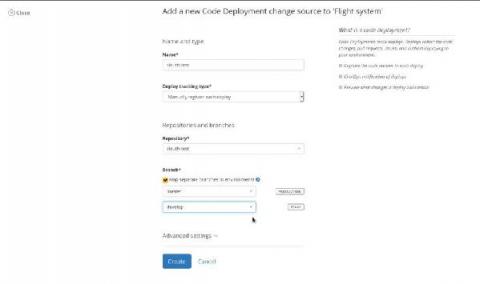
All deployments are not created equal, but you'd never know it from your Slack channel notifications. In reality, some deployments you really care about, as they contain things like API changes or database migrations, and you want that information to surface. We created tags in Sleuth for this very reason. Out of the box, Sleuth matches files in your deployment with known patterns, and if any are found, tags your deployments automatically.
Being in the DevOps space, we're often asked questions about software deployment like, "What's the difference between continuous deployment and continuous delivery?", "What is continuous deployment?", and "Are continuous deployment and continuous delivery the same thing?" So first, let's start by clearly defining these terms.
Quick, do you know what code is currently deployed to production? How about staging? How far apart are these environments? Sleuth tracks your deployments, and today, Sleuth is launching first-class environments support. I'm going to show you how it works, steps to take to migrate your existing projects, and where we plan to take it in the future.
In order to have the most successful deployment, there are a few best practices that software development teams should be mindful of. First, following a continuous delivery approach allows software development teams to release in shorter cycles, so that building, testing, and releasing can be done with greater speed and reduced error rates. As stated in an earlier post of ours, you’re doing continuous delivery when: Your software is deployable throughout its lifecycle.
In order to have the most successful deployment, there are a few best practices that software development teams should be mindful of. First, following a continuous delivery approach allows software development teams to release in shorter cycles, so that building, testing, and releasing can be done with greater speed and reduced error rates.
I’ve recently co-founded a startup, and after working so long in more mature enterprises with diverse toolchains, it was actually massively educational to return to first steps and figure out what our critical needs were, balanced with essentially zero budget. As we’ve grown and raised money, we’ve graduated in some areas to other tools, but I wanted to share what we felt were the absolute can’t-live-without-tools for a team building SaaS software.