Operations | Monitoring | ITSM | DevOps | Cloud

The Place Where Modern Operations & Technology Come Together

The latest News and Information on Service Reliability Engineering and related technologies.


How to Connect Jaeger with Your APM
Microservices make it tough to understand how applications behave end-to-end. Most teams already rely on an Application Performance Monitoring (APM) tool to track system health. But as requests move across many services, you also need distributed tracing. Jaeger gives you that visibility. The real value comes from connecting the two. Instead of running APM and Jaeger in silos, you can combine their strengths, metrics from your APM, and traces from Jaeger, to get a clearer view of performance.

AWS Prometheus: Production Patterns That Help You Scale
You've got Prometheus running in one cluster — maybe a dev environment, a single EKS cluster, or a proof-of-concept setup. The configuration is straightforward: node_exporter on a few EC2 instances, some service discovery for pods, and a single Prometheus server scraping everything. Storage is local, retention is 15 days, and you can keep all the default recording rules without worrying about costs.

What is Asynchronous Job Monitoring?
Modern applications don’t process everything inside the request/response path. To keep APIs responsive, time-consuming work like image resizing, payment processing, or data syncs is moved into background queues. Workers then pick up these asynchronous jobs and run them outside the main thread. Asynchronous job monitoring is the practice of tracking these background tasks: Without this visibility, background workers become a blind spot.

Kubernetes Service Discovery Explained with Practical Examples
In Kubernetes, applications are constantly changing — new pods start, old ones shut down, workloads shift across nodes. The challenge is making sure that different parts of your system, and even external clients, can still find each other when the actual locations keep moving. That’s what service discovery handles. It provides a stable way for applications to connect and communicate, no matter where they’re running or how often the underlying infrastructure changes.
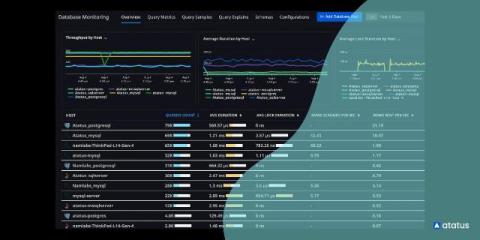
What is Database Monitoring? A Guide for Developers, DevOps, and SREs
Databases handle critical operations for applications, from online banking to e-commerce and streaming services. Any slowdown or failure can directly affect application performance and user experience. Database monitoring tracks performance, detects issues, and helps prevent downtime. It also ensures efficient use of resources, maintains security, and supports compliance requirements.

Background Job Observability Beyond the Queue
Background jobs handle the critical work that happens outside the request path: processing payments, sending emails, generating reports, syncing data. They keep applications running smoothly, but the signals they produce look different from API endpoints. Most teams start with queue metrics—how many jobs are waiting and how quickly they complete. These metrics provide the foundation, but job health extends beyond throughput.
What is Service Catalog Observability and How Does It Work?
A service catalog gives teams a shared view of their systems—what services exist, who owns them, how dependencies are structured, and the SLAs that guide expectations. It’s an important part of development infrastructure because it helps everyone speak the same language about services. Service catalog observability builds on that foundation.

APM for Kubernetes: Monitor Distributed Applications at Scale
When a payment service runs across 12 pods — each serving different customer segments — and an authentication layer spans three namespaces, performance issues can originate in both the application code and the orchestration layer. The challenge is linking request-level performance data with what’s happening inside the cluster: container CPU limits, pod scheduling decisions, and node-level events.

The End of "Good Code"? AI, Throughput, and Reliability with CircleCI CTO Rob Zuber
Is “good code” still the right measure of engineering success in an AI-driven world? In this episode of *Humans of Reliability*, Rob Zuber, CircleCI CTO, joins Sylvain to explore how coding assistants are reshaping developer workflows and changing what teams value. Rob shares what he’s seeing across CircleCI’s customer base: a clear boost in throughput, new bottlenecks shifting from code creation to code review, and the rise of “vibe coding,” where engineers trust AI-generated code they may not fully understand.