
Zero Downtime: The Role of Smart PLCs in Predictive Ops

Image Source: depositphotos.com
Every Operations professional knows the dread of the 3 AM pager duty call. In the software world, this usually means a server crash or a database deadlock. But in the world of manufacturing and physical operations, the stakes—and the costs—are often higher. A halted assembly line in an automotive plant or a pharmaceutical facility can cost upwards of $10,000 per minute.
For years, the industry accepted these outages as the cost of doing business. Maintenance was a reactive game: wait for the smoke, then fix the fire. However, the rise of Industry 4.0 has introduced a new standard: Predictive Ops.
The secret to achieving "zero downtime" isn't found solely in cloud algorithms. It begins much closer to the ground. The Programmable Logic Controller (PLC)—once seen merely as a ruggedized switch—has evolved into a sophisticated Edge Node, providing the granular data foundation required to predict failures before they happen.
Reactive vs. Predictive: The Evolution of Uptime
To understand the value of modern PLCs, we must first categorize how organizations approach infrastructure health. In the IT world, we moved from physical server patching to automated container orchestration. OT (Operational Technology) is undergoing a similar evolution.
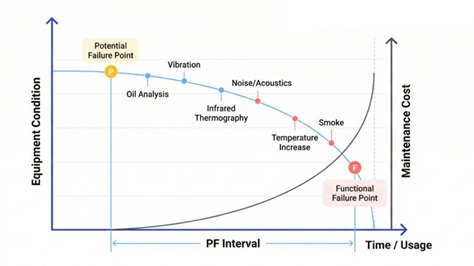
- The Reactive Model ("Run to Failure"): This is the legacy standard. You run a motor until it burns out. While this maximizes the component's lifespan, the unplanned downtime causes chaos, overtime costs, and missed SLAs.
- The Preventive Model ("Scheduled Replacement"): This is risk-averse but expensive. If a servo motor has a rated life of 10,000 hours, you replace it at 8,000 hours. You avoid the crash, but you waste 20% of the asset's useful life and incur unnecessary labor costs.
- The Predictive Model ("Zero Downtime"): This is the goal. By analyzing real-time telemetry, you replace the component exactly 48 hours before it fails. You maximize asset life while eliminating unplanned outages.
The gap in achieving this third model has never been the software; tools like Splunk, Grafana, and dedicated MES platforms are ready to ingest data. The gap has always been the hardware source. IT dashboards cannot visualize what they cannot see.
The Smart PLC: Your Facility’s "Edge Node"
In the context of Predictive Ops, the modern PLC functions less like a relay panel and more like an Edge Server. Major industrial controllers, such as Siemens S7 or Allen-Bradley ControlLogix, have evolved to monitor physics, not just control motion.
Unlike a cloud server that might poll data every few minutes, a PLC operates in milliseconds. This allows it to detect high-frequency anomalies that would be invisible to a standard IoT gateway.
Key Edge Metrics:
- Vibration Analysis: Detecting micro-wobbles in a shaft (measured in mm/s) that indicate bearing wear weeks before failure.
- Thermal Profiling: Spotting heat spikes in electrical cabinets or motor windings.
- Current Draw: Noticing when a conveyor belt requires 5% more amperage to maintain speed—a classic sign of increased friction or mechanical binding.
Crucially, the Smart PLC performs Edge Processing. Sending raw, millisecond-level vibration data to the cloud is bandwidth-prohibitive. The PLC filters the noise locally, calculating the RMS (Root Mean Square) values, and only transmitting the high-fidelity alerts via lightweight protocols like MQTT or JSON.
Building the "Zero Downtime" Stack
How does this look in practice? A predictive stack is built in layers, moving from the physical to the digital.
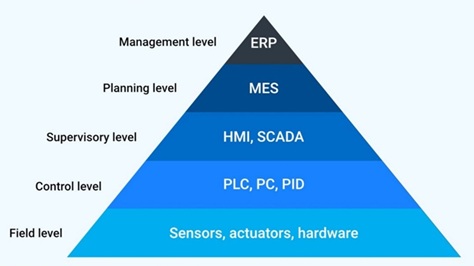
- The Sensor Layer
It starts with inputs. Modern machine builds utilize smart sensors (often using the IO-Link standard). These devices report not just the process value (e.g., "The tank is full"), but also their own health status (e.g., "My lens is dirty" or "My internal temperature is critical").
- The Logic Layer (The PLC)
The PLC ingests this data and compares it against a "Golden State" baseline. Using simple logic blocks or advanced function modules, the PLC determines if the machine is drifting out of spec. For example: If vibration > 5mm/s for more than 10 seconds, trigger Alert Level 1.
- The Visualization Layer
This is where OT meets IT. The PLC pushes the alert to an OPC UA server. This signal is picked up by the central monitoring system, which can automatically flag a "Maintenance Required" ticket in a system like Jira or ServiceNow, dispatching a technician before the machine ever stops.
The Logistics of Uptime: Sourcing and Supply Chain
There is, however, a critical difference between IT and OT Ops. If a software deployment fails, you can roll back the code in seconds. If a physical bearing fails, you cannot "git revert" the hardware. You must physically replace it.
Predictive data is useless if the logistics pipeline fails. Knowing a drive will fail in three days is of little comfort if the replacement part has a six-week lead time from the factory. Therefore, a "Zero Downtime" strategy requires a robust hardware supply chain alongside the software CI/CD pipeline.
The Role of Specialized Suppliers
In many industrial environments, the machines running critical processes are legacy systems. The PLCs monitoring them may be robust, but they are often no longer supported by the OEM. When your predictive model flags a legacy module for replacement, waiting for factory production runs is not an option.
This is where strategic sourcing partners become part of the Ops stack. Platforms like Iainventory play a critical role here, providing immediate access to hard-to-find, surplus, or refurbished automation parts. By tapping into a circular economy of industrial electronics, Ops managers can secure replacements for discontinued components instantly, ensuring that the "Zero Downtime" promise is actually kept.
FAQ: Implementing Predictive Ops
Q: Can I do predictive maintenance on old PLCs?
A: Yes. You don't always need to rip and replace. You can install "Gateway" modules or secondary PLCs that sit alongside the legacy controller, listening to the I/O traffic to gather data without altering the critical control logic.
Q: What is the ROI of Smart PLCs?
A: The ROI is generally realized through uptime. Industry studies consistently show that predictive maintenance strategies can reduce overall maintenance costs by 25% and unplanned outages by up to 70%.
Q: Is this "Big Data"?
A: It doesn't have to be. It starts small. Monitoring just one critical motor's temperature and vibration can save an entire production line. You don't need a data lake to start; you just need one smart edge node.
Conclusion
"Zero Downtime" is not magic; it is math. It requires the convergence of robust hardware (Smart PLCs) and intelligent software (Predictive Analytics).
The future of Operations is hybrid. The most successful teams will be those who understand both the Python script running in the cloud and the 24V signal running on the floor. By leveraging modern PLCs as edge nodes and securing a responsive supply chain for the physical assets, Ops teams can finally move from fighting fires to preventing them.