
Is Terabox Safe in 2026? Security Risks, Data Privacy Concerns, and Safer Cloud Storage Alternatives
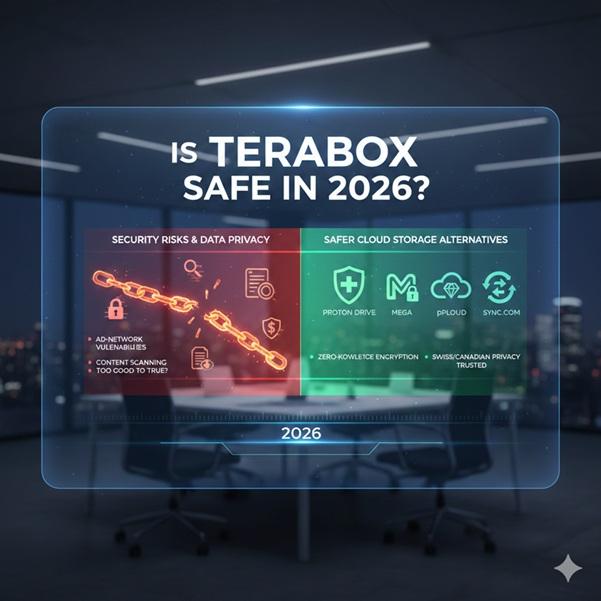
Cloud storage platforms have become essential for individuals, startups, and enterprises alike. From backing up photos and documents to sharing large files across teams, services like Terabox promise convenience, massive free storage, and cross-device accessibility. However, in 2026, users are asking a more important question: Is Terabox truly safe?
With growing concerns around data breaches, ransomware attacks, cross-border data transfers, and regulatory compliance, evaluating the security of any cloud storage platform requires more than just looking at advertised encryption claims. This article explores Terabox’s safety profile, key security risks, privacy considerations, and safer alternatives for different types of users.
What Is Terabox?
Terabox is a cloud storage platform known for offering generous free storage capacity, often significantly more than competitors. It allows users to:
- Upload and store files
- Sync data across devices
- Share files via public or private links
- Stream stored media content
Its appeal largely stems from the high free storage allocation compared to mainstream platforms like Google Drive or Dropbox. However, higher free storage often raises questions about monetization models and data handling practices.
Understanding Cloud Storage Security in 2026
Before analyzing Terabox specifically, it’s important to understand what defines a secure cloud storage service today.
Key Security Factors:
- Encryption Standards
- Data encryption in transit (TLS/SSL)
- Encryption at rest (AES-256 or similar)
- Zero-Knowledge Architecture
- The provider cannot access your files because only the user holds the encryption key.
- Multi-Factor Authentication (MFA)
- Prevents unauthorized access even if credentials are compromised.
- Data Residency and Compliance
- GDPR, CCPA, and other regulatory adherence
- Clear data processing transparency
- Transparent Ownership and Governance
- Company background
- Security audit disclosures
When assessing Terabox’s safety in 2026, these benchmarks are critical.
Is Terabox Safe? A Practical Security Evaluation
Terabox markets itself as secure, but evaluating real safety requires examining encryption policies, user reports, compliance transparency, and broader risk signals.
For a deeper technical breakdown of Terabox’s encryption standards, user experience factors, and platform transparency, readers can review this comprehensive analysis:
That review provides important context regarding encryption claims, file-sharing permissions, and user concerns around account controls.
1. Encryption and Data Protection
Terabox claims to use encryption for data transmission. However, one key question remains: does it offer true end-to-end encryption or zero-knowledge storage?
If the provider retains encryption keys, theoretically it could access user files. While this is common among many mainstream services, it presents potential privacy risks.
In 2026, zero-knowledge encryption is becoming a preferred standard for privacy-focused users.
2. Free Storage and Monetization Model
Offering extremely high free storage raises concerns about sustainability. Cloud storage infrastructure is expensive. If users are not paying for storage, revenue must come from:
- Premium upgrades
- Advertising
- Data analytics
- Partnerships
Users should carefully review privacy policies to determine how metadata and usage patterns are handled.
3. Data Residency and Jurisdiction Risks
Cloud storage safety is not only about encryption. It is also about jurisdiction.
Different countries have varying data protection laws. If a service operates across multiple regions, user data may be subject to government access laws or cross-border transfer regulations.
In 2026, with stricter global data governance frameworks, companies must clearly disclose:
- Where data is stored
- Who can access it
- Under what legal conditions
Ambiguity in these areas may indicate higher compliance risk for businesses.
Key Security Risks Associated With Terabox
While there is no widespread confirmed data breach uniquely associated with Terabox at the time of writing, users should remain cautious of potential risk categories.
1. Account Hijacking
If MFA is not enforced by default, accounts may be vulnerable to phishing or credential stuffing attacks.
2. Link-Based File Sharing Exposure
Public sharing links can expose files to unintended audiences if:
- Links are indexed
- Permissions are misconfigured
- URLs are guessed or leaked
Users should disable public indexing and set expiration dates for shared links.
3. Limited Transparency
If a platform lacks third-party security audits or publicly available penetration testing reports, it becomes harder to verify security claims.
Transparency is a major trust signal in 2026.
Data Privacy Concerns in 2026
Privacy is no longer optional. It is regulated and monitored.
Major privacy considerations include:
- Whether user data is scanned for advertising purposes
- Whether metadata is collected and stored
- Whether files are subject to automated analysis
- Whether accounts can be terminated without clear recourse
Modern users expect:
- Clear privacy policy language
- Transparent compliance certifications
- Data deletion guarantees upon account closure
If any of these are vague, that may indicate privacy risk.
Who Should Be Cautious About Using Terabox?
Terabox may be acceptable for casual use such as:
- Temporary file transfers
- Non-sensitive media backups
- Storage of publicly shareable content
However, high-risk users should exercise caution:
- Businesses handling client data
- Healthcare providers
- Financial service firms
- Legal professionals
- Enterprises bound by GDPR or HIPAA
These users require strict compliance guarantees and zero-knowledge architecture.
Safer Cloud Storage Alternatives in 2026
If security is your top priority, consider alternatives with stronger privacy credentials.
1. Google Drive
- Strong infrastructure
- Enterprise compliance frameworks
- Extensive MFA options
Best for: Businesses already integrated into Google Workspace.
2. Microsoft OneDrive
- Enterprise-grade security
- Integrated with Microsoft 365
- Advanced identity protection
Best for: Corporate environments.
3. Dropbox
- Mature platform
- Strong file-sharing controls
- Business security plans
Best for: Teams needing collaboration flexibility.
4. Proton Drive
- Zero-knowledge encryption
- Privacy-first architecture
- Based in privacy-friendly jurisdiction
Best for: Privacy-conscious individuals.
5. Sync.com
- End-to-end encryption
- Transparent compliance positioning
- Strong file-sharing protections
Best for: Users prioritizing encryption over ecosystem integration.
How to Use Terabox More Safely
If you decide to continue using Terabox, apply these best practices:
- Enable multi-factor authentication immediately.
- Avoid storing highly sensitive documents.
- Encrypt files locally before uploading.
- Regularly audit sharing permissions.
- Avoid storing financial or identification documents.
- Use unique passwords managed by a password manager.
It's also worth encrypting the connection itself, not just the files. Uploading or syncing to any cloud storage service over public or unsecured networks exposes that traffic unless it's protected — a VPN like NordVPN adds that layer by encrypting your connection regardless of which network you're on when you access your files.
Layered security reduces exposure even if the platform itself has limitations.
The Bigger Picture: Security Is a Strategic Decision
Cloud storage security is no longer just an IT concern. Cloud storage security is no longer just an IT concern. It directly influences website trust, search visibility, and long-term digital credibility, which is why understanding core infrastructure principles covered in this Technical SEO guide is essential for modern businesses operating in competitive digital environments.
It affects:
- Business continuity
- Regulatory compliance
- Brand reputation
- Customer trust
- Search visibility and digital credibility
Organizations that ignore platform security risks may face reputational damage and operational disruption.
Choosing a storage provider should involve:
- Reviewing security architecture
- Understanding compliance alignment
- Evaluating transparency signals
- Conducting independent risk assessments
References and Security Frameworks
To evaluate cloud storage providers effectively, consult established standards:
- NIST Cybersecurity Framework (National Institute of Standards and Technology)
- ISO/IEC 27001 Information Security Management
- GDPR (General Data Protection Regulation)
- CISA cloud security guidance
These frameworks outline what strong security governance should look like.
Final Verdict: Is Terabox Safe in 2026?
Terabox may be sufficient for low-risk, personal file storage and temporary use. However, for users storing sensitive, regulated, or mission-critical data, the platform may not meet the highest security and transparency standards expected in 2026.
The key concerns include:
- Unclear zero-knowledge encryption guarantees
- Jurisdiction and compliance transparency
- Monetization model ambiguity
- Limited public third-party audit disclosures
Security-conscious users and businesses should evaluate alternatives offering stronger encryption frameworks, audit transparency, and regulatory compliance.