
Is My Paper Human? The Top 6 AI Checkers for Students to Verify Their Work

AI detectors are everywhere in classrooms and submission portals. Students need clear, practical guidance that explains strengths and limitations. Use this guide to pick a checker and interpret results responsibly.
You will learn how these systems work at a high level. You will also see a realistic look at accuracy, false positives, and appeals. Each tool section ends with a quick verdict for fast decisions.
How Checkers Work
Most checkers analyze writing for patterns that resemble machine generation. They measure features like repetition, predictability, and token patterns across sentences. Some also compare your text against public sources to flag overlap.
These signals can suggest risk, yet they are probabilistic. Detectors do not read intent, and they cannot confirm authorship on their own. Treat outputs as indicators that need human judgment and supporting evidence.
Accuracy and Fairness
Accuracy varies by domain, assignment type, and the kind of revision you apply. Short, formulaic passages can look machine-like even when you wrote them yourself. Long sections with rich context are often easier to evaluate because claims, evidence, and transitions provide stronger signals.
Fairness improves when detectors are used with clear rubrics and transparent documentation. Ask instructors how they weigh scores, what evidence matters, and how appeals work in your course. Shared expectations help students understand risk and reduce anxiety during revision and submission.
Limits and Caveats
False positives happen with clean, highly structured prose like lab reports or literature reviews. False negatives also appear when text has been heavily edited or mixed with original writing. Policies vary by course and institution, so always check instructions before submitting.
To handle flags quickly, use this checklist:
- Watch for false positives in highly structured prose.
- Rebuild flagged lines around specific claims and citations.
- Verify quotation boundaries and reference formatting.
- Compare revised wording to earlier drafts for meaning drift.
- Re-run a focused check after targeted edits.
Screenshots alone rarely convince instructors. Keep drafts, notes, and timestamps to reconstruct your process and demonstrate authorship. If you challenge a result, bring evidence and a calm explanation of your workflow.
StudyPro
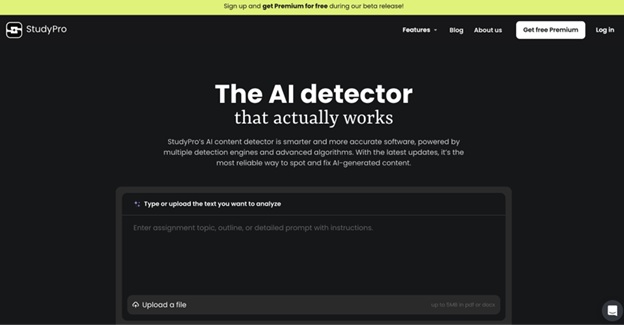
StudyPro approaches detection within a broader academic workflow. It links paraphrasing, outlining, and similarity checks so edits stay anchored to your argument and sources. Results appear alongside your draft for quicker review and targeted revisions.
For students seeking a no-cost scan before submission, Study Pro AI detector is a free AI detector during beta. Its goal is clarity about risk rather than a final verdict on authorship. Use the detector’s risk score and highlighted sentences to decide whether to revise phrasing, add context, or assemble documentation.
If results worry you, review flagged phrases and rebuild them around specific claims and citations. Save a version snapshot, then recheck the section to confirm improvements.
Verdict: Integrated workflow with a helpful, no-cost check and practical cues for targeted edits.
GPTZero
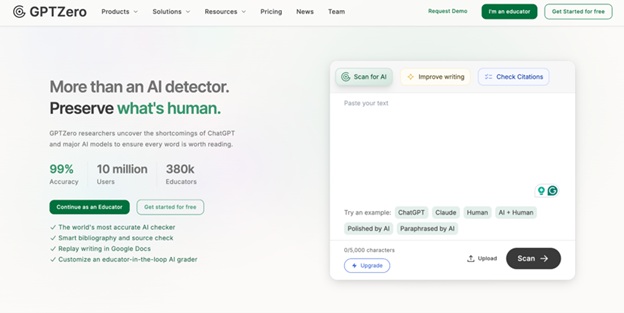
GPTZero focuses on identifying machine-like signals in English prose. It highlights sentences with higher risk and provides an overall score that guides review. Many students use it as an early warning pass before deeper edits.
Risk labels are predictions that benefit from context and corroboration. Keep drafts and sources on hand so you can interpret flagged sentences in light of your process. If a passage scores high on risk, tighten the wording and confirm that quotations and citations are correctly formatted.
Use it early in drafting to catch predictable patterns before they spread. Pair adjustments with stronger transitions so your argument flows and reads distinctly human.
Verdict: Helpful early-pass detector that surfaces sentence-level risk for quick cleanup.
Proofademic
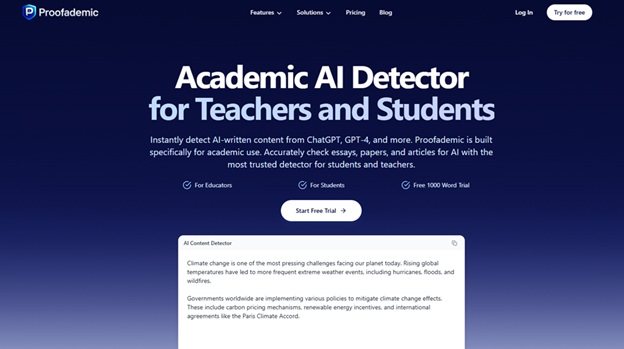
Proofademic is a dedicated academic AI detection tool that helps students and educators verify the authenticity of essays, papers, and research writing by spotting AI-generated content from models like ChatGPT, GPT-4, Claude, and others. Built with academic use in mind, it analyzes linguistic and semantic patterns to highlight which sections may be machine-generated and gives confidence scores that support responsible revision and originality checks. Proofademic’s detailed, sentence-level insights make it a practical choice for maintaining academic integrity alongside broader workflows of drafting, feedback, and documentation.
Turnitin
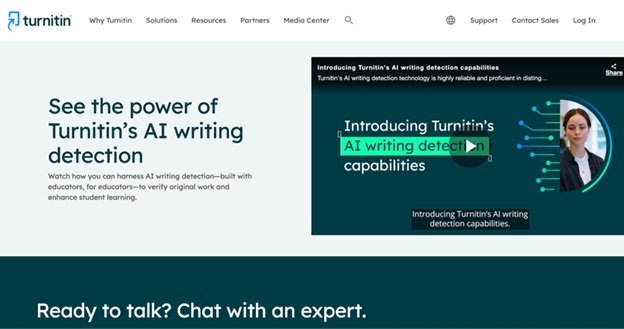
Turnitin is widely used in learning management systems and institutional workflows. It offers similarity reports and a separate indicator for potential AI-generated content. Instructors may review these signals together when assessing originality concerns.
If your course uses Turnitin, read the feedback carefully and respond with evidence. Confirm that paraphrases reflect the source meaning and that quotations and citations match your required style. Bring process notes if you need to explain decisions behind revisions and phrasing changes.
If a class requires submission through Turnitin, plan a buffer for revisions. A short window for targeted edits often turns borderline sections into clear, credible prose.
Verdict: Institutional standard with combined signals that reward documented, careful revision.
Writer.com
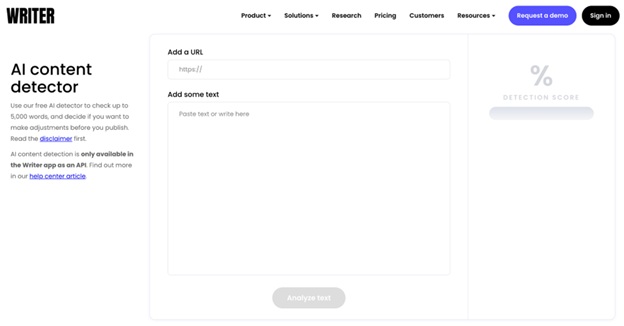
Writer.com includes an AI detector alongside style tools and team features. It suits group projects where shared guidelines and a consistent voice matter. Risk scores can guide line edits that align tone with course expectations.
Treat flagged lines as prompts for clarification rather than automatic proof. Ask peers to read high-risk passages and confirm that claims, citations, and transitions remain solid. Adjust vocabulary and rhythm until the section sounds consistent with the rest of your draft.
The platform suits student teams that share glossaries or style rules across courses. Consistent terminology across group papers reduces risk and improves readability for evaluators.
Verdict: Strong fit for collaborative courses that value shared style and consistent voice.
Copyleaks
Copyleaks offers detection features used by educators and businesses. It provides risk assessments at the sentence level so you can focus edits where needed. Reports are readable and suitable for quick passes during revision.
As with any checker, corroborate results with your notes and a fresh read. Look for repetitive phrasing or overly predictable structures, then revise for clarity and voice. Re-run the section if you made significant changes to verify the new wording.
Export a copy of the report and keep it with your drafts. A clear trail of edits and results makes future reviews smoother and faster.
Verdict: Clear reports and sentence-level cues that support focused, documented revisions.
BrandWell.ai (formerly Content at Scale)
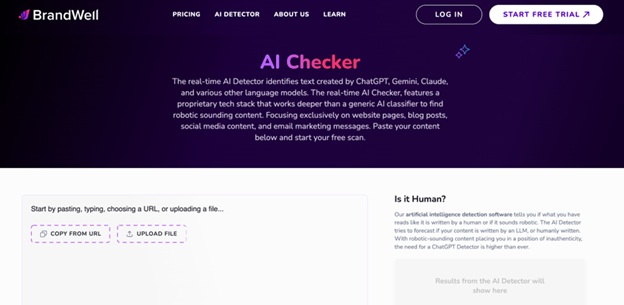
BrandWell.ai (formerly Content at Scale) offers an AI detection tool that highlights suspect segments. It provides an overall risk view with line-level cues for targeted edits. Use the summary to prioritize sections that need careful reworking and stronger context.
Remember that indicators reflect probability rather than certainty. Pair results with your outline, sources, and earlier drafts to document choices behind final phrasing. Clarity, evidence, and consistent voice remain the foundation of credible academic work.
Use the sentence cues to rewrite selectively instead of rewriting everything. Precision editing saves time and keeps your original voice intact.
Verdict: Practical dashboard with cues that support selective, high-impact edits.
Interpreting and Challenging Results
Scores indicate risk rather than authorship. Read flagged lines, compare them with sources and earlier drafts, and focus on clarity and specificity. If a score seems off, test a small rewrite and recheck the section.
If you plan to contest a result, pinpoint the exact sentences, confirm meaning and attribution, and prepare a brief process note. Bring drafts, timestamps, and reading notes, then ask for concrete next steps such as targeted rewrites or additional documentation.
For extra tips on interpreting detector outputs, scan independent tool feedback. Searches for reviews StudyPro and similar reviews reveal practical patterns and fixes.
Final Verdict
AI checkers help students spot risk and plan better revisions. They work best as part of a workflow that includes drafting, feedback, and documentation. Use them to inform decisions rather than to decide authorship.
Select one or two tools and learn their reports well. Keep evidence of your process and treat every score as a starting point for thoughtful edits. Clear reasoning, precise wording, and verified sources remain the core of strong academic writing.