
How to Evaluate Laser Welding System Manufacturers for Factory Production
Choosing between laser welding system manufacturers is not only about comparing power and price. For factory buyers, the bigger question is whether the system can fit daily production, reduce rework, and stay reliable after delivery.
A good supplier should understand your materials, thickness range, workflow, safety needs, and service expectations. The right laser welding system should make production easier, not add more testing and uncertainty.
Why Factory Buyers Should Look Beyond Welding Power
Power matters, but it does not tell the whole story.
A high-power machine may not be the best choice for thin sheet metal. A lightweight handheld unit may be perfect for repair work but not enough for thicker structural parts. The right machine depends on material, joint design, operator skill, and how the system will be used every day.
Factory buyers should think about practical issues such as:
- Weld consistency
- Heat control
- Post-weld rework
- Operator learning time
- Machine maintenance
- Spare parts supply
- Safety training
- Long-term support
For factory welding operations, one good demo weld is not enough. The machine needs to produce repeatable results on real workpieces, shift after shift.
This is especially important for stainless steel cabinets, aluminum frames, carbon steel structures, elevator parts, machinery covers, kitchen equipment, and visible sheet metal assemblies. In these jobs, weld appearance, stability, and rework time directly affect cost.
Factory Checklist for Evaluating Laser Welding System Manufacturers
When comparing laser welding system manufacturers, look at the full working system, not only the machine body.
|
Factor |
What to Check |
|
Welding performance |
Penetration, seam appearance, heat control, repeatability |
|
Material range |
Stainless steel, carbon steel, aluminum, brass, copper |
|
Machine design |
Portability, cooling method, gun weight, cable length |
|
Workflow fit |
Welding, cutting, cleaning, repair, production line use |
|
Maintenance |
Lens, cable, gun, cooling system, spare parts |
|
Training |
Safety, parameters, operator setup |
|
Support |
Remote help, warranty, sample testing, process advice |
A strong supplier should be able to explain which machine fits your application and why. If the answer is always “choose the highest power,” the recommendation may not be detailed enough.
Welding Performance
Ask for more than sample photos.
Useful questions include:
- What thickness range can it weld?
- Can it handle your main materials?
- How stable is the weld seam across repeated parts?
- How much grinding is usually needed after welding?
- Can the supplier help adjust parameters for your parts?
Good industrial laser welding solutions should help control heat input, reduce distortion, and improve weld appearance when used correctly.
Maintenance and Support
Laser welding equipment maintenance is often overlooked during purchase. But lenses, protective windows, cables, welding guns, and cooling systems all affect long-term use.
Before buying, ask:
- Are spare parts available?
- What parts need regular checking?
- Is remote support included?
- How long is the warranty?
- Can operators handle basic maintenance?
A lower purchase price is not always cheaper if support is weak after delivery.
Handheld, Semi-Flexible, or Automatic Laser Welding?
Not every factory needs the same type of system.
Fully automatic welding can be useful for high-volume, repeatable parts. If the same joint is welded again and again with stable fixtures, automation may improve speed and consistency.
But many factories handle mixed parts, repair work, custom fabrication, or small-batch production. In these cases, handheld or semi-flexible systems can be more practical.
When comparing automatic laser welding machine suppliers, buyers should first ask whether their work really needs full automation. Automation requires stable part design, fixtures, programming, and higher setup cost.
|
Work Type |
Better Fit |
|
High-volume repeated parts |
Automatic or semi-automatic system |
|
Mixed fabrication tasks |
Handheld or flexible system |
|
Repair and maintenance |
Portable handheld system |
|
Large or irregular parts |
Handheld system |
|
Precision repeat welding |
Fixture-based or automatic setup |
|
Small-batch production |
Handheld or semi-flexible system |
For production line welding equipment, automation may be the right choice. For repair teams and flexible fabrication shops, portability may bring more value.
The best precision welding systems are not always the most complex ones. They are the systems that match the real job.
Why Dynalasers Fits Practical Factory Welding and Repair Work
Dynalasers is a practical option for factory buyers who need flexible handheld laser welding systems. Its M, D, and S Series cover different levels of power, mobility, and process needs.
Dynalasers focuses on equipment that can be used in real workshop conditions. Depending on the series, the machines can support welding, cutting, cleaning, spot welding, and rust removal.
Useful support includes:
- Portable system design
- 2-year warranty
- Spare parts support
- Remote assistance
- Parameter guidance
- Practical model selection
- Multi-function use depending on series
Dynalasers laser welding systems can work with stainless steel, carbon steel, aluminum, brass, copper, and other common industrial metals, depending on model, thickness, joint fit-up, and settings.
For factory buyers, this means one supplier can support different needs, from fabrication and repair to OEM production and mobile service.
Dynalasers Series for Different Factory Production Needs
M Series for Flexible Factory Welding
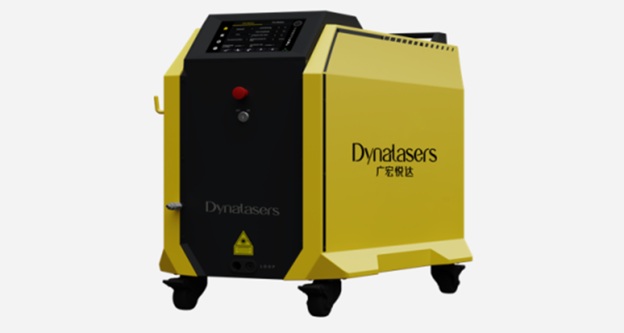
The Dynalasers M Series is built for flexible factory and workshop use. Models include M30, M50, and M70, with power from 800W to 1800W.
It supports continuous, pulse, spot, and turbo modes. Depending on configuration, it can support welding, cutting, and cleaning.
Best for
- Flexible fabrication shops
- Medium-thickness sheet metal
- Stainless steel and carbon steel work
- Repair and maintenance jobs
- Factories that need welding and cleaning in one workflow
D Series for Stronger Industrial Welding
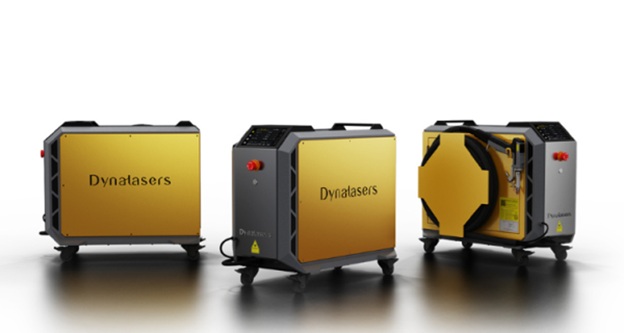
The Dynalasers D Series is designed for stronger industrial welding needs. Models include D50P and D70P, with 1200W and 1800W power options.
It supports 5-in-1 capability: welding, cutting, cleaning, spot welding, and rust removal.
Best for
- Industrial repair
- Structural components
- Batch production
- Thicker stainless steel and carbon steel
- Buyers needing stronger multi-function capability
S Series for Mobile Repair and Light Production
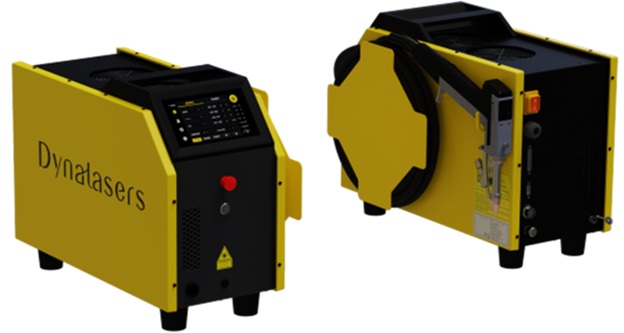
The Dynalasers S Series focuses on portability. It is suitable for field repair, mobile service, small workshops, custom parts, and small-batch work.
The S30 weighs less than 21 kg. The S40 weighs less than 22 kg. The welding gun weighs less than 0.48 kg.
Best for
- Mobile repair
- Field maintenance
- Small workshops
- Light production tasks
- Limited workspace
Dynalasers Series Comparison
|
Series |
Factory Role |
Power Range |
Best Match |
|
M Series |
Flexible factory welding |
800–1800W |
Fabrication, repair, mixed tasks |
|
D Series |
Stronger industrial welding |
1200–1800W |
Structural parts, batch work, industrial repair |
|
S Series |
Mobile welding |
700–900W |
Field repair, small-batch work, mobile service |
FAQs
What should factory buyers check before buying a laser welding system?
Factory buyers should check welding performance, material range, thickness capability, cooling method, welding gun comfort, maintenance needs, spare parts, training, warranty, and supplier support. Sample testing is also useful before purchase.
Why does machine maintenance matter in laser welding?
Maintenance affects weld stability and downtime. Lenses, protective parts, cables, guns, and cooling systems must stay in good condition. Poor maintenance can lead to unstable welding, more rework, and production delays.
Which Dynalasers series is best for factory production?
It depends on the work. The M Series fits flexible fabrication and repair. The D Series supports stronger industrial welding and batch production. The S Series is better for mobile repair, light production, and limited-space workshops.
How does Dynalasers support long-term machine use?
Dynalasers supports buyers with model selection, parameter guidance, spare parts support, remote assistance, and a 2-year warranty. This helps users reduce trial and error and keep the machine practical in daily production.
Conclusion
Choosing laser welding system manufacturers should start with real factory needs, not just machine power. Buyers need to consider materials, thickness, workflow, training, safety, maintenance, and long-term support.
Dynalasers gives factory buyers clear options. The M Series fits flexible welding tasks, the D Series supports stronger industrial work, and the S Series is built for mobile repair and light production. For factories that need practical laser welding equipment without unnecessary complexity, this series structure makes selection easier.