
How to Rent a Server in the Netherlands and Actually Do It Right

How to Rent a Server and where?
Let’s imagine a situation. You’ve launched a project—maybe it’s a growing e-commerce site, a traffic-heavy blog, or even a VPN business—and now you’re standing at the crossroads. Shared hosting no longer cuts it. Your page loads like molasses, customers are starting to complain, and you’re just tired of all the limitations. What’s the next step? Right—rent a dedicated server.
But where? And more importantly—how?
Well, today we’ll talk about how to rent a dedicated server in the Netherlands, why it might be a better idea than going for a dedicated server USA option, and how to choose the hardware so you don't end up overpaying for power you’ll never use—or worse, underestimating your actual needs.
So, why the Netherlands?
You might be wondering: “Why rent a server in the Netherlands of all places?” Well, let me share a little story. A friend of mine runs a SaaS startup. He initially went with a dedicated server USA, because, well, that's what everyone does, right? But half of his clients were in Europe, and latency became a huge issue. One smart move to a Dutch data center, and guess what? Ping dropped, page load speeds improved, and his churn rate went down.
That’s why server location matters. If your audience is in Europe—or even if it's global and you just want something geographically neutral—the Netherlands is a sweet spot. Stable regulations, strong privacy laws, and robust infrastructure? Yes, please.
👉 Speaking of good infrastructure, take a look at DeltaHost’s Netherlands server rental page. It's a great place to start if you're considering this region.
Alright, but how do I actually rent a server?
Let’s break it down into steps. Because, yeah, you could just click a big green "Order Now" button somewhere and pray for the best. Or you could approach it thoughtfully. Let’s go with that second option.
Step 1: Know your project (no, seriously)
It sounds obvious, but a surprising number of people rent a server without really understanding what they need. Are you hosting a single website? A cluster of microservices? A game server? These are very different workloads.
For example, if you're running a WordPress site that gets 1000 visits a day, you probably don’t need 128 GB RAM and dual CPUs. But if you’re operating a high-frequency trading app—well, now we're talking about entirely different beasts.
So: define your workload. Then move on.
👉 Once you’re clear, check what’s available on DeltaHost’s Netherlands server page—they list all the key specs you’ll need.
Step 2: Let’s talk hardware — what matters and what’s just fluff?
Now, let’s consider this. You’re standing in front of two server rental offers. One says "Intel Xeon E5, 32 GB RAM, 2x SSD." The other says "Ryzen 9, 128 GB RAM, 4x NVMe RAID 10." Both sound fancy, but which one do you actually need?
Let’s break the components down:
-
CPU (Processor): If you're doing complex calculations or hosting multiple VMs, this is critical. Otherwise, a mid-range Xeon is usually enough.
-
RAM: 16–32 GB is okay for most websites and applications. Only go higher if you're running multiple containers, databases, or caching systems.
-
Storage: SSDs are a must. NVMe is faster but costlier. RAID setups offer redundancy but might be overkill for simple sites.
-
Bandwidth & traffic limits: You don’t want your site to crawl because you hit a monthly limit. Check if traffic is metered or unmetered.
For example, if you're planning to launch an image-heavy portfolio site, invest in better storage speed. But for a simple SaaS backend? Prioritize CPU and bandwidth.
💡 Still not sure? Scroll through this page on DeltaHost: https://deltahost.com/dedicated/dedicated-nl.html—they list hardware in plain language.
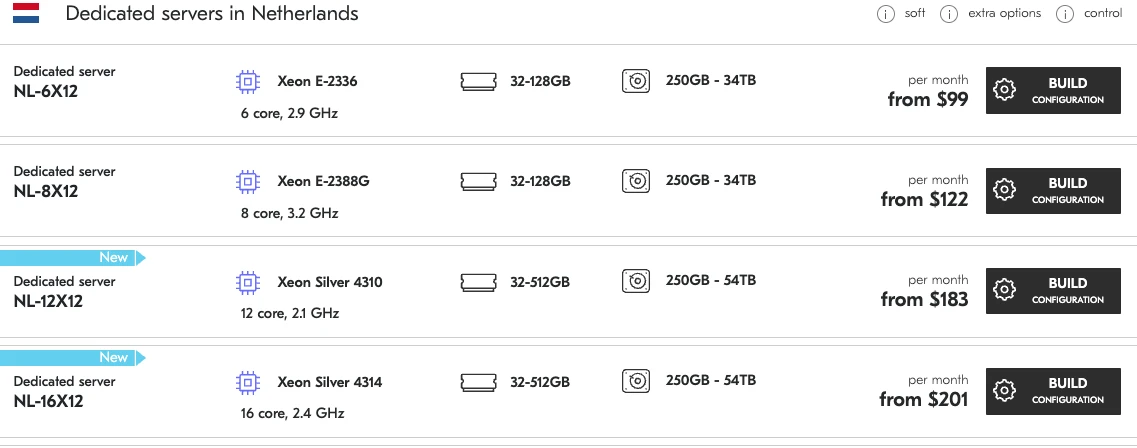
Step 3: Budget vs. reliability — finding the balance
Let’s be real for a second. We all want to save money. But there's a fine line between a "good deal" and "I wish I never clicked that order button."
Think of it like renting an apartment. You could live in a basement with flaky electricity to save $200 a month. But would you really want to?
Same here: when you rent dedicated server infrastructure, always read the fine print:
-
What’s the uptime guarantee?
-
Do they offer hardware replacement in case of failure?
-
Is support 24/7, and how fast do they respond?
💬 One time, I rented a cheap server from a lesser-known provider. A disk failed, and they answered the ticket two days later. I was down for a week. Lesson learned. Stick with proven providers like DeltaHost Netherlands servers, where uptime and support are part of the core offering.
Step 4: Control panel or bare metal?
Another situation: you're not exactly a Linux wizard. You rent a bare server, SSH into it... and stare at the blinking cursor like it’s judging you.
Ask yourself: Do I want to install and manage everything myself? Or do I need help?
Many server rental providers offer:
-
Bare-metal servers (you install everything)
-
Managed servers (they handle setup, security, updates)
-
Optional control panels (like cPanel, Plesk, Webmin)
If you're technical and enjoy tinkering, bare-metal might be your jam. Otherwise, it’s totally okay to get help—managing servers isn’t everyone’s hobby.
📌 You can customize your setup easily with options from DeltaHost’s server rental in NL, by the way.
Step 5: Thinking long-term — what if you grow?
Okay, let’s say things go great. Your project scales. Site traffic triples. App usage spikes.
Will your rented server keep up?
Always check:
-
Is hardware upgrade possible without full migration?
-
Can you move to a more powerful machine with minimal downtime?
-
Does the provider support virtualization or clustering?
Honestly, it’s better to ask these questions upfront than to panic later.
👉 A flexible provider like DeltaHost often lets you scale or even switch server types mid-contract. That’s gold.
Let’s wrap this up (but not too neatly)
So, what have we got? Renting a server in the Netherlands isn’t just a button-clicking task. It’s a thoughtful process that, if done right, gives you power, stability, and peace of mind.
-
Compare it to a dedicated server USA option? In many cases, the Netherlands wins on privacy, latency (for EU users), and neutrality.
-
Want to rent server hardware that works and grows with you? Focus on clear goals, balanced specs, and long-term flexibility.
-
Planning to rent dedicated server machines without regrets? Go with providers that have your back—both in uptime and in support.
And hey, nobody said you have to figure this all out alone. I recommend starting with DeltaHost’s dedicated server options in the Netherlands and just seeing what feels right. Compare offers, ask questions, even open a support chat—they’re surprisingly responsive.
Because in the end, the server rental you choose is more than just a machine. It's the invisible engine that keeps your project running, day and night.
Make sure it's a good one.