
How Drones Help Farmers Address Uneven Crop Growth by Providing Real-Time Plant Health Data
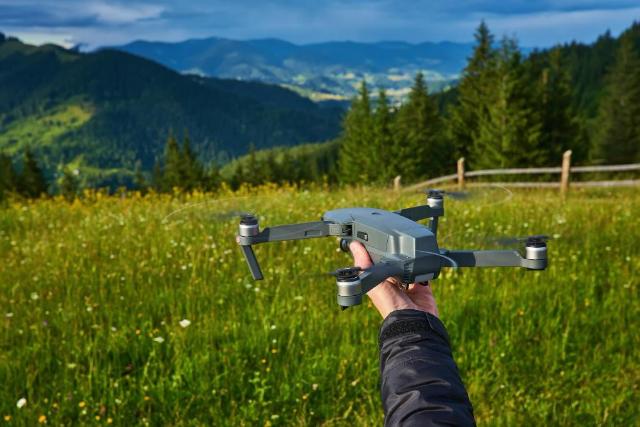
Designed by Freepik
Uneven crop growth is one of the most frustrating challenges for farmers. A field can look healthy from afar, yet patches of underperforming plants often reduce yield potential and create uncertainty about where to intervene.
Modern farming tools, especially drones equipped with advanced sensors, are changing how growers respond to this problem. By capturing real-time plant health data, these devices allow farmers to detect variations early, make precise adjustments, and prevent small issues from spreading across an entire field.
How Do Drones Detect Uneven Crop Growth?
Drones rely on specialized cameras and sensors that capture details invisible to the human eye. While traditional scouting methods often miss subtle differences, drones can measure plant vigor, soil conditions, and water stress across large fields within minutes. This ability to spot irregularities early helps farmers take targeted action rather than waiting until problems become obvious.
Advanced systems like the DJI Agras T10 Sprayer Drone go further by combining monitoring with application, ensuring underperforming areas receive exactly what they need without wasting resources elsewhere.
What Role Does Real-Time Data Play in Crop Decisions?
Real-time plant health data transforms farming decisions from guesswork to precision. Instead of relying solely on visual inspections or delayed lab tests, farmers get immediate insights into crop health. This immediacy means irrigation, fertilization, or pesticide applications can be adjusted on the spot.
For example, if a drone identifies stress due to low nitrogen levels in a corner of the field, fertilizer can be applied directly there, preventing the rest of the field from being oversupplied. The outcome is better yields, reduced costs, and healthier soil over time.
Why Is Uniform Crop Growth So Important?
Uniformity in crop growth directly influences profitability. When plants develop at the same pace, harvesting becomes more efficient, and quality standards are easier to meet. Uneven growth leads to wasted inputs, inconsistent product sizes, and increased susceptibility to pests and disease. Many farmers used to assume that uneven fields were unavoidable, yet drones prove otherwise. By offering insights into micro-variations, farmers can restore balance before the harvest window. It’s like treating a patient early rather than waiting until the illness becomes severe.
When Should Farmers Deploy Drones for Maximum Impact?
Timing makes the difference between helpful data and missed opportunities. Drones are most effective when used consistently throughout the growing season rather than only during visible stress. Early growth stages reveal germination success, mid-season checks highlight nutrient uptake, and late-season flights confirm maturity levels.
By spacing out drone flights at these intervals, farmers build a complete picture of crop health, ensuring interventions are always timely. The approach reduces waste while maximizing the field’s overall performance.
Where Do Sensors Add the Most Value in Monitoring?
Sensors are the heart of drone technology, and their placement determines the quality of insights. Multi-spectral and thermal sensors measure aspects of plant health that standard cameras cannot. These include chlorophyll levels, canopy temperature, and photosynthetic activity.
Together, they give farmers an accurate map of where crops are thriving and where they are under stress. Rather than spreading treatments uniformly, farmers can target only the areas in need. Here’s how the main sensor categories work in practice:
Multi-Spectral Imaging for Plant Health
This technology detects differences in light reflection from plant leaves, signaling issues such as nutrient deficiencies or disease before they’re visible. It enables corrective action when problems are still small and manageable.
Thermal Imaging for Water Stress
By measuring canopy temperature, thermal sensors reveal which plants are experiencing water shortages. Farmers can then adjust irrigation schedules with precision, preventing both under-watering and over-watering.
RGB Cameras for Visual Confirmation
Standard RGB cameras provide a clear overhead view of the field. While less advanced than multispectral sensors, they’re useful for validating patterns identified by other sensors and ensuring no anomalies are missed.
How Do Drones Help Correct Misconceptions in Farming?
A common myth is that drones are just expensive toys with little practical use in agriculture. The reality is quite the opposite. While the upfront cost can be significant, the return on investment comes quickly through input savings, reduced labor, and higher yields. Farmers often discover that drone technology pays for itself after only a few growing seasons. By replacing guesswork with precise data, drones prove they’re not luxuries but essential tools for modern, sustainable farming.
What Practical Steps Can Farmers Take Immediately?
Getting started with drones doesn’t require overhauling an entire farming operation. The first step is identifying a small section of the field that typically struggles with uneven growth and testing drone monitoring there. Once the benefits are clear, scaling across larger areas becomes easier.
Farmers should also invest in learning how to interpret data correctly or partner with agronomists who can translate maps into action plans. Finally, pairing drones with variable-rate equipment ensures that the insights gained are turned into precise, field-level solutions.
Frequently Asked Questions
How accurate are drone-based crop health maps?
Drone-generated maps can be highly accurate, often within a few centimeters. The accuracy depends on sensor quality and flight planning, but with proper calibration, they provide reliable data for making immediate field decisions.
Do drones replace traditional soil testing?
No, drones complement rather than replace soil testing. They identify problem areas that warrant further investigation, but soil sampling remains essential for confirming nutrient levels and long-term management strategies.
Can small farms benefit from drones, or are they only for large-scale operations?
Small farms benefit just as much, sometimes more. Because resources are limited, targeted interventions save significant costs. Renting drone services or collaborating with local cooperatives can make adoption affordable for smaller growers.
What’s the learning curve for farmers new to drone technology?
The technology is increasingly user-friendly, with automated flight paths and simplified data processing. While some training is helpful, most farmers adapt quickly, especially when starting with basic monitoring before advancing to more complex applications.