
How AI Security Cameras Transform Traditional CCTV into Proactive Protection
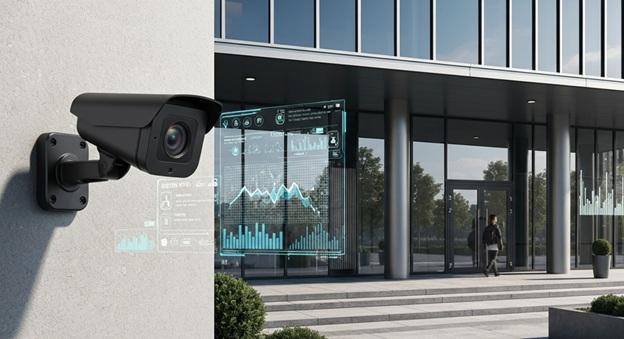
Key Highlights
Here are the key takeaways on how AI is revolutionising security:
- An AI security camera system transforms passive recording into proactive threat detection.
- Advanced features like human and vehicle recognition dramatically reduce false alarms.
- Video analytics provide intelligent insights that can improve your security operations.
- Machine learning algorithms allow the system to become smarter and more accurate over time.
- Real-time alerts enable security teams to respond to incidents instantly.
- AI capabilities enhance overall security by predicting and preventing potential threats.
Introduction
Is your current security system just recording incidents, or is it actively preventing them? The evolution from traditional CCTV cameras to an AI security camera system marks a significant leap in how we protect our properties. By integrating artificial intelligence, modern surveillance systems can now analyse events as they happen, offering a level of proactive protection that was previously unimaginable. This technology is not just about watching; it's about understanding and responding in real time to keep you one step ahead of potential threats.
The Shift from Traditional CCTV to AI Security Cameras
The landscape of video surveillance is undergoing a major transformation. For years, traditional surveillance systems have served as a passive pair of eyes, recording footage for review after an incident has occurred. This reactive approach, however, often proves to be too little, too late.
Today, businesses and homeowners are demanding more from their security camera system. The shift towards smarter solutions is driving the adoption of AI security cameras, which offer proactive monitoring by analysing footage in real time. These advanced systems meet modern security needs by identifying and alerting you to potential threats before they escalate.
Understanding Conventional CCTV Systems
Conventional CCTV cameras have long been a cornerstone of video surveillance. Their primary function is to record video footage of a specific area, which is then stored for later review. Think of them as silent observers, capturing everything that happens without any interpretation or analysis.
These camera systems are primarily used for forensic purposes. If a security incident occurs, security personnel can go back and review the recorded footage to understand what happened and identify the people involved. While useful for investigations, this means their value is almost entirely realised after the fact.
The reliance on manual review is a key characteristic of traditional security systems. Someone has to physically watch the feeds or sift through hours of recordings to find a specific event. This makes them a reactive tool rather than a proactive one, designed to solve crimes rather than prevent them.
The Limitations of Passive Surveillance
While traditional surveillance offers a basic level of security, its passive nature comes with significant limitations. One of the biggest challenges is the overwhelming number of false alarms. Motion alerts triggered by swaying trees, shadows, or animals can create a constant stream of notifications, leading to alert fatigue where real threats might be overlooked.
This passive surveillance model is fundamentally reactive. It relies on someone noticing an event on a screen or reviewing footage after a security incident has already taken place. This delay can be critical, as it provides a window of opportunity for intruders to cause damage or for a situation to escalate.
Key limitations include:
- High volume of false alarms: Generic motion detection cannot distinguish between real threats and irrelevant movement.
- Delayed response: Action is typically taken only after an incident of unauthorised access or theft has occurred.
- Labour-intensive monitoring: It requires constant human attention to be effective in real time.
Defining AI Security Cameras in Modern Context
So, what makes an AI camera different? An AI security camera is an intelligent surveillance device that uses artificial intelligence to analyse video feeds in real time. Instead of just recording what it sees, it interprets the footage to identify specific objects, people, and behaviours. This ability to "understand" the video content is what sets it apart.
These cameras are equipped with sophisticated algorithms for tasks like advanced motion detection and object recognition. When looking for features in an AI security camera, you should consider its ability to differentiate between humans, vehicles, and other objects. This intelligence dramatically reduces false alarms and ensures you are only alerted to events that truly matter.
Ultimately, an AI camera transforms surveillance from a passive recording tool into a proactive security solution. By processing information on the spot, it can trigger immediate alerts, automate responses, and provide detailed insights, allowing security teams to act swiftly and effectively.
Essential Features of AI Security Cameras
An AI camera is defined by its powerful and advanced features that go far beyond simple recording. These systems are packed with AI capabilities designed to provide more accurate, efficient, and actionable intelligence from your video feeds. They turn standard camera systems into smart, responsive security assets.
Understanding these key features helps clarify how AI elevates surveillance from a passive observer to an active guardian of your property. Let's explore some of the essential functions that make this technology so transformative for modern security.
Smart Motion Detection for Accurate Monitoring
One of the most significant upgrades offered by AI is smart motion detection. Unlike traditional systems that trigger an alert for any movement, AI-powered cameras use video analytics to analyse the cause of the motion. This means the system can distinguish between a person walking past and leaves blowing in the wind.
This intelligence is crucial for eliminating the constant stream of false alarms that plague conventional systems. By focusing only on relevant events, such as unusual movements in a restricted area, smart motion detection ensures that your security teams aren't wasting time investigating non-threats. You can trust that the alerts you receive are for events that genuinely require your attention.
The system learns to identify patterns and objects, becoming more accurate over time. This capability frees up your personnel to focus on real security issues, making your entire monitoring process more efficient and effective.
Human and Vehicle Recognition Capabilities
Building on smart motion detection, advanced AI capabilities can specifically identify people and cars. Yes, AI security cameras can detect humans and vehicles separately. This is a game-changer for monitoring areas where you need to distinguish between pedestrian and vehicle traffic. For example, you can set rules to be alerted only when a person enters a certain zone after hours, while ignoring passing cars.
This technology utilises machine learning algorithms to recognise the unique shapes and movement patterns of humans and vehicles. Some systems take it a step further with licence plate recognition, which can capture and log the details of every vehicle that enters or exits your property. This is incredibly useful for managing parking, monitoring deliveries, or tracking unauthorised vehicles.
These recognition features provide a much deeper level of detail than standard motion detection. By automatically categorising objects, the AI system gives you precise, searchable information, making it faster and easier to review events and investigate incidents.
Automated Real-Time Alerts and Notifications
The true power of proactive security lies in immediate communication. AI security cameras excel at real-time threat detection, instantly sending automated alerts to you or your security team the moment a specific event is identified. Whether it's a person loitering near an entrance or a vehicle entering a restricted zone, you'll know about it as it happens.
This instant notification system dramatically shortens response times. Instead of discovering a break-in hours later, you can react immediately to prevent or mitigate security incidents. This shifts your security posture from reactive to proactive, giving you the power to intervene before a situation escalates.
Automated alerts can be customised to fit your needs, such as:
- Push notifications sent directly to your mobile device.
- Emails with image snapshots of the event.
- Integration with alarm systems to trigger sirens or lights.
How AI Security Cameras Enhance Security
By combining intelligent detection with instant alerts, an AI camera fundamentally enhances your security measures. These systems don't just record events for later review; they actively help prevent incidents from happening in the first place. The real-time threat detection capabilities mean that suspicious activity is flagged the moment it occurs, allowing for an immediate and effective response. This proactive approach is a world away from the passive nature of traditional video surveillance.
The integration of AI into security operations streamlines workflows and empowers personnel to focus on genuine threats. Instead of sifting through hours of footage or chasing down false alarms, your team receives precise, actionable information. An AI camera system acts as a force multiplier, providing constant, intelligent vigilance over your property. This ensures that your security infrastructure is not just a deterrent but an active participant in protecting your assets and people.
Advanced Analytics and Surveillance Insights
Beyond immediate threat detection, AI security cameras offer advanced video analytics that provide valuable insights for your business. The right security camera software can analyse patterns in footage to reveal trends in customer behaviour, foot traffic, and operational workflows. For example, retail stores can use this data to optimise store layouts by identifying popular areas and bottlenecks. This is where AI moves beyond security and becomes a tool for business intelligence.
Features like behaviour analysis can automatically flag unusual activities, such as loitering or overcrowding, while facial recognition technology can be used to manage access or identify persons of interest. These analytics transform raw video into structured data that you can use to make informed decisions about both security and business operations.
|
Analytic Feature |
Description |
Benefit |
|
Behaviour Analysis |
Identifies abnormal patterns like loitering or running. |
Enables proactive intervention before incidents occur. |
|
Crowd Density Analysis |
Monitors and analyses the number of people in an area. |
Helps manage public safety and prevent overcrowding. |
|
Object Tracking |
Follows a person or object across multiple cameras. |
Provides a comprehensive timeline for investigations. |
|
Heat Mapping |
Visualises customer traffic and popular zones in a space. |
Optimises retail layouts and improves customer experience. |
Implementation Considerations for Homes and Businesses
When planning to upgrade your security infrastructure, it's important to consider how an AI system will fit into your existing setup. For a smooth transition, look for solutions that offer seamless integration with other technologies you already use. For example, AI cameras can work alongside access control systems to automatically grant or deny entry based on facial recognition, creating a unified and more robust security framework. This is especially true for smart home setups, where cameras can integrate with lights, locks, and alarms.
Consider your specific security needs. A system for a small home will have different requirements than one for a large commercial warehouse. Scalability is also key; choose a system that can grow with your needs. While the upfront cost may be higher than traditional models, the long-term benefits—including reduced false alarms, enhanced efficiency, and proactive protection—often provide a significant return on investment. Ease of installation and use are also vital, as a user-friendly system ensures you can manage your security effectively without extensive technical knowledge.
Conclusion
As we transition from traditional CCTV systems to AI security cameras, it's clear that the future of surveillance is rooted in proactive protection. These advanced systems not only enhance security through features like smart motion detection and real-time alerts but also provide valuable insights through advanced analytics. By leveraging AI technology, homes and businesses can experience a significant boost in safety, making it easier to distinguish between potential threats and everyday activity. Embracing this shift means investing in a smarter, more responsive security solution that adapts to your unique environment. If you're ready to enhance your security measures and explore these innovative options, don't hesitate to reach out for assistance or guidance!
Frequently Asked Questions
Can AI security cameras distinguish between people and vehicles?
Yes, absolutely. An AI camera uses advanced object recognition and machine learning algorithms to accurately differentiate between various objects. This allows for specific human detection and vehicle detection, significantly reducing false alarms from irrelevant movements and providing more precise security alerts.
What kind of analytics do AI security cameras provide?
AI security camera software provides a wealth of video analytics. These include behaviour analysis to detect suspicious loitering, facial recognition for access control, and licence plate recognition for vehicle tracking. These insights help improve both security and operational efficiency by turning raw footage into actionable data.
Do AI security cameras help prevent incidents or just record them?
They absolutely help prevent incidents. Through real-time threat detection and instant alerts, AI surveillance systems enable proactive protection. Instead of just recording security incidents for later review, they allow you to intervene as events unfold, stopping potential threats before they escalate into major problems.