
The great outdoors of Japan: Exploring nature and going on adventures
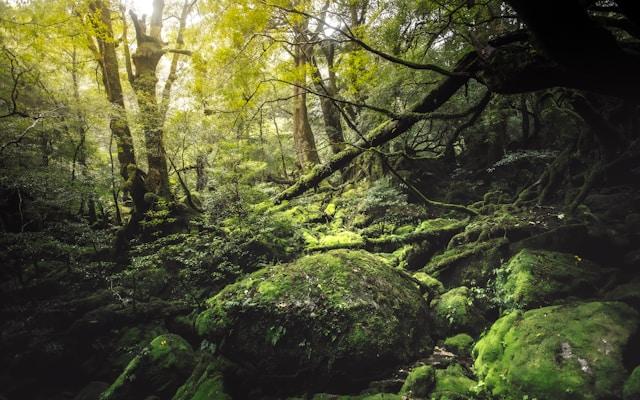
Japan is home to incredibly diverse natural landscapes, ranging from volcanic peaks and areas to alpine environments and dense forests. Coastlines, subtropical islands, and bamboo groves are part of the pristine beauty of the country’s natural areas as well, and if you want to explore all of them in depth, you’ll definitely need to go on more than one trip. In fact, if you’ve decided to travel to Japan, it is a good idea to have an itinerary before leaving so that you can be sure that you have the opportunity to spend time in all the spots you want to see.
If you haven’t decided where to go yet but want to make sure that your trip is as diverse as it could possibly be, here are a few areas that you can consider.
Yakushima
The Yakushima Island can be accessed via both ferry and car ferry, with 42% of it being located within the borders of the national park of the same name. Since 1980, the area has been a designated UNESCO Man and the Biosphere Reserve. Yakushima is the largest nesting ground for the endangered loggerhead sea turtle in the entire North Pacific. The ancient forests have been designated as a World Heritage Site since 1993. The moss-covered Yakusugi trees, all of which are over 1,000 years old, are truly a rare sight to see as they thrive exclusively in the wet, mountainous conditions of the island.
If you want to share them with the people back home, get an eSIM plan for your travel to Japan so that you enjoy seamless internet connection at all times without the need to worry about the extra costs and fees. Yakushima hosts the largest tracts of Nansei Islands subtropical evergreen forests, an endangered habitat and ecoregion. Some of the indigenous animals you can expect to see include the Yakushima macaques and sika deer. Japanese raccoon dogs and Japanese weasels can sometimes be spotted as well.
Kasugayama Primeval Forest
Kasugayama is almost 300 hectares of primeval forest found in Nara and protected as a Special Natural Monument. Hunting and logging have been prohibited in this area since 841, during the reign of Emperor Ninmyō, as Mount Kasuga is regarded as sacred. In 1922, the Nara Park was designated as a Place of Scenic Beauty. To reach the forest, you’ll have to take the Nara Kotsu Bus to the Wariishi-cho stop, then walk for about fifteen minutes, and you’ll reach the starting point of the Kasugayama Promenade.
Several hiking trails and paths can be taken, and there are many waterfalls and small caves carved with figures of the Buddha that you can explore. If you’re up for a challenge, you can climb Mount Wakakusa to get a spectacular panorama of the city and the forest expanse below.
Tottori Sand Dunes
If climbing mountains and wading through forested areas doesn’t sound like something you’d be keen on, you need to go to the Tottori Prefecture. It is the least populous in all of Japan, with only around 540,000 residents, but it is also home to one of the most interesting landscapes the country has to offer. The Tottori Sand Dunes are the largest system of this kind located in Japan, having a length of 14 km. They are part of the San'in Kaigan Geopark, which is focused on the geological features and natural environments of Japan, as well as having the relationship between nature and human lives as one of its main themes. The area is incredibly diverse from a geological standpoint, a feature that has impacted the lives of the people living here as well.
The maximum elevation reaches 90 meters, and the largest dunes are known as “Ō-suribachi” or “large grinding bowl”. In spite of the fact that they’re dunes, the area is not always dry, as there are areas where groundwater seeps out to form shallow pools during certain times of the year.
Aogashima
The volcanic island of Aogashima can be found in the south of Japan, being the most isolated of the Izu Islands that is still inhabited. The island has been mentioned in records ever since the days of the Edo period. Episodes of volcanic activity were recorded in 1653, 1670, and again in 1680. During a particularly massive eruption that occurred in 1785, over 300 people lost their lives, but there has been no significant volcanic activity since the 18th century.
To reach Aogashima, you must first get to Hachijojima via ferry. Getting to the island itself will require the use of another local ferry or a helicopter. Hiking is the most popular thing to do for visitors, with stunning areas such as the Oyama Observation Park being particularly popular, as they provide you with a splendid view of the famous double caldera. Cooking food in geothermal steam vents and relaxing at the natural Fureai Sauna are some of the other activities you can try.
Yonaguni Monument
If you want to take your adventure underwater, the Yonaguni Monument must be a priority on your itinerary. The submerged rock formation can be found off the coast of the island of the same name, the southernmost of the Ryukyu Islands, located around 100 kilometers east of Taiwan. Some marine geologists claim that the formations are human-made monoliths, but the claims have been described as pseudoarchaeological by others. Other geologists believe that the sandstones are most likely natural. In fact, similar formations exist on the island’s northeast coast as well.
However, if you visit the area, you’ll need to be careful and remember that the currents in the area are quite strong. If diving isn’t your strong suit, you can embark on a glass-bottom boat tour instead and explore the pillars and steps as well. Hammerhead sharks can be spotted here too, a truly unique sight.
Japan is one of the most amazing countries in the world, home to many amazing wonders and special sights. If you want to visit, make sure to have an itinerary so that you get the chance to see as many beautiful places as possible.