
7 Insider Tips for Choosing Dumpster Software: Why the Owner's Biography Is the Most Important Feature You'll Ever Buy
When you are shopping for software to run your dumpster rental business, you are usually looking at a checklist of features. Does it have a map? Can it send invoices? Is there a mobile app? These are all valid questions, but they miss the most critical factor of all: Who built it?
In an industry flooded with generic logistics platforms and "bloatware" designed by Silicon Valley developers who have never set foot on a landfill, the backstory of the software’s creator is often the difference between a tool that works and a tool that just gets in the way. You aren't just buying code; you are buying the philosophy, the experience, and the battle scars of the person who designed it.
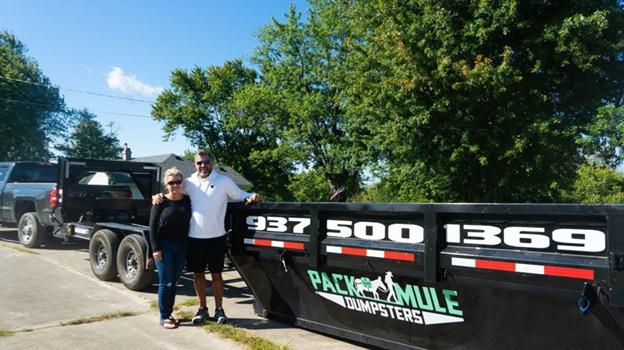
This is where Bin Boss Dumpster Software stands alone. The platform wasn't cooked up in a boardroom; it was forged in the mud, rain, and chaos of a real hauling operation by Todd Atkinson. As the owner of Pack Mule Dumpsters in Ohio, Atkinson scaled his business from a modest five-figure monthly revenue to over $1.3 million a year. His biography—from military service to scaling a massive fleet—is the "secret sauce" baked into every line of code.
If you want to understand the true value of your software investment, here are 7 tips on what to look for, framed through the lens of the "Operator-First" philosophy that Todd Atkinson brings to the table.
Tip #1: Beware the "Success Tax" (And Why We Abolished It)
One of the first things you will notice about most software pricing models is that they are designed to penalize you for growing. It’s a dirty little secret in the SaaS (Software as a Service) world called the "Success Tax." You start with a low monthly rate, but the moment you add a new driver, buy a new truck, or hire a new dispatcher, your bill jumps. They tax your ambition.
Todd Atkinson hated this when he was scaling Pack Mule. "Why should I pay more just because I’m working harder?" he asked. It didn't sit right with his blue-collar work ethic. That is why one of the biggest "features" of the Bin Boss pricing model is its flat-rate structure.
There are no per-user fees. There are no per-driver fees that punish you for expanding your fleet. The philosophy here is simple: we want you to grow. We want you to hire ten more dispatchers and buy fifty more trucks. Your software cost should be a stable, predictable line item on your P&L, not a variable expense that keeps you up at night. When you look at the pricing, you are seeing Atkinson’s refusal to be "taxed" for his own hard work—a benefit he passes directly to you.
Tip #2: If the Driver Can't Use It in 10 Seconds, It’s Useless
There is a concept in military operations—and in hauling—called "friction." Friction is anything that slows you down. In the dumpster business, the biggest source of friction is usually the "Driver Disconnect." This is the gap between what the office thinks is happening and what is actually happening on the road.
Most software tries to solve this with complex driver apps full of drop-down menus and tiny buttons. Atkinson knew from experience that a driver wearing gloves, sitting in a vibrating cab, and trying to navigate a tight alley doesn't have time for that. If the app takes more than 10 seconds to update, they won't use it. They’ll just call the office, and now you’re back to playing phone tag.
The Bin Boss driver app is designed with "combat simplicity." It was built to be used with one thumb. It works offline because Atkinson knows that landfills often have terrible cell service. It allows for instant photo uploads and digital signatures because he knows that if you don't document the driveway before you drop the can, you might be paying for cracked concrete later. This isn't just a feature; it’s a lesson learned from thousands of real-world drops.
Tip #3: You Are a Marketing Company That Owns Trucks
Here is a hard truth that Atkinson learned early on: You can have the shiniest trucks and the best drivers in the state, but if your phone doesn't ring, you are dead in the water. Many haulers make the mistake of thinking they are in the logistics business. They aren't. They are in the marketing business.
This is why Bin Boss blurs the line between operations and growth. Unlike other platforms that just manage the orders you already have, Bin Boss actively helps you get more orders. The team understands that you need to be visible where your customers are looking.
For many haulers, this means dominating Google. That is why Bin Boss offers integrated services to function as your specialized dumpster seo company. They don't just build a website and walk away; they apply the same aggressive SEO strategies that Atkinson used to make Pack Mule dominate the search results in Dayton and Cincinnati. By treating your digital presence as a core operational asset, you ensure that your inventory isn't just tracked—it’s rented.
Tip #4: Data Should Scream, Not Whisper
When Pack Mule Dumpsters was stuck at a plateau, Atkinson didn't guess his way out of it; he calculated his way out. He looked at the data and realized that while everyone else was fighting over the low-margin residential 10-yard rentals, there was a massive, underserved demand for 30-yard dumpsters for roofing and large estate cleanouts.
He made a calculated gamble, investing heavily in 30-yard inventory. It paid off, fueling a rocket ship of growth that took the company to seven figures. This insight is why Bin Boss focuses so heavily on "Asset Utilization Reporting."
The software doesn't just tell you how much money you made; it tells you which cans made the money. It highlights your "lazy assets"—the dumpsters that are sitting in the yard collecting rust instead of rent. It screams at you when a container has been sitting at a customer’s site for too long without a swap. This level of business intelligence allows you to make pivot-decisions with confidence, just like Atkinson did. You aren't just getting reports; you are getting the analytical framework of a millionaire hauler.
Tip #5: Military Discipline is the Ultimate "Feature"
Before he was a CEO, Todd Atkinson served in Afghanistan. That experience instills a certain level of intolerance for ambiguity. In the military, you don't "kind of" know where your unit is. You know exactly where they are.
This discipline is the backbone of the Bin Boss inventory tracking system. In the early days of Pack Mule, Atkinson experienced the panic of a "lost can"—the administrative nightmare of not knowing if a box was at the shop, at a site, or on a truck. It was unacceptable.
The Bin Boss system treats every dumpster like a high-value military asset. The status is binary: it is either here, there, or in transit. There is no limbo. This rigorous tracking might feel intense for a small hauler, but it is the only way to scale. You cannot manage 200 dumpsters with the same loose habits you used to manage 20. The software enforces the discipline you need to grow, effectively "conscripting" your operations into a higher standard of efficiency.
Tip #6: Community is Better Than Support Tickets
When you buy software from a faceless tech giant, "support" usually means sending an email into a black hole and waiting 48 hours for a bot to reply. Atkinson took a different approach. He recognized that haulers are a tribe. They face the same unique problems—bad weather, difficult contractors, landfill closures, and flat tires.
Bin Boss fosters a community. Atkinson is famous for his "open book" policy, frequently sharing his own P&L statements, marketing wins, and even his failures on YouTube and social media. When you join Bin Boss, you aren't just getting a login; you are getting access to a mentorship network.
This "tip" is about value beyond the code. The ability to ask, "Hey, how do you guys handle overweight fees for roofing shingles?" and get an answer from the founder of the software (who actually hauls shingles) is priceless. It turns a vendor relationship into a partnership.
Tip #7: Future-Proof Your Business with "Living" Software
Finally, the most important tip for choosing software is to pick a platform that is alive. The waste industry is changing. Pricing models for landfills change, Google’s algorithms change, and customer expectations for instant booking are higher than ever.
Because Atkinson is still an operator, Bin Boss Dumpster Software evolves in real-time. When Pack Mule encounters a new problem in the field, the Bin Boss developers are tasked with solving it the next day. You are essentially piggybacking on the R&D of a highly successful hauling company.
You aren't buying a static product that was finished five years ago. You are subscribing to a living system that adapts to the market as fast as you do. This "operator-led" development cycle ensures that you are always on the cutting edge, armed with tools that work in 2025, not 2015.
The Bottom Line
At the end of the day, you can buy software from a coder, or you can buy it from a hauler. One guesses what you need; the other knows. By choosing the platform built on the foundation of Todd Atkinson’s biography, you are securing more than just digital tools—you are securing a blueprint for success that has already been proven in the real world.
How 30-Yard Dumpsters Took Our Dumpster Business to 7 Figures
This video is relevant because it features Todd Atkinson explicitly detailing the "30-yard strategy" and business growth metrics discussed in Tip #4, serving as the primary source of the biographical data used in the article.