
2026's Best HR Software for Midsize Companies: Top 10 Picks
Image Source: depositphotos.com
If your company has moved past the “everyone does a bit of everything” stage, you’ve probably felt the growing pains in HR first. More hires, more managers, more locations, more compliance, and suddenly spreadsheets, shared drives, and basic tools just can’t keep up.
That’s where modern HR software comes in. The right platform gives you a single place to manage people data, performance, org structure, engagement, and workflows, so HR stops being a patchwork of one-off processes and starts operating like a scalable system.
But the HR software market is crowded. Some tools are built for small businesses, others for global enterprises, and only a handful really understand what midsize companies need: structure without bureaucracy, flexibility without chaos.
This guide cuts through the noise with 10 of the best HR software options for midsize companies in 2026. Whether you’re formalizing performance cycles, standardizing onboarding, or trying to get a clear view of your workforce, these are the platforms to know.
And leading the list? HiBob, the people-first HR platform built for modern midsize organizations.
Overview: Best HR Software for Midsize Companies
- HiBob – Best overall HR platform for scaling midsize teams
- Personio – Best HR suite for Europe-based midsize organizations
- SAP SuccessFactors – Best for mature, globally complex HR environments
- Workday – Best for high-growth companies planning enterprise scale
- Paycor – Best for workforce insights and HR analytics
- BambooHR – Best for simple, clean HR workflows
- Leapsome – Best for performance, feedback, and development
- ADP Workforce Now – Best for compliance-heavy midsize companies
- Sage HR – Best modular HR toolkit for growing teams
- Rippling (HR Cloud) – Best for automation across HR and IT
1. HiBob – People-First HR for Modern Midsize Teams
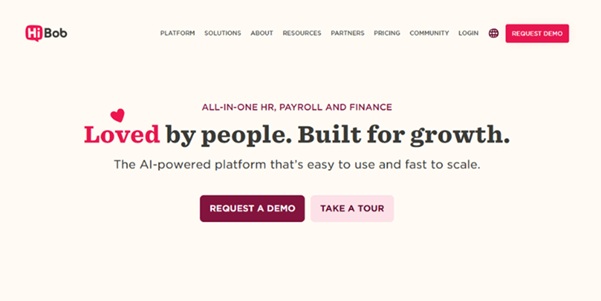
HiBob leads this list because it’s built around how midsize companies actually work today: hybrid teams, distributed offices, evolving org structures, and managers who need clarity without wrestling with clunky systems. It’s a modern HR platform that combines core HR, performance, engagement, workflows, and analytics in one intuitive interface.
Instead of feeling like a static database, Bob feels like a live snapshot of your organization, who’s joining, who’s moving, how teams are performing, and where culture is thriving (or slipping).
Reviews: ~1,811 reviews on G2 (HRIS category)
Key Features & Use Cases
- Centralized HR Hub: Maintain people records, org charts, documents, and policies in one place, with flexible structures for regions, entities, and teams.
- Performance & Growth: Run structured review cycles, track goals, and support growth frameworks so managers have clear tools to develop their teams.
- Engagement & Culture Tools: Use surveys, shoutouts, celebrations, and social-style profiles to keep teams connected and give HR real-time sentiment signals.
- Configurable Workflows: Automate onboarding, approvals, and recurring HR tasks with workflows that adapt to your org structure.
- People Analytics: Analyze turnover, engagement, DEI, performance, and headcount trends to inform strategic decisions, not just admin reporting.
Considerations
HiBob is designed for midsize and up, so very small teams may find it more platform than they need. Pricing is via custom quote, and some adjacent functions (like payroll or local benefits) are typically handled through integrations rather than fully native modules.
Who it’s ideal for
HiBob is ideal for midsize organizations that want a single HR platform to manage people operations, performance, engagement, and analytics—without the overhead of heavyweight enterprise HCM systems. If your company is scaling across locations or building more mature people programs, Bob is the all-around platform to beat.
2. Personio – Structured HR Suite for European Midsize Companies
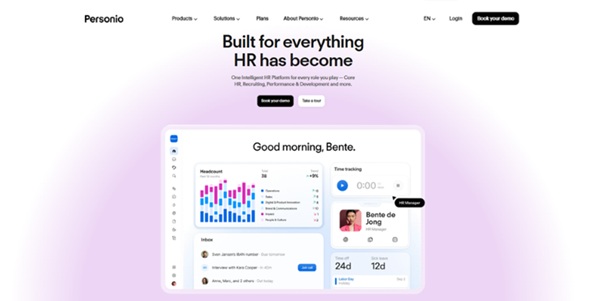
Personio has become a go-to HR system for European SMBs and midsize organizations that need clean, standardized HR processes and strong compliance. It offers an integrated suite across recruiting, onboarding, employee data, absence, and performance, with workflows tuned to European labor norms.
Where some tools feel like a loose toolkit, Personio behaves more like a structured operating system for HR.
Reviews: ~699+ on G2
Key Features & Use Cases
- Recruiting + HR in One: Manage the full journey from applicant tracking to employee onboarding without switching systems.
- Process-Driven HR: Configure workflows, approvals, and document handling for consistent, auditable processes across locations.
- Absence & Attendance Management: Support different leave policies, accruals, and country-specific rules.
- Performance & Feedback: Run review cycles and feedback processes that align with standard HR practices across teams.
Considerations
Personio shines for European-based teams but is less compelling for organizations with major footprints outside Europe. Its analytics are solid but not as deep or flexible as newer people-analytics-first platforms, and the overall experience leans more “structured operations” than “culture-forward.”
Who it’s ideal for
Personio is a strong fit for midsize companies headquartered in Europe that want standardized, compliant HR processes and prefer a single, integrated suite for recruiting and core HR.
3. SAP – Advanced HCM for Mature HR Operations
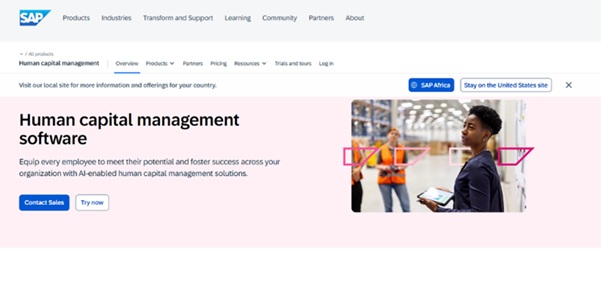
SAP SuccessFactors is a full-scale HCM suite used by large enterprises and increasingly by upper-midsize organizations with complex needs. It offers deep capabilities for core HR, talent management, learning, succession, and workforce planning—all designed for global scale.
This is not a “lightweight HR tool.” It’s a serious system for companies that treat HR as a fully mature strategic function.
Reviews: ~1,300+ reviews on G2
Key Features & Use Cases
- Global Core HR: Robust data structures for multi-country, multi-entity organizations with complex hierarchies.
- Talent & Succession: Support for talent pipelines, succession plans, and high-potential tracking for leadership continuity.
- Learning & Development: Integrated learning platform for training, compliance, and skills development.
- Workforce Planning: Model scenarios, headcount plans, and future org designs using live data.
Considerations
Implementation and ongoing administration require real investment: time, budget, and internal ownership. Many midsize organizations will not use everything SuccessFactors offers, and the UX can feel more enterprise-grade than user-friendly compared to newer platforms.
Who it’s ideal for
SAP SuccessFactors is best for midsize companies with complex, international structures or those tightly aligned to SAP ecosystems that want a long-term, enterprise-class HCM backbone.
4. Workday – Enterprise-Ready HR for High-Growth Midsize Companies
Workday is one of the most recognizable names in HCM. While traditionally an enterprise solution, it’s increasingly adopted by larger midsize companies expecting heavy growth or complexity. Workday provides deeply configurable HR data models, talent modules, and analytics designed to support multi-entity, multi-region organizations.
Reviews: ~1,400+ reviews on G2 (Core HR category)
Key Features & Use Cases
- Core HCM: Advanced data structures to handle job architecture, compensation models, and complex reporting lines.
- Talent & Performance: Integrated tools for performance, succession, and talent reviews across leadership layers.
- Analytics & Planning: Extensive reporting, dashboards, and workforce planning capabilities that give HR and finance a shared view of the people side of the business.
Considerations
Like SuccessFactors, Workday is more system than many midsize teams realistically need. Implementation takes time and expertise, and day-to-day administration often requires dedicated HRIS ownership. It’s powerful, but it’s not lightweight.
Who it’s ideal for
Workday is best for midsize organizations with complex needs or aggressive growth plans that want an enterprise-grade platform they won’t outgrow—even as headcount and structure expand dramatically.
5. Paycor – HR & Workforce Insights for Midsize Teams
Paycor is a human capital platform focused on helping HR and leaders understand and manage their workforce more strategically. It combines core HR capabilities with workforce analytics, performance tools, and manager dashboards that are tuned to the realities of midsize organizations.
Reviews: ~2,200+ reviews on G2
Key Features & Use Cases
- HR & People Data: Centralized employee records, org structures, and workflows for day-to-day HR operations.
- Performance & Goals: Support performance cycles and goal tracking to align teams around priorities.
- Workforce Analytics: Provide leaders with visibility into retention, hiring trends, headcount, and other key HR metrics.
Considerations
Paycor offers a broad feature set, but the overall experience is more operational than culture-led. It’s a solid option for teams that prioritize analytics and structure, but it doesn’t go as far as modern platforms in engagement and employee experience.
Who it’s ideal for
Paycor is a good choice for midsize organizations that want a pragmatic HR platform with stronger-than-average analytics and workforce insights, especially where HR is moving toward a more data-driven model.
6. BambooHR – Simple, Clean HR for Midsize Organizations
BambooHR is well known in the SMB and lower-midmarket space for its approachable, user-friendly design. It focuses on core HR functions like employee records, onboarding, time off, and simple performance tools. For midsize companies with relatively straightforward structures, it’s a low-friction way to move beyond spreadsheets.
Reviews: ~2,799 reviews on G2
Key Features & Use Cases
- People Records & Directory: Manage employee data, roles, and teams in one central hub.
- Onboarding & Docs: Simplify the new-hire process with checklists, e-signatures, and centralized documents.
- Time Off & Basic Performance: Track leave, approvals, and run simpler review cycles without a heavy system.
Considerations
BambooHR’s strength is also its limitation: simplicity. As companies get more complex—multiple entities, nuanced org structures, deeper analytics needs—teams often find they start to hit its ceiling. It’s more “core HR system” than “strategic people platform.”
Who it’s ideal for
BambooHR is best for midsize organizations with relatively simple structures that want an easy-to-implement, easy-to-use HR system to centralize their basics without diving into enterprise territory.
7. Leapsome – Performance, Feedback, and Development Platform
Leapsome focuses on the talent and development layer of HR rather than core HR administration. It brings performance reviews, goals, feedback, learning, and engagement into a single environment, helping companies build a more continuous, development-focused culture.
Most midsize organizations pair Leapsome with a core HRIS rather than using it as the primary HR system.
Reviews: ~600+ reviews on G2 (Performance Management + OKRs + Engagement categories)
Key Features & Use Cases
- Performance & Reviews: Run structured review cycles with customizable questions and templates.
- Goals & OKRs: Align teams around shared objectives and track progress over time.
- Learning & Development: Create learning paths and development plans tailored to roles or competencies.
- Engagement Surveys: Collect feedback on engagement and culture to guide initiatives.
Considerations
Leapsome doesn’t replace a core HRIS—there’s no full people database or deep HR admin tooling. It’s an add-on layer, which means additional budget and integration work. But for organizations serious about performance and development, it’s a meaningful upgrade.
Who it’s ideal for
Leapsome is ideal for midsize companies that already have a core HR system in place and now want to level up performance, feedback, and development in a more structured and continuous way.
8. ADP Workforce Now – HR Platform with Strong Compliance Foundations
ADP Workforce Now is a long-established platform recognized for its reliability and compliance capabilities. It centralizes HR data, workflows, and documentation in a way that’s particularly reassuring for companies in regulated industries or with strict audit requirements.
Reviews: ~7,089+ reviews on Software Advice (HR + Payroll categories combined)
Key Features & Use Cases
- Core HR Administration: Employee data, policies, and workflows managed from a single system of record.
- Compliance & Documentation: Tools for policies, acknowledgements, and reporting to support audits and regulatory needs.
- Reporting & Dashboards: Standard HR reporting and dashboards tailored for mid-market organizations.
Considerations
Workforce Now’s UX and navigation feel more traditional compared to newer HR platforms. It is strong on compliance and controls, less so on modern user experience, engagement, or culture features. It’s a safe choice—but not the most forward-looking.
Who it’s ideal for
ADP Workforce Now is a fit for midsize organizations where compliance, documentation, and administrative control are top priorities, and where a proven, stable platform is more important than cutting-edge experience.
9. Sage HR – Modular HR Toolkit for Growing Teams
Sage HR offers a modular approach to HR software. Instead of a monolithic suite, midsize companies can pick and choose components—such as core HR, time off, performance, or shift scheduling—and add more as they grow.
Reviews:
- Sage People: ~42 reviews on G2
- Sage HR (formerly CakeHR): ~300+ reviews on Capterra
Key Features & Use Cases
- Core HR & Profiles: Centralize employee info and basic HR workflows.
- Time Off & Scheduling: Manage leave, approvals, and, where needed, shift scheduling.
- Performance & Feedback: Run review cycles and basic performance processes as companies mature.
Considerations
Sage HR keeps things relatively lightweight. That’s a plus for teams that don’t want heavy systems—but it also means more limited analytics, culture tools, and global capabilities compared to modern mid-market platforms.
Who it’s ideal for
Sage HR works well for growing midsize teams that want an affordable, modular way to modernize HR and are comfortable with a more streamlined feature set.
10. Rippling (HR Cloud) – Automation-First HR for Ops-Heavy Teams
Rippling is known for its automation and tight connection between HR and IT. Its HR Cloud gives you centralized employee data, org structures, workflows, compliance tools, and deep integration with devices and access management.
It’s especially appealing to operations and IT leaders who want HR processes to map cleanly to systems access and tools.
Reviews: ~4,368+ reviews on Software Advice (HR solutions category)
Key Features & Use Cases
- Central Employee Graph: One source of truth for people data used across HR and IT flows.
- Automated Workflows: Trigger workflows for onboarding, changes, or exits that update systems, permissions, and records automatically.
- Compliance & Governance: Keep a tight handle on who has access to what, and maintain consistent processes across the organization.
Considerations
Rippling is excellent for operational automation, but its people programs—performance, engagement, and culture—are generally less mature than those of dedicated HR experience platforms. It’s built first for efficiency, then for experience.
Who it’s ideal for
Rippling is ideal for midsize companies that care deeply about automation and cross-functional workflows, particularly those with strong IT and ops involvement in HR systems.
How to Choose the Right HR Software for Your Midsize Company
No single platform is perfect for every midsize organization. The right choice depends on what’s most urgent for you right now. While most HR platforms are usable, many have drawbacks and cost considerations as you scale. If you want a modern, scalable HR platform that supports people operations, performance, engagement, and analytics in one place, HiBob remains the strongest all-around choice for midsize companies.