Operations | Monitoring | ITSM | DevOps | Cloud

Identity and Permissions for AI Worker Agents in Harness | Harness Blog

When we launched Autonomous Worker Agents, governance inherited, not integrated, was the core promise: agents run inside the same pipelines, and inherit the same RBAC, policy, and audit trails already governing production, rather than getting security bolted on after the fact.
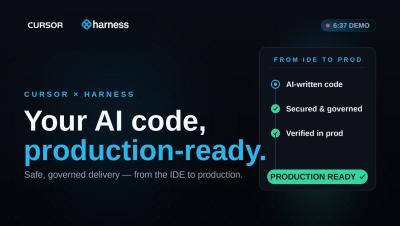

Harness + Cursor IDE: Accelerating Safe Software Delivery with AI Agents

While AI coding assistants help developers write code faster than ever, the traditional manual workflows for delivery, security, governance, and production readiness often create a bottleneck. In this demo, see how Cursor and Harness bridge this gap by turning AI-generated code into a safe, governed, and production-ready software delivery lifecycle right from your IDE.

You're already using AI without realizing it

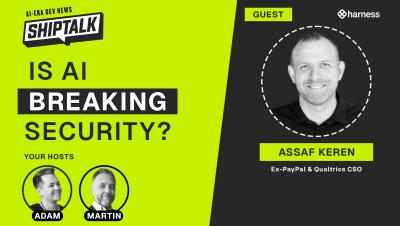
You're already using AI without even thinking about it. That's the realization that kicks off this ShipTalk moment: Apple Maps quietly using on-device machine learning to learn your routes and driving habits — complete trust, zero thought. Which raises the real question: why aren't we there yet with AI in software delivery? The answer comes down to one word: guardrails. Consumer AI earned invisible trust. Shipping software hasn't — not until the guardrails catch up.

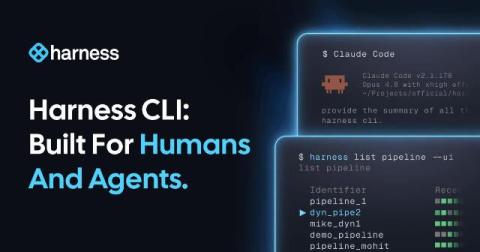
Announcing the Harness CLI: Built for Humans and Agents | Harness Blog

---‍Key Takeaway: Today, we're launching the public beta of the Harness CLI: the single, officially supported command-line tool for the entire Harness platform. It replaces the older per-module CLIs with one binary, one grammar, and one auth flow across pipelines, CD, code, artifacts, IaCM, feature flags, governance, and audit. Designed for secure DevSecOps and enables terminal workflows for developers and deterministic execution for AI agents. ---

DevOps Platform Explained: Why Unified Wins Over Siloed Tools | Harness Blog

A DevOps platform unifies the entire software delivery lifecycle. Unlike standalone tools that automate individual tasks, a DevOps platform connects CI/CD, security, governance, artifact management, infrastructure, and engineering workflows into a single software delivery system. Tool sprawl creates operational complexity as engineering organizations scale.

AI Is Writing More Code Than Ever. Your Release Process Hasn't Kept Up. | Harness Blog

A new report from LeadDev and Harness makes one thing clear: AI coding tools have fundamentally changed how much code organizations are producing. What has not changed nearly fast enough is how that code gets released. The State of AI-Driven Software Releases 2026 report, based on responses from 500424 engineers across industries and company sizes, puts real numbers behind a problem that engineering leaders have been feeling for a while. AI is accelerating the code creation side of the SDLC.

Why the U.S. Locked Down Fable and Mythos: AI, National Security, and the Workforce Squeeze

The U.S. just barred foreign nationals from accessing two advanced AI models — Fable and Mythos — citing national security. Around the same time, the Five Eyes intelligence alliance warned that AI-enabled cyberattacks are "months, not years" away. In Season 5 of ShipTalk, host Adam and co-host Martin dig into whether that warning is already overdue — and what it means for the people actually defending software.

Compliance Without Complexity: Introducing Harness Rego Policy Packs | Harness Blog

In the fast-paced world of modern software delivery, compliance is often a bottleneck. While our existing OPA-based Policy as Code feature has long empowered teams to encode complex authorization checks and enforce granular governance across their DevOps workflows, we know that starting from a blank page can be daunting. Security and governance teams struggle to keep up with the volume of releases, while developers often find the initial setup of these policies to be time-consuming.

Poisoning The Pipeline: How The Mastra AI Ecosystem Was Poisoned At The Registry Level | Harness Blog

The open-source landscape has witnessed another highly automated, ecosystem-level subversion. On June 17, 2026, a critical software supply chain attack struck the Mastra AI framework - a popular open-source TypeScript ecosystem used widely to build AI agents, workflows and RAG pipelines. By exploiting a compromised contributor account, threat actors successfully mass-published 144 malicious packages under the official @mastra npm scope.