Operations | Monitoring | ITSM | DevOps | Cloud

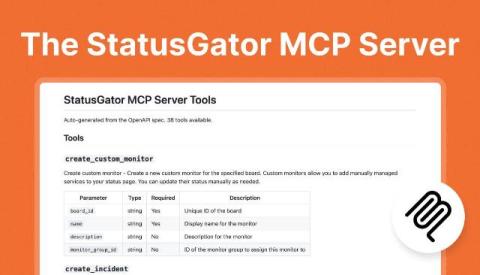
Introducing the StatusGator MCP Server

Your AI agents can now monitor, triage, and respond to cloud outages autonomously. The way enterprises manage cloud infrastructure incidents is changing. AI agents are no longer just chatbots answering questions — they’re becoming first responders in your incident management pipeline. Today, we’re launching the StatusGator MCP Server, giving AI agents direct, structured access to the full power of StatusGator’s cloud status monitoring platform.
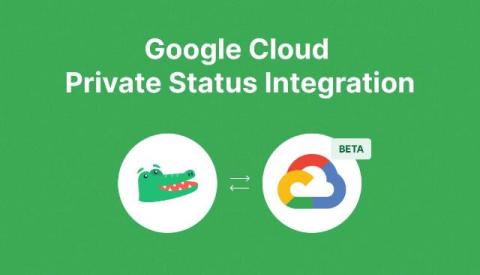
New Beta feature: Google Cloud Private Status integration!

We are excited to announce that Google Cloud is the latest addition to our suite of Enterprise infrastructure integrations! While StatusGator has long monitored the public status of Google Cloud services, this new integration goes deeper. You can now monitor the personalized health of your specific Google Cloud projects directly within your StatusGator dashboard.

Improved Azure status integration

Monitoring Azure health across large environments should not require complicated setup. Until recently, connecting Azure to StatusGator required configuring access at the subscription level, which could become difficult for organizations managing dozens or even hundreds of subscriptions. We redesigned the Azure integration to make it simpler, more scalable, and easier to manage.

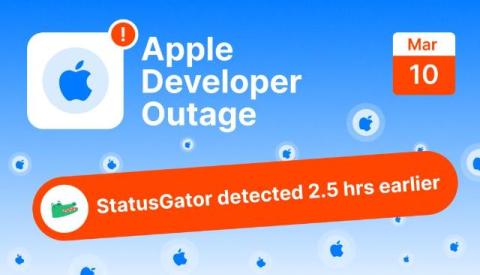
Apple Developer outage on March 10th

On March 10, 2026, developers around the world began experiencing issues with Apple Developer services that prevented apps from being verified or launched on physical devices. For many teams building and testing iPhone apps, the outage disrupted development workflows and blocked deployment to test devices. The issue appeared to involve Apple’s developer certificate verification systems.

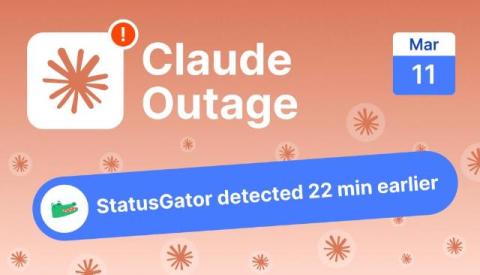
Claude outage analysis: What happened on March 11

On March 11, 2026, users around the world began reporting problems with Claude, including login failures, API errors, and stalled responses. While the disruption did not affect every user, reports quickly showed that the issue was widespread. StatusGator began receiving outage reports at 13:56 UTC. Using its Early Warning Signals system, StatusGator detected the growing incident at 14:22 UTC. The provider officially acknowledged the outage later at 14:44 UTC.

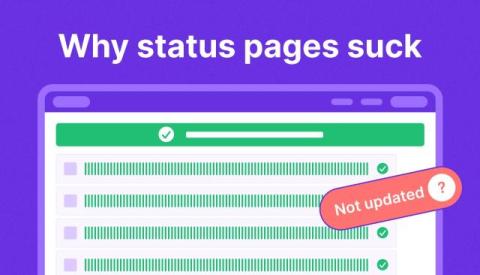
Why status pages suck

Cloud status pages were supposed to bring transparency to outages. Instead, they’ve become one of the most frustrating parts of incident response. Just to illustrate, here are only a few of the many posts on X: When a cloud service fails, status pages are often slow to update, incomplete, or missing information. Crowdsource platforms are noisy and misleading.

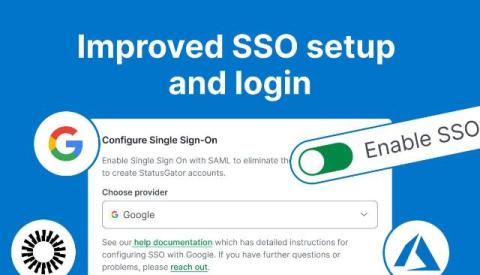
Improved SSO setup and logging

We’ve made several improvements to Single Sign-On (SSO) in StatusGator to make authentication easier to configure and easier to monitor. As a reminder the StatusGator dashboard includes SAML-based SSO on all plan tiers, even our free plan. This update introduces a simplified SSO setup flow along with a new Audit logs tab that provides visibility into authentication activity.

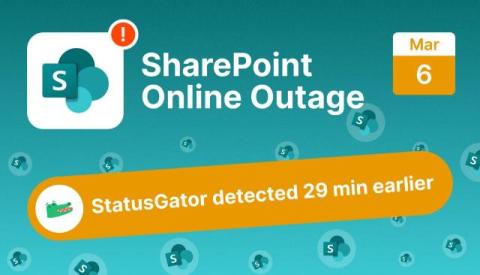
SharePoint Online outage on March 6, 2026

On March 6, 2026, SharePoint Online experienced a disruption that prevented some users from loading sites, accessing files, or authenticating successfully. The incident did not affect every user, but reports came in from multiple regions including North America and Europe. StatusGator detected the problem early through user outage reports and triggered an Early Warning Signal before Microsoft officially acknowledged the issue.

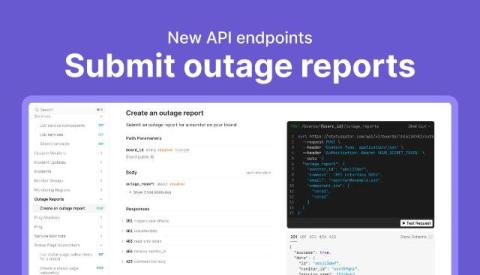
New API: Submit outage reports

We’ve added a new endpoint to the StatusGator API that allows you to submit outage reports for monitors on your board. With the new Outage Reports API, you can programmatically report issues you’re experiencing with a service. These reports help StatusGator detect outages faster and improve visibility for other users who rely on the same services.

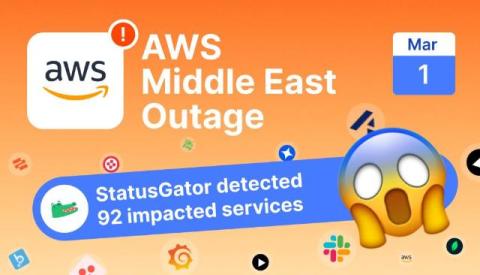
AWS Middle East data center strikes: 92 SaaS platforms report disruptions

StatusGator analysis identifies 92 cloud services that publicly acknowledged disruptions tied to the AWS Middle East incident. Over the weekend, Amazon confirmed that drone strikes damaged AWS facilities in the Middle East, disrupting cloud infrastructure across the region. The strikes affected AWS regions in the United Arab Emirates and Bahrain, causing outages and degraded performance across core cloud services including compute, storage, and databases.

Did ChatGPT take down Claude?

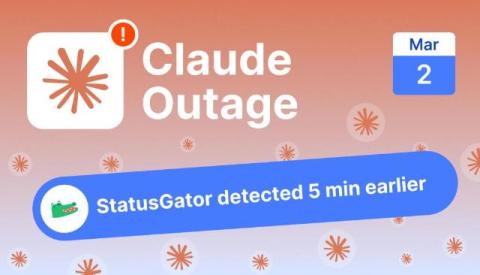
On March 2, 2026, Claude experienced a widespread service disruption that affected users across North America, Europe, Asia, and Australia. The outage quickly drew significant media attention, with numerous technology news outlets reporting on user frustration and downtime. In the early hours of the incident, some commentators speculated that the disruption may have been caused by a sudden influx of new users migrating from OpenAI. However, there is no public evidence confirming that theory.

February 2026 product updates

February brought powerful new improvements to StatusGator – from better status page analytics and expanded API capabilities to smarter incident detection. We also published our latest Early Warning Signals report, highlighting major outages we detected before providers acknowledged them. Here’s everything that’s new.

February 2026 Early Warning Signals

February 2026 saw another wave of impactful service disruptions across AI platforms, e-commerce infrastructure, developer tools, education providers, collaboration apps, and cloud services. Using StatusGator’s Early Warning Signals, we detected outages before providers publicly acknowledged them – and in several cases, providers never acknowledged them at all. Many services still lack transparent or timely status communication, leaving users with little visibility during critical incidents.