Operations | Monitoring | ITSM | DevOps | Cloud

Coralogix vs Sumo Logic: Support, Pricing, Features & More

Coralogix and Sumo Logic are two different answers to the same observability platform decision. Where Coralogix processes telemetry in flight, stores it in your own Amazon Simple Storage Service (S3) bucket, and prices on data ingested, Sumo Logic keeps data in vendor-managed storage and, under its Flex model, bills for data scanned at query time. Both platforms have introduced pricing and artificial intelligence (AI) changes in the past year, and those changes have widened the difference between them.
Coralogix vs New Relic: Comparison Guide (2026)

Coralogix and New Relic both cover the full observability surface, but they charge for it and store it in different ways. One prices purely on data ingested and writes telemetry to a bucket you own, while the other combines ingest pricing with per-user licensing and retains data in its own backend. This guide covers how the two platforms compare on core features, pricing structure, AI observability, archiving and retention, security coverage, and support, then shows when each one is the stronger choice.

Where did all my Claude Code tokens go?

Most teams judge their AI coding agent on two things: the monthly bill and a feeling. The bill tells you what you spent and the feeling tells you whether it seems to be helping, but neither one tells you what the agent actually did. As these tools move into the critical path of how software ships, that gap is starting to matter. I wanted to replace the feeling with something I could measure and understand what shapes of work affects this bill, so I decided to run an experiment on myself.

The AI bill arrived. Now what?

There was a time when “Opus” meant a classical composition and “Sonnet” was fourteen lines of Shakespeare you definitely did not read before the test. Now they’re model tiers, and every new release rewrites the economics of your engineering org whether you’re ready or not. Currently, your monthly total hides the crucial information you need to control and justify AI spend.

The Data Plane Reality: OTel Scales, While Topology UX Lags

OpenTelemetry won the architectural standards battle. At scale, though, telemetry breaks more like plumbing than code. It breaks quietly, across a graph, with a blast radius you don’t understand until it’s expensive. With over 65% of organizations now running more than 10 collectors in production, hybrid deployments across Kubernetes and VMs are accelerating fast. Telemetry standardization is no longer a project milestone. It is a baseline expectation.

Un-observable AI is Un-trustworthy AI

Recently, someone talked Chipotle’s customer support agent into reversing a linked list – a task completely unrelated to burritos in any way. Screenshots circulated, people laughed, but underneath the joke sat a sharper question. If a production support agent will do that on a public channel, what else will it do that nobody is screenshotting? The bug is funny. The trust gap behind it is not.

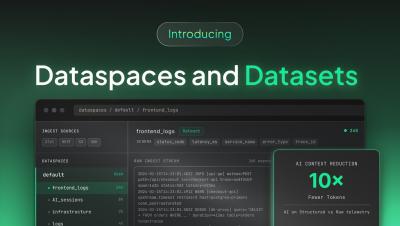
Introducing Datspaces and Datasets

Dataspaces and Datasets | The Structured Data Layer for Teams and AI | Coralogix Dataspaces and Datasets from Coralogix: the structured data layer teams and AI were waiting for. Turn a single query into a reusable dataset, share it across teams, and keep dashboards fast as your data scales. In this video: Timestamps: Dataspaces and Datasets are available now in Coralogix. Whether you're building dashboards, running background queries, or powering AI agents with telemetry data, Dataspaces give your organization a governed, high-performance data architecture that scales with your teams.

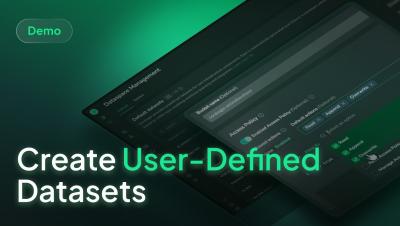
How to create User-Defined Datasets in Coralogix

Learn how to create a user-defined dataset in Coralogix and route telemetry data into it using TCO policies with granular DataPrime expressions. In this walkthrough, you'll learn how to:• Create a new dataset with its own schema, permissions, retention, and cost visibility• Configure PBAC settings for governed access control• Route data using DataPrime expressions in TCO policies• Fan out events to multiple datasets from a single source.

Monitor Memory Where Allocations Occur

Kubernetes dashboards often mask a system infrastructure failure. When a critical application crashes, it often points to an Out-of-Memory event. Even while standard CPU metrics appear completely healthy. This quick walkthrough shows you how Coralogix integrates continuous memory profiling directly into your production environment. We pair OpenTelemetry trace data with continuous background sampling via the Async Profiler. It helps teams isolate resource heavy code paths before they trigger system degradation.

DataPrime at ingest (DPXL): See the impact of any routing decision

TCO policies have always been one of the most impactful cost levers in Coralogix. Route business-critical data to High, push monitoring data to Medium, archive compliance logs to Low. With the addition of DataPrime expressions (DPXL) – a subset of the DataPrime query language designed for inline filtering at ingest – that routing became even more precise, matching on any field in the event payload, not just application, subsystem, and severity.