Operations | Monitoring | ITSM | DevOps | Cloud

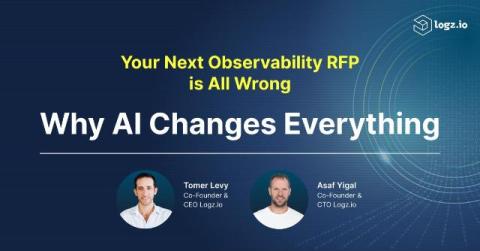
Your Next Observability RFP is All Wrong. Why AI Changes Everything

AI-first observability addresses two of the most pressing troubleshooting challenges: complex IT environments and AI-generated code. But understanding how to implement AI in a way that brings ROI, requires cutting through the hype and maintaining realistic expectations, while keeping a forward-thinking vision. In this blog post, we bring practical tips for including AI in your next observability RFP. The article is based on a webinar held with Logz.io founders, CEO Tomer Levy and CTO Asaf Yigal.
OpenTelemetry Observability: An In-Depth Look at Features and Best Practices

OpenTelemetry (OTel) is a unified framework of APIs, SDKs and tools, for collecting, processing, and exporting telemetry data (logs, metrics, and traces) across applications and infrastructure. OTel is especially required in today’s cloud-native world, where applications run on microservices, Kubernetes, and distributed systems.

Your Next Observability RFP Is All Wrong: Why AI Changes Everything

Watch how AI is reshaping observability for the years ahead. In this fireside chat, Logz.io founders Tomer Levy and Asaf Yigal reveal how the most innovative AI-first companies are breaking free from dashboards, avoiding common RFP mistakes, and building future-ready stacks. You’ll see: Watch and learn how autonomous AI eliminates noise, slashes costs, and gives engineering teams back their velocity.

What is Infrastructure Monitoring? How it Works, Key Metrics & Use Cases

Infrastructure monitoring is the process of continuously collecting, analyzing, and visualizing data from an organization’s IT infrastructure. With infrastructure monitoring, DevOps teams can maintain system health, meet SLAs, reduce downtime, and detect and resolve issues proactively. This ensures optimal performance, availability, and reliability. Key networks components infrastructure monitoring typically covers.