Operations | Monitoring | ITSM | DevOps | Cloud

Feature Friday: New Bird's Eye Report

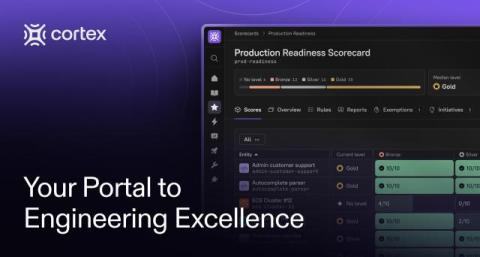
Stop squinting at data and start driving engineering excellence. In this week’s Feature Friday, Christine from the Cortex Product Team introduces the all-new Birdseye Report (now in private beta). See how to master your engineering standards at scale. We’ve redesigned Birdseye to give you a true "top-down" view of scorecard performance across your entire organization—from the CTO level down to a single service.
Why measuring things openly is the first step toward a stronger engineering culture

Most engineering leaders know they should be measuring more. What holds many of them back is a quieter concern about whether the organization is actually ready to see the numbers. This tension, however, did not keep Ganesh Datta, our co-founder and CTO, and Randy Shoup, SVP of Engineering at Thrive Market, from diving down this rabbit hole on the Braintrust podcast.

Why business context is the missing link in engineering performance

Think about the last time your team shipped something impressive. It was probably on time, clean code, and had great metrics. And yet somewhere along the way, the business priorities had shifted, and what the team delivered was no longer the top priority. The work was solid, but the direction just wasn't quite right anymore. This is usually what happens when engineers are disconnected from business context.

Breaking up with backstage: Why "free" open source isn't always free

We’ve all had that moment where it seems like you've solved your company's biggest engineering challenges after a weekend of hacking something together. Your prototype is so good, you feel, that the obvious next steps are to build a slide deck, rally the team around your work, and prepare the ticker tape parade for your hero's welcome. Jeff Schnitter, a Solution Architect at Cortex, knows this roller coaster of experience all too well after his time at Workday.

How frictionless development created a trillion dollar mistake

We've all heard from an engineering leader about the exact moment they realized their architecture had gotten too complex. It usually happens when they look at a service map and realize it looks like a box of tangled Christmas lights. This cognitive overload is exactly what Steve Evans, the former SVP of engineering at Chegg, reflected on in a recent post on LinkedIn. He argued that microservices were a trillion dollar mistake because we often over-build for future problems that never actually arrive.

Cortex and Semgrep partner to strengthen application security and drive continuous improvement

At Cortex, our mission is to help engineering organizations deliver reliable, secure, efficient software, faster. With Cortex, teams can standardize against best practices and create a culture of continuous improvement to achieve this. Today, we’re excited to announce a formalized partnership with Semgrep, a leader in modern static analysis and code security.

8 themes shaping engineering in the age of AI

We know that AI has been transformational for engineering and it will continue to be, so stop me if this sounds familiar. Imagine an engineering lead opening a pull request for a critical security patch and finding five hundred lines of AI-generated code. While the solution is (mostly) usable, it follows a pattern no one on the team recognizes. This shift away from manually writing every line of logic has introduced a unique level of complexity for teams.