Operations | Monitoring | ITSM | DevOps | Cloud

#054 - From Shiny Objects to FinOps: Taming Cloud Costs in the AI Era with Josh Schlanger (CloudX...

In this episode of the Kubernetes for Humans podcast, we are joined by infrastructure and FinOps expert Josh Schlanger. Drawing on over 15 years of experience across Martech, e-commerce, and health tech, Josh shares why solving core business problems should always take priority over chasing new, "shiny object" technologies.

Multi-Agent AI SRE Has Landed and Its Built for Your Most Complex Stacks

Once upon a time, a monolith running on a handful of servers meant that incident management, even at 2:17 AM, was something a single generalist could handle. One person with enough context across the stack could reasonably diagnose whether the database was choking, a config had changed, or a server was running hot. They’d fix it and go back to sleep.

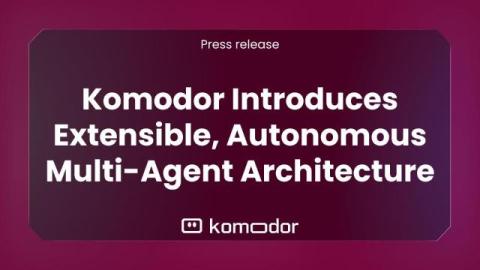
Komodor Introduces Extensible, Autonomous Multi-Agent Architecture for AI-Driven Site Reliability Engineering

Out-of-the-box and bring-your-own AI agents that encode operational knowledge boost troubleshooting speed and accuracy across cloud native infrastructure TEL AVIV and SAN FRANCISCO, March 18, 2026 — Komodor, the autonomous AI SRE company for cloud-native infrastructure, today announced a new extensibility framework that transforms its Klaudia AI technology into a universal multi-agent platform for troubleshooting and optimizing performance of complex cloud native infrastructures and applications.

FinOps in the Age of Kubernetes: When Everyone Owns the Bill

A FinOps analyst walks into a Monday morning meeting with a detailed spreadsheet showing $2.3M in potential Kubernetes cost savings. The recommendations look straightforward: reduce memory limits by 40%, scale down replicas during off-peak hours, consolidate workloads onto fewer nodes. The numbers are compelling, the methodology is sound, and the savings would make a material impact on quarterly cloud spend. The SRE team immediately objects.

AI SRE in Practice: Enabling Non-Experts to Troubleshoot Kubernetes

Kubernetes troubleshooting traditionally requires deep platform expertise. Understanding pod lifecycle, decoding error messages, correlating events across resources, and identifying root cause all demand experience that takes years to build. This expertise gap creates a bottleneck where only senior engineers can handle production issues, limiting how quickly teams can resolve incidents.

When AI Writes the Code, Who Pays the Cloud Bill?

This is part two of a series of the implications of AI generated code becoming mainstream. We recently wrote about how AI-generated code is overwhelming SRE teams with production complexity they can’t manage. Turns out that’s only half the problem. The other half shows up on the cloud bill. A prospect reached out to us last month. They’d been using Cursor and Claude Code for six months, shipping features at unprecedented velocity. Product was thrilled.