Operations | Monitoring | ITSM | DevOps | Cloud

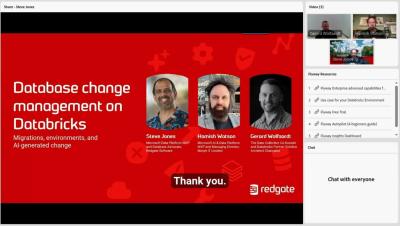
Database change management on Databricks: migrations, environments, and AI-generated change

You wouldn’t ship untested SQL Server database changes – Why is Databricks different? Databricks is where the data estate is growing, and increasingly where AI workloads run and generate change. But schema change there still happens the hard way: views and stored procedures managed through manually versioned scripts, drift between workspaces discovered when a deployment fails, and no reliable record of what changed, when, where, or why. As AI raises the volume and speed of schema change, these gaps widen.
Announcing Redgate Flyway Enterprise's advanced capabilities for Snowflake now in Preview

Snowflake has become a core part of how many teams store, model, and analyze their data. As more of the business comes to depend on Snowflake, the schema needs the same governance and control as any other production system. Too often, schema change in Snowflake happens through ad hoc scripts, tribal knowledge, or direct access in Snowsight.

Announcing the Flyway Docker provisioner, now in Preview in Flyway Enterprise

"Why do I need to give Flyway this extra database?" That's one of the most common blockers we hear from users setting up a Flyway project. Flyway has long had a concept of a build database or shadow database that is a dedicated sandbox database for Flyway to do background work in. It's required for Flyway to be able to simulate what running a set of migrations will do to a database.

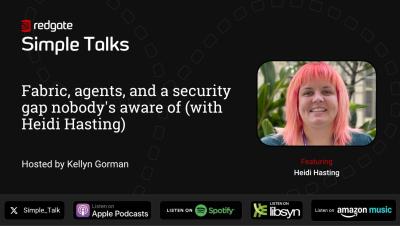
Fabric, agents, and a security gap nobody's aware of (with Heidi Hasting) | The Simple Talk Podcast

Heidi Hasting joins host Kellyn Gorman for a chat featuring Microsoft Fabric, real-time intelligence, and a permissions trap that hands your data to a coworker's chatbot...Also: what MVP status really means, and where you should visit in South Australia (snakes included)!

What's new in Redgate Monitor: Postgres monitoring, CIS compliance, and an MCP server for AI

Redgate Monitor is a database performance and security monitoring tool covering SQL Server, PostgreSQL, MySQL, Oracle, and cloud platforms including AWS, Azure, and Google Cloud SQL. This session walks through Redgate Monitor's latest releases and roadmap: cloud cost tracking, Google Cloud SQL support, expanded Postgres diagnostics, permission-change security alerting, CIS benchmark compliance, and a new MCP server and chat assistant for AI-powered workflows.

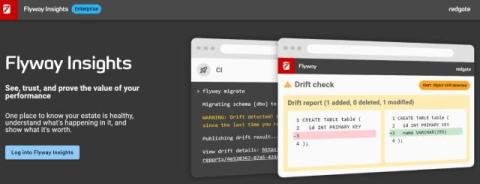
Introducing Flyway Insights: see the change, know the impact

How much of your database delivery can you actually see? For most teams, the picture is scattered. Deployment status lives in CI logs and scripts. Drift appears outside the process. And with AI multiplying the volume and speed of changes moving through pipelines, the risk that comes with low visibility rises with every release.

How to evaluate database monitoring vendors for long-term reliability and support

In this webinar, Redgate solution engineer Laura Copeland talks with Chris Yates, SVP of Data and Architecture at a large financial institution, about what separates a good database monitoring vendor from a bad one. His experience with Redgate Monitor runs through the whole conversation.

Building India's PostgreSQL scene (with Hari Kiran) | The Simple Talk Podcast

Pat Wright sits down with PostgreSQL veteran Hari Kiran – founder of OpenSource DB and co-organizer of PG Day Hyderabad, where this episode was recorded. They talk community building, mentoring the next generation of PostgreSQL contributors, and how a coffee chat with a friend turned into one of India’s biggest PostgreSQL events.

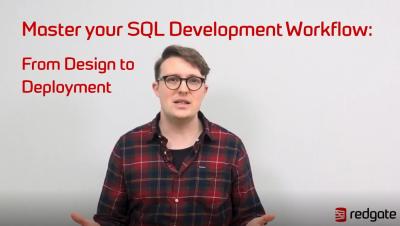
SQL Server development workflow: from design to deployment

This session walks SQL Server developers through a complete database development workflow, from designing schema changes to testing and deploying them safely, using SQL Toolbelt Essentials. Most database teams don't struggle with SQL itself. The friction comes from process: schema changes made without a clear picture of what's already there, inconsistent code quality across a team, databases left outside version control, and deployments that feel riskier than they should. This session covers all four, with a live demo in SSMS for each one.

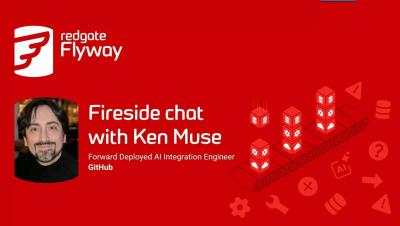
AI can write database code fast. Here's how to keep it safe before production.

AI can write database schema changes in seconds, but nothing should reach production until it's validated, tested, and approved. In this discussion, Ken Muse (GitHub), Steve Jones (Redgate), and Huxley Kendall (Redgate) show how a governed pipeline keeps AI-generated database changes safe without slowing teams down.