Live Discussion About Observability Lakes
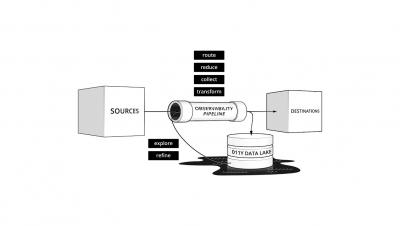
Join Ed Bailey and Nick Heudecker to discuss Cribl CEO Clint Sharp's recent blog post about how observability lakes allow for total recall of an organization’s observability and security data


We hosted a webinar a few weeks back on using Cribl LogStream to make your security operations more scalable, efficient, and cost-effective. The turnout was fantastic and, while we answered most of the audience’s questions live, we couldn’t get to all of them. So I’ll go through the questions we couldn’t get to and offer some answers. Along the way, I’ll also share the results of two polling questions we asked during the webinar.
Enterprises are dealing with a deluge of observability data for both IT and security. Worldwide, data is increasing at a 23% CAGR, per IDC. In 5 years, organizations will be dealing with nearly three times the amount of data they have today. There is a fundamental tension between enterprise budgets, growing significantly less than 23% a year, and the staggering growth of data.
If I had a penny for each time someone asked for a single pane of glass view across my 20 years in the application monitoring (now observability) space, and I would be retired instead of writing this blog. But, on the other hand, I’d be in big trouble if I paid out each time we failed we finished that ask.
AWS announced CloudTrail Lake on January 5th, 2022, as a fully-managed solution for storing and querying CloudTrail logs. At first glance, it is straightforward to set up, can be enabled for all your organization’s accounts with a radio button, and keeps data for up to seven years by default! It’s a huge time saver and headache eliminator for many, as getting CloudTrail from all organization accounts to a SIEM can be tedious and time-consuming. But all this comes with a cost.
Our mission at Cribl is to unlock the value of all your observability and telemetry data, regardless of source or destination. We aim to give you choice and control over your data—because we know data has different value to different stakeholders at different times in the data lifecycle. Users are just scratching the surface in terms of the ways they are finding value from Cribl LogStream.