
Resilience in the Desert: How Utah is Building Infrastructure for the Next 50 Years
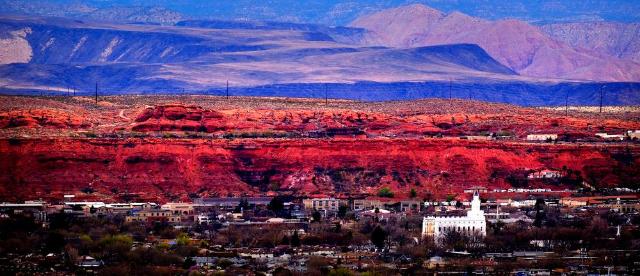
Image Source: depositphotos.com
How do you prepare a desert state to support twice its current population while facing hotter summers and scarcer water? Utah is tackling that question head-on with a long-term approach to infrastructure that prioritizes resilience.
From securing water supplies and diversifying transportation to expanding renewable energy and climate-proofing cities, every decision is shaped by the challenges of living in an arid environment. The next 50 years will test whether careful planning and innovation can sustain growth without exhausting the very resources that make life in the desert possible.
Utah’s Unique Landscape and Growth
Utah is defined by its high desert terrain, where water scarcity and rugged landscapes shape every decision about development. Despite these natural limits, it has become one of the fastest-growing states in the country, with projections showing its population could nearly double by mid-century. Cities like Salt Lake City and St. George are expanding quickly, putting pressure on limited resources while also creating opportunities for innovation.
Growth on this scale means more homes, more roads, and greater demands on utilities. The challenge lies in doing this sustainably without exhausting fragile ecosystems. Planning for the next 50 years is not about slowing growth but about managing it in ways that balance urban needs with environmental realities. Utah’s leaders and residents are faced with the question of how to thrive in a desert without repeating the mistakes of unchecked expansion.
Water Infrastructure and Conservation
Water is the foundation of life in the desert, and Utah’s reliance on sources like the Colorado River highlights how vulnerable the state is to ongoing droughts and changing climate patterns. Traditional infrastructure, such as reservoirs and aqueducts, is still essential, but it cannot alone secure the future. Conservation has become a critical part of the strategy, with measures ranging from stricter efficiency standards to the promotion of drought-resistant landscaping in neighborhoods.
Beyond large projects, community-level changes are making an impact. Cities are investing in water recycling and reuse, while households are adopting technologies that reduce consumption.
These steps may seem small individually, but together they form a safety net against shortages. By combining new infrastructure with smarter usage, Utah is building resilience into a resource that is becoming more unpredictable every year.
Transportation Networks for Tomorrow
Utah’s rapid population growth also creates an urgent need to expand and adapt its transportation networks. Highways and interstates remain the backbone of mobility, but congestion in growing urban areas makes diversification a priority.
Rail expansions and bus systems are being developed to provide reliable alternatives to cars, particularly for commuters. Long-term transit planning is focusing on connecting suburbs with urban centers to reduce traffic and improve access. As Utah invests in smarter, safer transportation systems, reducing accidents is just as important as improving mobility. Yet collisions involving large trucks continue to pose challenges, and when they do happen, people often turn to a Utah semi truck accident lawyer to understand their rights and options.
At the same time, future-minded upgrades are being introduced to make the system more sustainable. Electric buses, EV-friendly infrastructure, and smart traffic management are helping reduce emissions and create a smoother travel experience. The challenge is balancing Utah’s strong car culture with the need for cleaner, more efficient mobility. If growth continues as expected, a multi-layered transportation system will be essential for keeping communities connected.
Energy and Sustainability in the Desert
Utah’s desert climate makes it a natural fit for renewable energy, particularly solar and wind, and these resources are becoming a larger part of the state’s energy mix. Large-scale projects are supported by smaller distributed systems, giving communities more flexibility and resilience. Geothermal resources in certain areas add another dimension to this energy transition, offering steady power that complements intermittent sources like solar and wind.
Yet the shift is not without complexity. Utah still relies heavily on fossil fuels, and balancing traditional energy sources with the push for renewables requires careful planning. Expanding grid capacity, modernizing infrastructure, and investing in storage technologies are all part of the equation. The end goal is to ensure that energy is reliable, affordable, and sustainable enough to meet the demands of the next 50 years.
Building Climate-Resilient Communities
In desert cities, rising temperatures and longer heatwaves present growing risks for residents. Urban planners are responding with strategies that make neighborhoods more livable, such as shaded walkways, tree canopies, and building designs that better withstand extreme heat. These measures not only improve comfort but also reduce energy demand by lessening the need for constant cooling.
Another priority is guiding growth in ways that minimize sprawl and protect open spaces. Higher-density housing, mixed-use developments, and compact communities are helping reduce strain on water, energy, and transportation systems. Climate-resilient design is not just about withstanding today’s challenges but also anticipating those of the future, from floods to droughts, ensuring that communities remain safe and sustainable as conditions change.
Technological Innovations and Infrastructure
Technology is becoming a powerful ally in Utah’s long-term planning. Smart water meters allow households and utilities to track usage in real time, helping reduce waste. Traffic management systems powered by data help ease congestion and improve safety on busy roads. These innovations may not be visible to most people day to day, but they add up to more efficient and adaptable infrastructure.
Digital tools and predictive modeling are enabling planners to simulate how growth, climate shifts, and resource demands will interact over decades. This allows infrastructure to be designed with flexibility built in, reducing the risk of costly mistakes. Automation and digitization are not replacing traditional infrastructure but enhancing it, making every drop of water, every kilowatt of energy, and every mile of road work harder and smarter for Utah’s future.
Conclusion
What makes resilience in Utah remarkable is not only the scale of its challenges but the determination to address them before they become crises. By combining lessons from the past with modern technology and sustainable practices, the state is laying the groundwork for communities that can thrive even in the harshest conditions.
The blueprint being built today, rooted in foresight, adaptability, and balance, offers a glimpse of how desert regions everywhere can grow stronger in the face of a changing climate.